


Astronomers confirm existence of planetoid furthest away in our solar system, names it Farfarout
Farfarout’s current distance from the Sun is 132 astronomical units (au), where 1 au is the distance between the Earth and Sun.

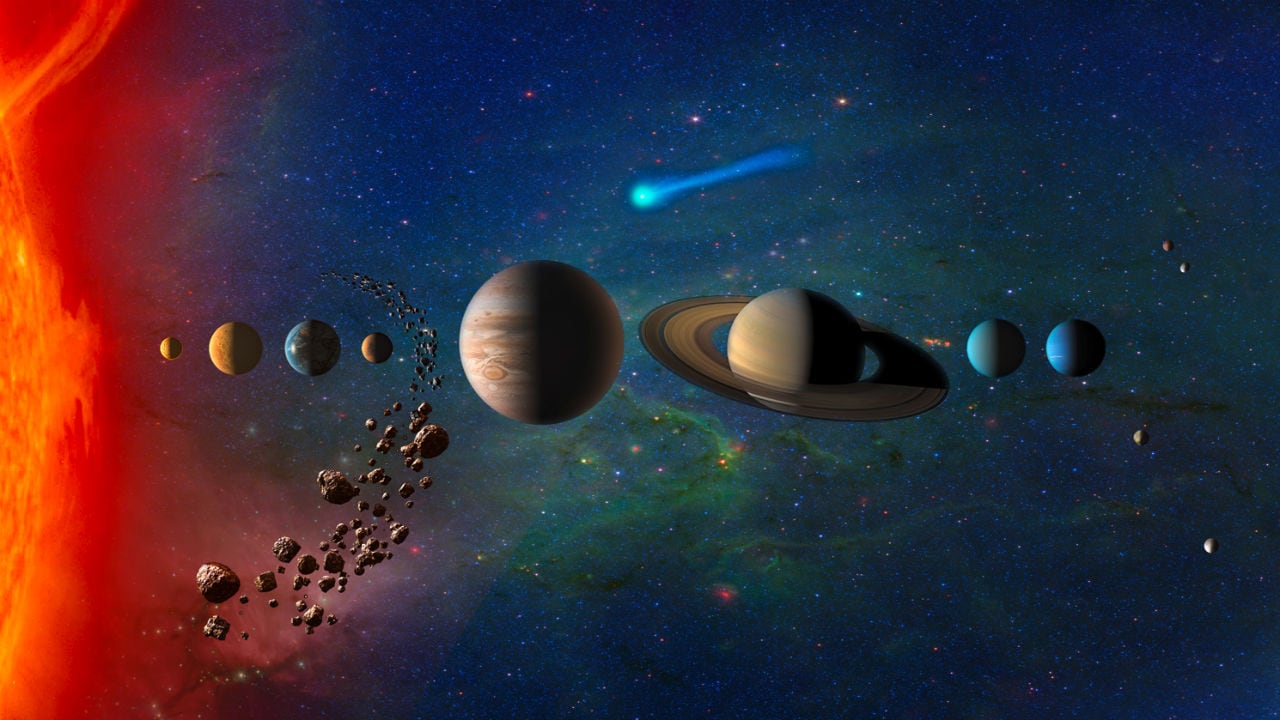
Representational image. NASA.[/caption]According to a statement released by the University of Hawaii, Farfarout was also first detected in 2018 but researchers were able to pin down its orbit and hence its distance only now. Farfarout’s current distance from the Sun is 132 astronomical units (au), where 1 au is the distance between the Earth and Sun.It is to be mentioned here that Pluto is only 34 au away from the Sun, making Farfarout four times distant from the Sun. it was discovered at Subaru 8-meter telescope located atop Maunakea in Hawaii. As per the statement, the planetoid will be officially given a name once studies are conducted in the years to come to better understand its orbit.As far as it is understood now, the object has a “very elongated orbit” thus taking it to 175 au when it is the farthest away. Also, the orbit goes inside the orbit of Neptune, when it is closest to the Sun. This is around 27 au away. One revolution for Farfarout will take about a thousand years.The shape and elongation of its orbit has to deal with the forces it experiences while crossing by Neptune. Tholen said, “Because of this long orbital period, [Farfarout] moves very slowly across the sky, requiring several years of observations to precisely determine its trajectory.”Scientists think an object is an ice-rich object and quite small in size. It is believed to one of the smaller dwarf planets with a size of 400 km across.

Careless Whispers: Scientists discover that plants can 'talk' to each other using smells
Life on Mars? European Space Agency’s Orbiter discovers ice water deposits at equator
Microsoft briefly overtakes Apple as the most valuable company, Apple back on top again
Even NASA is facing a tough time, starts layoffs following major budget cuts
ISRO, NASA's NISAR satellite to get ready by Jan-end, will monitor Earth's snow-covered regions