


Relax, asteroid 2006 QQ23 won't hit us, but it will perform a flyby on 10 August
QQ23 is a near-earth asteroid with a diameter of 568 metres and will pass within 7.5 mn km of the planet.

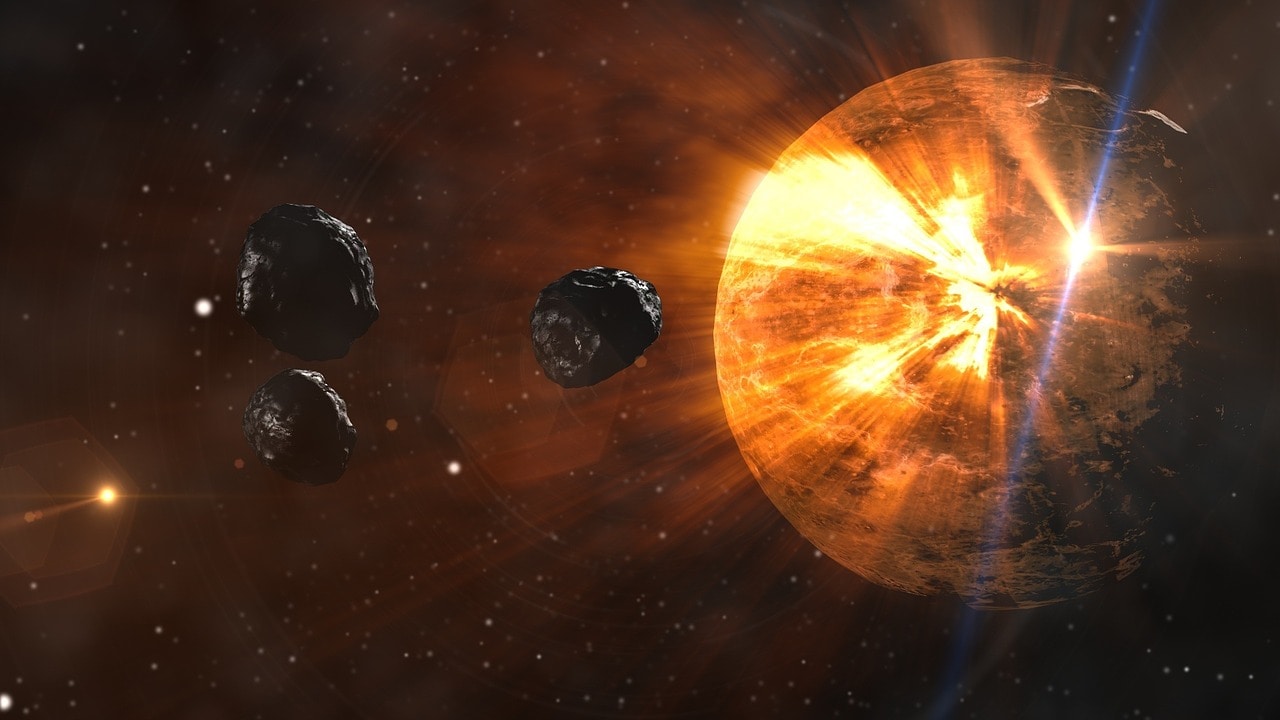
Representational image[/caption]The asteroid is categorized under Atens which means that it is a near-earth asteroid with a semi-major axes that is smaller than Earth's. It has a diameter of 568 meter, which is taller than many skyscrapers. It is much bigger than the Chelyabinsk meteor that entered Russian airspace in 2013 and blew up in the atmosphere with a force of a small nuclear bomb.QQ23 was first was observed on 21 August 2006.A NEO is a comet, asteroid or any small Solar System body whose orbit brings it in close proximity with Earth. If a NEO's orbit crosses the Earth's, and the object is larger than 140 meters across, it is considered a potentially hazardous object (PHO). NASA tracks these NEOs and maintains a database.Over 19,000 near-earth asteroids have been mapped and studied by the Centre as of 2019, according to a report. NASA characterizes these asteroids using optical and radio telescopes to find out their size, shape, rotation, composition and trajectory.

Careless Whispers: Scientists discover that plants can 'talk' to each other using smells
Life on Mars? European Space Agency’s Orbiter discovers ice water deposits at equator
Microsoft briefly overtakes Apple as the most valuable company, Apple back on top again
Even NASA is facing a tough time, starts layoffs following major budget cuts
ISRO, NASA's NISAR satellite to get ready by Jan-end, will monitor Earth's snow-covered regions