
Advertisement


Sections
Another scientist is editing genes in human embryos, but ethically this time
So far, the Columbia University scientist has allowed modified embryos to live no longer than one day.

Last year, a Chinese researcher stunned the world by announcing his joy and success with editing human genes in tiny human embryos.The objective of this research is to give the human babies resistance to HIV, which received massive criticism from the research community since there are far safer and more effective ways to do that than an unapproved gene editing experiment.A scientist in New York appears to be working on something very similar – modifying humans embryos to prevent the child from getting inherited or genetic diseases, according to an NPR report.While the Columbia University scientist, Dr Dieter Egli, isn't creating any genetically-modified babies or implanting these gene-edited embryos into mothers, he admits that the ultimate goal of his future research is probably just that.Egli is a developmental biologist currently working on genetically-modified embryos "for research purposes only." He wants to find our whether CRISPR gene editing technology is a safe way to repair mutations in embryos. Such mutations would otherwise manifest as a genetic or congenital disorder and be inherited by all the generations that follow.[caption id="attachment_6029121" align="alignnone" width="1280"]![Dieter Egli at work. Image credit: Rob Stein/NPR]() Dieter Egli at work. Image credit: Rob Stein/NPR[/caption]So far, the longest Egli claims to have allowed a genetically-modified embryo to live is one day."Right now we are not trying to make babies. None of these cells will go into the womb of a person," he says.Egli's research is focussed on fixing a genetic defect called retinitis pigmentosa, an inherited form of blindness, in embryos. If it works, people with the genetic illness would be able to have biological children of their own with normal eyesight.Unlike He Jiankui's study in China, Egli's research is overseen by a panel of scientists and bioethicists at Columbia in advance of his experiments.Still, experts have expressed concerns and criticism for the basic research that Egli and his team are working on.[caption id="attachment_5624551" align="alignnone" width="1280"]
Dieter Egli at work. Image credit: Rob Stein/NPR[/caption]So far, the longest Egli claims to have allowed a genetically-modified embryo to live is one day."Right now we are not trying to make babies. None of these cells will go into the womb of a person," he says.Egli's research is focussed on fixing a genetic defect called retinitis pigmentosa, an inherited form of blindness, in embryos. If it works, people with the genetic illness would be able to have biological children of their own with normal eyesight.Unlike He Jiankui's study in China, Egli's research is overseen by a panel of scientists and bioethicists at Columbia in advance of his experiments.Still, experts have expressed concerns and criticism for the basic research that Egli and his team are working on.[caption id="attachment_5624551" align="alignnone" width="1280"]![He Jiankui during an interview at his laboratory in Shenzhen in China. AP]() He Jiankui during an interview at his laboratory in Shenzhen in China. AP[/caption]"If we've learned anything from what's happened in China, it's that the urge to race ahead pushes science to shoot first and ask questions later," J Benjamin Hurlbut, an associate professor of biology and society at Arizona State University, told NPR. "But this is a domain where we should be asking questions first. And maybe never shooting. What's the rush?"[caption id="attachment_5624541" align="alignnone" width="1280"]
He Jiankui during an interview at his laboratory in Shenzhen in China. AP[/caption]"If we've learned anything from what's happened in China, it's that the urge to race ahead pushes science to shoot first and ask questions later," J Benjamin Hurlbut, an associate professor of biology and society at Arizona State University, told NPR. "But this is a domain where we should be asking questions first. And maybe never shooting. What's the rush?"[caption id="attachment_5624541" align="alignnone" width="1280"]![An image of the IVF procedure used in the gene-editing experiment. AP]() An image of the IVF procedure used in the gene-editing experiment. AP[/caption]"We don’t need to be mucking around with the genes of future children," Marcy Darnovsky, human biotechnology expert, told NPR. "This could open the door to a world where people who were born genetically modified are thought to be superior to others, and we would have a society of people who are considered to be genetic haves and genetic have-nots."And perhaps that’s exactly right. But, since CRISPR can't be uninvented now, it may serve us well to look into the benefits that the technology can offer people without causing any harm – responsibly.Based on the report, it looks like that’s exactly what Egli is trying to do.
An image of the IVF procedure used in the gene-editing experiment. AP[/caption]"We don’t need to be mucking around with the genes of future children," Marcy Darnovsky, human biotechnology expert, told NPR. "This could open the door to a world where people who were born genetically modified are thought to be superior to others, and we would have a society of people who are considered to be genetic haves and genetic have-nots."And perhaps that’s exactly right. But, since CRISPR can't be uninvented now, it may serve us well to look into the benefits that the technology can offer people without causing any harm – responsibly.Based on the report, it looks like that’s exactly what Egli is trying to do.
 Dieter Egli at work. Image credit: Rob Stein/NPR[/caption]So far, the longest Egli claims to have allowed a genetically-modified embryo to live is one day."Right now we are not trying to make babies. None of these cells will go into the womb of a person," he says.Egli's research is focussed on fixing a genetic defect called retinitis pigmentosa, an inherited form of blindness, in embryos. If it works, people with the genetic illness would be able to have biological children of their own with normal eyesight.Unlike He Jiankui's study in China, Egli's research is overseen by a panel of scientists and bioethicists at Columbia in advance of his experiments.Still, experts have expressed concerns and criticism for the basic research that Egli and his team are working on.[caption id="attachment_5624551" align="alignnone" width="1280"]
 He Jiankui during an interview at his laboratory in Shenzhen in China. AP[/caption]"If we've learned anything from what's happened in China, it's that the urge to race ahead pushes science to shoot first and ask questions later," J Benjamin Hurlbut, an associate professor of biology and society at Arizona State University, told NPR. "But this is a domain where we should be asking questions first. And maybe never shooting. What's the rush?"[caption id="attachment_5624541" align="alignnone" width="1280"]
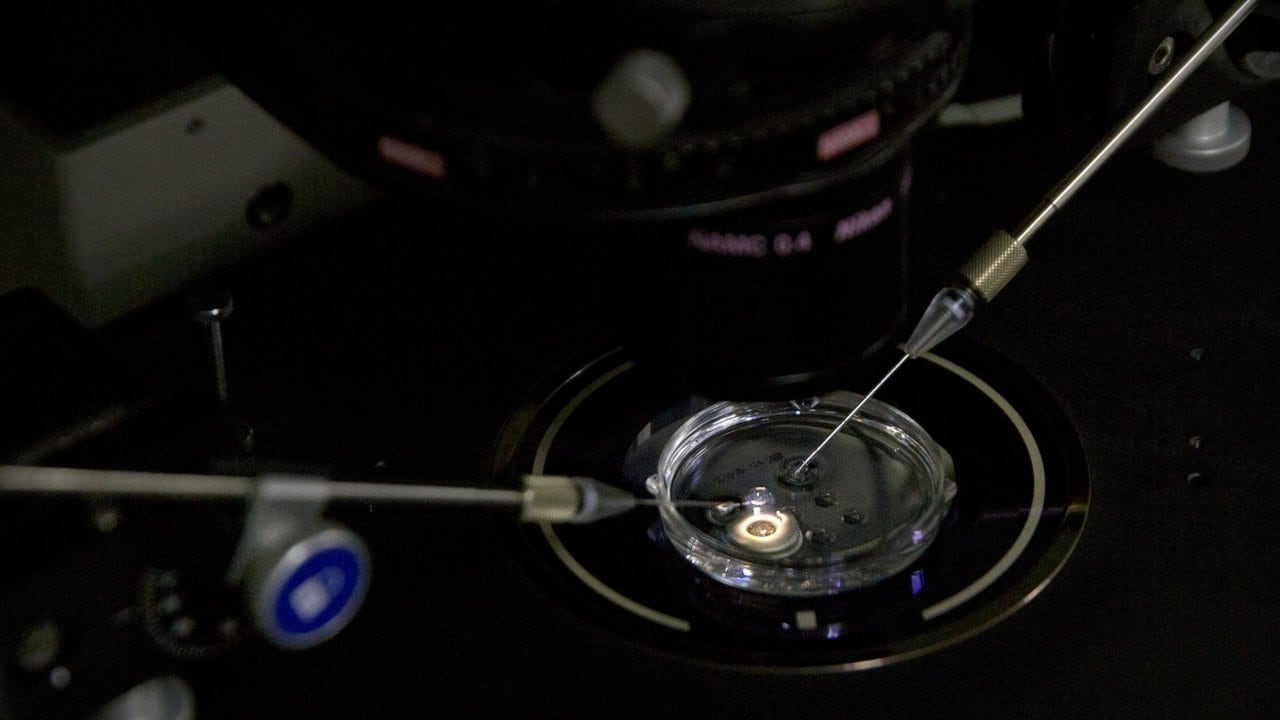 An image of the IVF procedure used in the gene-editing experiment. AP[/caption]"We don’t need to be mucking around with the genes of future children," Marcy Darnovsky, human biotechnology expert, told NPR. "This could open the door to a world where people who were born genetically modified are thought to be superior to others, and we would have a society of people who are considered to be genetic haves and genetic have-nots."And perhaps that’s exactly right. But, since CRISPR can't be uninvented now, it may serve us well to look into the benefits that the technology can offer people without causing any harm – responsibly.Based on the report, it looks like that’s exactly what Egli is trying to do.
First Published:Feb 05, 2019, 13:44:27 IST
Advertisement
Advertisement

Careless Whispers: Scientists discover that plants can 'talk' to each other using smells
Japanese scientists have recorded a video that shows plants, in certain conditions, communicate with each other using mists that carry smells. The discovery, reveals that plants release a fine mist of airborne compounds, to warn nearby plants of potential dangers
Life on Mars? European Space Agency’s Orbiter discovers ice water deposits at equator
European Space Agency's Mars Express Orbiter has identified massive ice and ice water deposits beneath the surface of Mars. The Mars Express orbiter was also the first to confirmed the presence of ice on Mars in 2004
Microsoft briefly overtakes Apple as the most valuable company, Apple back on top again
At its peak during the session, Microsoft's value reached $2.903 trillion, with a 2% surge. As of writing this article, Apple closed at $2.89 trillion, whereas Microsoft closed at $2.86 trillion
Even NASA is facing a tough time, starts layoffs following major budget cuts
NASA is facing some massive budget cuts, because of which, it has been forced to postpone some upcoming missions. NASA's Jet Propulsion Laboratory has been hit hard by recent federal budget cuts, resulting in the layoff of 100 contractors last week
ISRO, NASA's NISAR satellite to get ready by Jan-end, will monitor Earth's snow-covered regions
The NISAR satellite which has been developed jointly ISRO and NASA, should be ready for launch by the end of January 2024. The collaboration between NASA and ISRO on NISAR is the first time the two agencies have cooperated on hardware development for an Earth-observing mission
Advertisement
Advertisement