


Ancient micrometeoroids carried stardust, water to asteroid 4 Vesta; could have done same for Earth, say scientists
The stardust in asteroid Vesta holds a unique record of ancient galactic material that was delivered to a celestial body far from Earth.

A new study says that much like 'stardust' grains that arrived on Earth inside primitive meteorites, such grains were also delivered to another planet-like body, asteroid 4 Vesta, by micrometeoroids that also carried water.
The results of the study, conducted by researchers from New Washington in St Louis was published in the journal Geochima et Cosmochimica Acta.
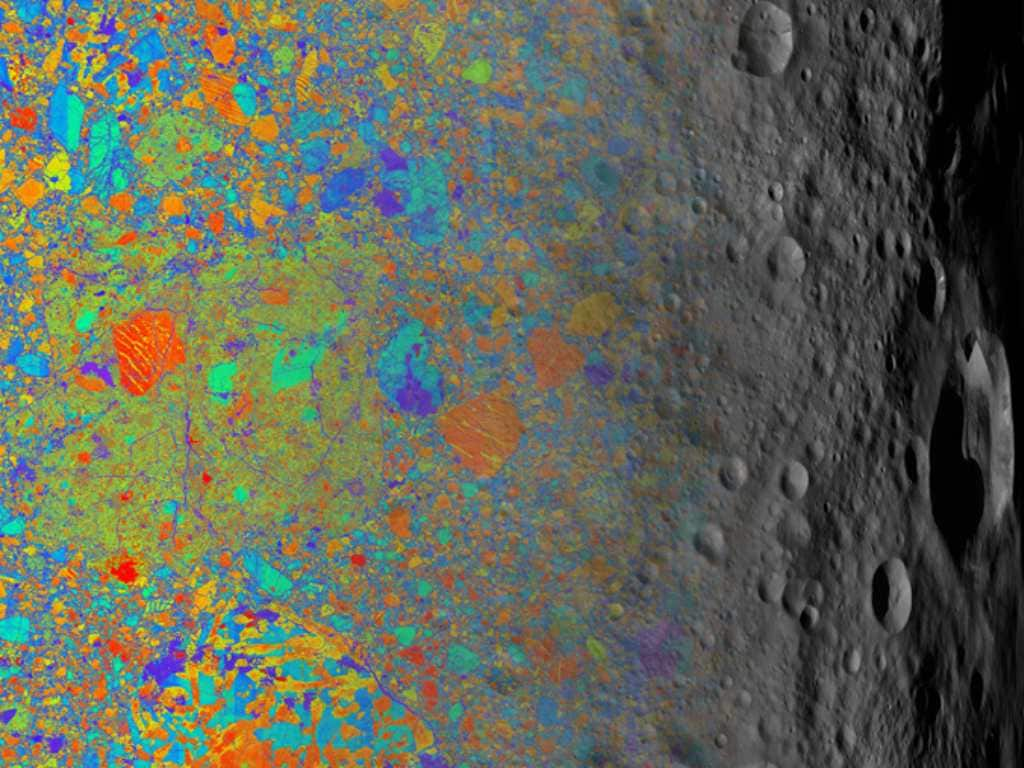
Researchers found presolar grains in the Kapoeta meteorite, a piece of the surface of asteroid Vesta. Image Credit: Ogliore Lab[/caption]Liu, along with Lionel Vacher and Ryan Ogilore studied samples of the Kapoeta meteorite which fell to Earth in 1942 in South Sudan during World War II.
According to a report by Washington University in St Louis' website The Source, the research team focused on small, dark inclusions in Kapoeta that seemed out of place.
“They look completely different from surrounding material,” Liu said, adding that the material turned out to be microscopic meteoroids, less than 100 microns across which is smaller than the thickness of a human hair.
 More from Science
Using a mass-spectrometer microscope, Liu was able to detect the stardust, which has a very different isotopic composition from material that was formed within the solar system.
According to researchers, the stardust in asteroid Vesta holds a unique record of ancient galactic material that was delivered to a celestial body far from Earth.
Vacher and Ogliore studied the chemical make-up of the micrometeoroids and found minerals and textures that were linked to interactions between rock and water from melted ice, the report added.
This led the research team to theorise on how water got on Earth. Speaking about it Vacher said that the research shows that one can transport small micrometeoroids that contain ice to dry bodies that formed without water.
A report in Universe Today mentions that while ancient record of the impact of these micrometeoroids has been erased by weather and tectonic shift, the record from Vesta may help explain how water was delivered to Earth.
“If icy micrometeoroids delivered water to the inner solar system when the Earth was still forming, this could be one way that the Earth ended up with enough water to support life,” Ryan Ogliore, assistant professor of physics and co-author of the paper said.

Careless Whispers: Scientists discover that plants can 'talk' to each other using smells
Life on Mars? European Space Agency’s Orbiter discovers ice water deposits at equator
Microsoft briefly overtakes Apple as the most valuable company, Apple back on top again
Even NASA is facing a tough time, starts layoffs following major budget cuts
ISRO, NASA's NISAR satellite to get ready by Jan-end, will monitor Earth's snow-covered regions