


After first test was cut short, NASA considers firing up its moon rocket again
All four engines fired for barely a minute, rather than the intended eight minutes, on the test stand at NASA’s Stennis Space Center in Mississippi.

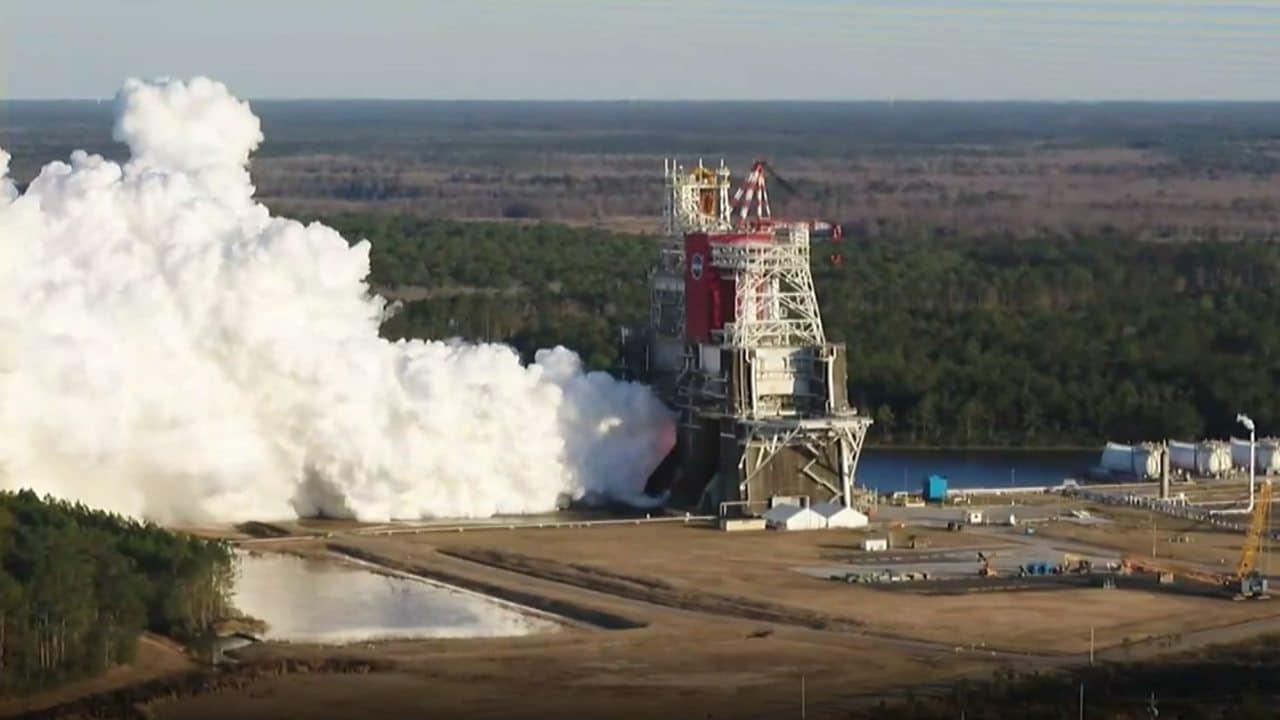
The core stage for the first flight of NASA’s Space Launch System rocket is seen in the B-2 Test Stand during a hot fire test Jan. 16, 2021, at NASA’s Stennis Space Center near Bay St. Louis, Mississippi. Image Credits: NASA Television[/caption]All four engines fired for barely a minute, rather than the intended eight minutes, on the test stand at NASA’s Stennis Space Center in Mississippi. The countdown rehearsal for the 65-meter core stage — made by Boeing — included the liquid hydrogen and oxygen tanks, as well as the all necessary computers and electronics.On Tuesday, NASA attributed the automatic shutdown to the strict test limits meant to protect the core stage so it can be used on the first Artemis flight. The hydraulic system for one engine exceeded safety parameters, officials said, and flight computers shut everything down 67 seconds into the ignition.NASA said it can adjust the test limits if a second test is deemed necessary, to prevent another premature shutdown. Engineers will continue to analyze the data, as managers debate the pros and cons of proceeding with a second test firing at Stennis or shipping the rocket straight to Florida’s Kennedy Space Center for launch preparations. Some of that Kennedy work might be able to be streamlined, Lueders said.This core stage can be loaded with super-cold fuel no more than nine times, NASA Administrator Jim Bridenstine told reporters Tuesday evening. A second full-blown test firing would reduce the remaining number of fill-ups.The Artemis program is working to put astronauts back on the moon by 2024, a deadline set by the Trump administration. It’s uncertain how the incoming White House will approach that timeline.In its annual report Tuesday, the Aerospace Safety Advisory Panel urged NASA to develop a realistic schedule for its Artemis moon program and called into question the 2024 date for returning astronauts to the lunar surface.On the eve of his departure from NASA, Bridenstine, a former Republican congressman from Oklahoma, stressed that key programs like Artemis need to encompass multiple administrations, decades and even generations. It’s crucial, he said, that “we’ve got buy-in and support from all of America and members of Congress on both sides of the aisle.”

Careless Whispers: Scientists discover that plants can 'talk' to each other using smells
Life on Mars? European Space Agency’s Orbiter discovers ice water deposits at equator
Microsoft briefly overtakes Apple as the most valuable company, Apple back on top again
Even NASA is facing a tough time, starts layoffs following major budget cuts
ISRO, NASA's NISAR satellite to get ready by Jan-end, will monitor Earth's snow-covered regions