
Advertisement


Sections
Zero-MDR: Is India pioneering a global business model for digital payments?
Historically, digital payments around the world have been driven by the American model defined by card associations.

In the past few months, a lot has been debated about the move to ZeroMDR for RUPAY and UPI payments. People in the industry have to think out of the box to figure out a viable business model for payment acceptance. The government also has to play a key role in squaring the business model for all players and this will be key to a successful and smooth transition for the country.![Representational image. Image: Tech2]()
The Journey of Digital Payments
Historically, digital payments around the world have been driven by the American model defined by the card associations, characterised by:● Merchant Discount Rate (what the merchant pays)● Issuer interchange (what the credit-card issuing bank makes)● Switching Fees (what Visa or MasterCard makes for providing the guarantee of settlement to the merchant)Gradually the ATM card evolved into the debit card and was introduced as a payment instrument in the US in the early 1990s. In the late 1990s, the internet as a medium of commerce and bill payments created a new opportunity and the US payment associations figured out a way to allow cards to be used online.Fast forward to 2010, the last major innovation from the developed markets came in the form of the Mobile POS (Point of Sale) revolution, allowing card payments to be accepted with smartphones and low cost accessories.At around the same time, emerging markets were forced to innovate because of a few important factors:● The cost of merchant acquisition (onboarding, device/servicing costs, etc.)● Lack of access to institutional credit due to lack of credit ratingsAs such the industry stayed with cash, or had to devise models based on debit/prepaid wallets. Two other models were taking birth around the world:1) The Telco-led wallet model of mPesa which took the Kenyan market by storm.2) The Alipay and Tencent/WePay led SmartPhone + SuperApp + Static QR strategy that won the Chinese market with a deviceless model.Despite their huge success over the past 15 years, they have neither been replicable by the same companies nor have they been copied anywhere else with similar success.[caption id="attachment_6523621" align="alignnone" width="1024"]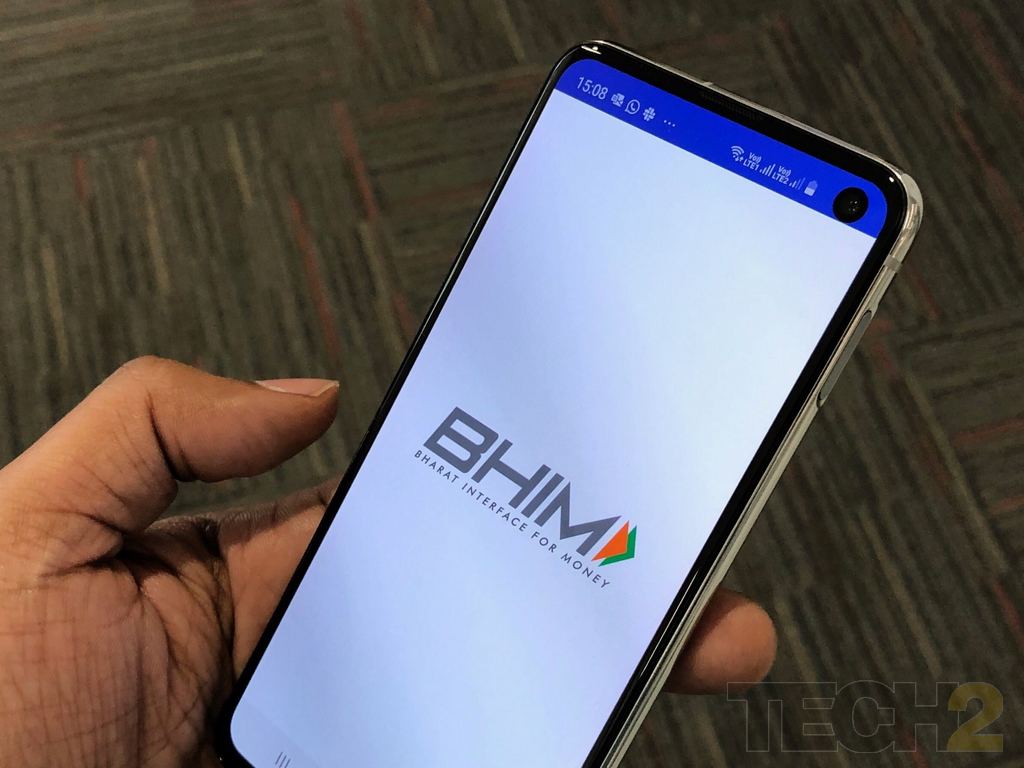
Representational image. Image: Tech2[/caption]
India: Pioneering open, interoperable real-time payments
In 2017, India launched the Unified Payment Interface (UPI). One of UPI’s biggest innovations was the Four-Party-Model that allowed for payments to be embedded and distributed via a range of applications that had nothing to do with banking and payments but had large-scale distribution. UPI was based on core-banking rails from the get-go and had three unique and core tenets:● Interoperable, near-zero cost, real-time payments● Financial institution led - but with ample opportunities for distribution via partners from other ecosystems, notably mobile/Internet companies● Static QR code-based acceptance with the option to evolve to other methods including dynamic QR or non-QR based modelsUPI has seen an astounding growth with more than 1 Trillion transactions being processed in its 3rd year. It has been so successful in India that governments around the world are studying this model and are keen to collaborate and replicate it. While UPI’s growth has been nothing short of breathtaking, digital payments still constitute less than 10 percent of retail transactions in India.ZeroMDR — the Business Model Shift
In an attempt to further increase digital payments in India, the government has been pushing the industry to innovate in distribution and business models - urging and now mandating that MDR should go to zero. This has caused a great deal of concern amongst banks and payment service providers whose business models have, in several cases, been turned upside down. Additionally, there are significant costs associated with digital payments and infrastructure and operations.The government believes that banks should be bearing this as it reduces the overall cash management cost and increased digital deposits. However, the government is probably going to be the biggest beneficiary of digitization in the short-run and one quarter believes that the government should step in and ensure that the ecosystem remains viable.Nonetheless, it is clear that payment service providers have to get creative and it will be exciting to see how the ecosystem adapts. The new world will require solutions that solve other adjacent problems for merchants in order to make payment processing viable and attractive. There will be a few incumbents who will lose out in the short run but there’s no question that newer models will emerge and payment acceptance in India will create a new world order in the next 2-3 years, one that will be replicable around the world over the next 5-7 years. The payments industry will go through dramatic changes in the coming years and India will lead the way. The rest of the world is watching and the success of these new products, technologies and business models in India will lead to massive changes worldwide.The author is a managing partner at Prime Venture Partners.First Published:Feb 05, 2020, 13:17:01 IST
Advertisement
Advertisement

Why AI notetakers are raising serious privacy and security concerns
AI notetakers promise effortless meeting summaries, but experts warn they could expose confidential conversations, corporate secrets and personal voiceprints. As businesses increasingly adopt AI-powered meeting assistants, questions over data storage, privacy, consent and legal risks are becoming impossible to ignore
5 min read
China's low-cost AI models are changing the global AI race. Here's why Silicon Valley is worried
As Chinese firms continue to improve performance while keeping prices low, the AI race is no longer just about building the smartest model—it is increasingly becoming a battle over who can deliver the best value
2 min read
China's Kimi K3 challenges US AI leaders with frontier-level performance at lower cost
Chinese artificial intelligence startup Moonshot AI has unveiled its latest open-weight AI model, Kimi K3, with early results suggesting it could compete with some of the world's most advanced AI systems developed by leading US companies
2 min read
How did Instagram run ads promoting child abuse in India?
India has issued a notice to Meta after an investigation alleged that Instagram displayed paid advertisements promoting child sexual abuse material. MeitY ordered Meta to remove such Instagram ads and explain within seven days how they were approved
8 min read
Why has India halted WhatsApp’s username feature before launch?
India has halted WhatsApp’s planned username feature, citing concerns about cybercrime, impersonation, and law enforcement challenges. As Meta races to address security concerns, here’s why MeitY has paused the rollout, what the feature does, and how it could influence privacy and online safety in India
3 min read
Advertisement
Advertisement