


Xiaomi's weak IPO debut may spell trouble for upcoming Hong Kong tech listings
Xiaomi shares closed at HK$16.80, having touched a low of HK$16 in early trade, compared to the IPO price of HK$17 per share.

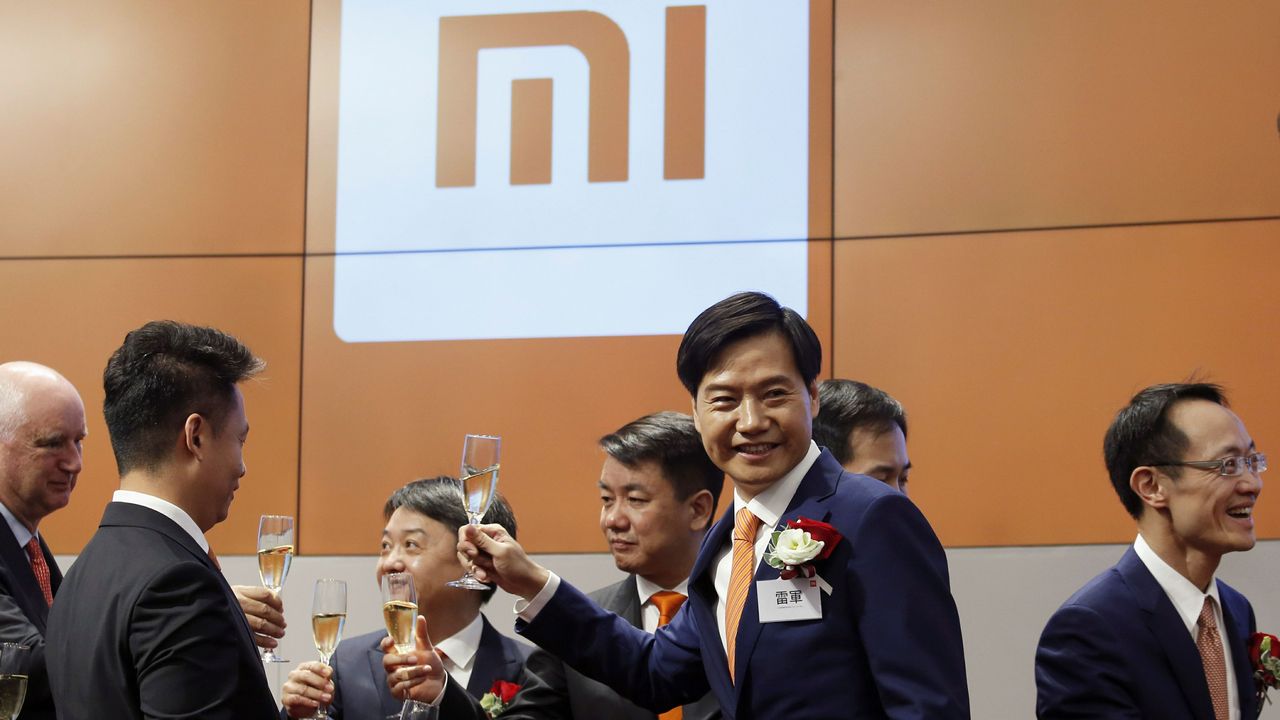
Xiaomi founder, Chairman and CEO Lei Jun (2nd from right) attends the listing of the company at the Hong Kong Exchanges in Hong Kong. Reuters[/caption]51 Credit Card, a Chinese online credit management company, raised HK$1bn ($127 million) from a Hong Kong IPO after pricing it at the bottom of an indicative price range, Thomson Reuters publication IFR reported on Monday.Asked at the listing ceremony on Monday if the low pricing of Xiaomi and some other tech firms will weigh on upcoming IPOs, Hong Kong stock exchange CEO Charles Li said it was not up to the exchange to have a view, "The market is always open. It’s open to everybody... If you don’t like the price, you can stay away."ValuationXiaomi’s IPO valued the firm, which also makes internet-connected home appliances and gadgets, at $54 billion, almost half the $100 billion it had initially hoped for and below its more recent target of at least $70 billion.At Monday’s closing price the company had a market value of $53.3 billion.Xiaomi’s IPO had been expected to raise up to $10 billion, split between a Hong Kong and a mainland offering, which was postponed last month in a surprise move.The HK$17 price valued the company at 39.6 times its forecast 2018 earnings, while iPhone maker Apple is trading at 16 times and Chinese social media and gaming giant Tencent Holdings at 36.Mo Jia, a Shanghai-based analyst with industry consultancy Canalys, said the weak debut was to be expected.“The market environment is getting conservative. Most recent floats in Hong Kong dropped below IPO prices. Xiaomi’s self-positioning as an internet company also needs some convincing,” he added.While the company makes more than 90 percent of its revenues from selling smartphones and other devices — through which it offers online services — it has pushed to be viewed as an internet-based company. Such firms tend to carry far higher valuations than device makers.“We are an internet firm,” Xiaomi’s founder and chief executive Lei Jun told the listing ceremony at the Hong Kong stock exchange.“From day one, we’ve set up a dual-class share structure. Without the innovation of Hong Kong’s capital markets, we wouldn’t get a chance to go public in Hong Kong,” he said.Xiaomi’s float was the first under the city’s new rules allowing firms to weight voting rights in favour of company founders, as part of efforts to encourage more tech groups to choose Hong Kong over New York, its arch-rival.Xiaomi sold 2.18 billion shares in its IPO, 1.4 billion of which were new shares. The deal was led by CLSA, Goldman Sachs and Morgan Stanley.The company is now the biggest smartphone vendor in India and is pushing into European markets including Spain and Russia, though it has lost share in China recently to lower-cost rivals.

Why AI notetakers are raising serious privacy and security concerns
China's low-cost AI models are changing the global AI race. Here's why Silicon Valley is worried
China's Kimi K3 challenges US AI leaders with frontier-level performance at lower cost
How did Instagram run ads promoting child abuse in India?
Why has India halted WhatsApp’s username feature before launch?