


White House probes Google after Trump accuses it of hiding fair coverage of him
Google denied any political bias, saying that its search engine is not used to set political agenda.

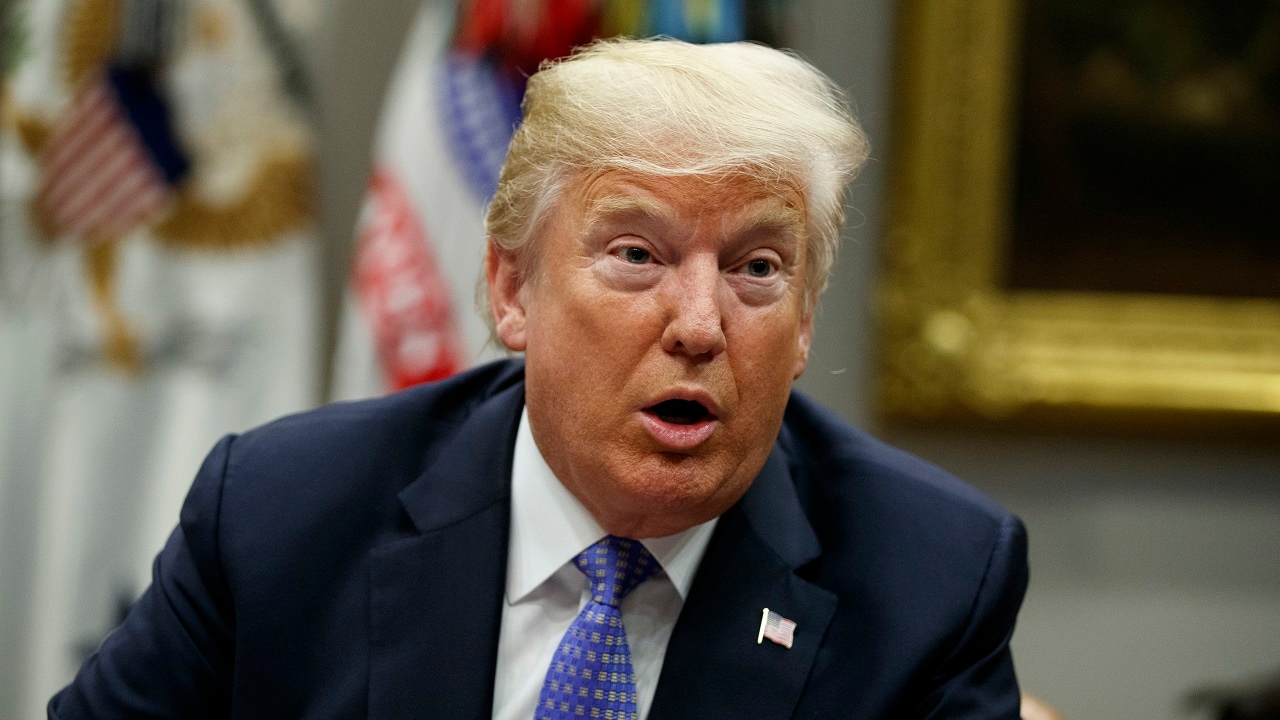
President Donald Trump. Image: AP[/caption]Google denied any political bias, saying in a statement that its search engine is “not used to set a political agenda and we don’t bias our results towards any political ideology.”Trump said in several tweets on 28 August that Google search results for “Trump News” were “rigged” against him because they showed only coverage from outlets like CNN and not conservative publications, suggesting the practice was illegal.“I think Google is really taking advantage of our people,” Trump said on 28 August in the Oval Office. “Google, and Twitter and Facebook, they are really treading on very, very troubled territory, and they have to be careful. It’s not fair to large portions of the population.”Facebook declined to comment. Twitter did not comment when asked for a response. In congressional testimony, both companies have denied engaging in partisan censorship.Neither Trump nor the White House detailed how or under what legal justification they would use to probe Google.Trump’s economic adviser, Larry Kudlow, later told reporters that the White House was “taking a look” at Google, saying the administration would do “some investigation and some analysis,” without providing further details.Earlier this summer, the new Republican chair of the Federal Trade Commission, Joseph Simons, said the agency would keep a close eye on big tech companies that dominate the internet. In a previous investigation, the FTC decided that Google was likely justified in developing a search function that harmed other companies.In June Representative Keith Ellison, a Democrat, asked the Federal Trade Commission to investigate Google’s alleged anticompetitive behaviour in the online search and advertising markets.Congressional sources cautioned that it may be difficult for Trump to find a way to probe Google about news search results, and that Congress is unlikely to pass any applicable laws.US member of Congress Ted Lieu, a Democrat, said in a tweet directed at Trump that such restrictions on Google would violate the US Constitution: “If government tried to dictate the free speech algorithms of private companies, courts would strike it down in a nanosecond.”Shares of Alphabet closed down 0.8 percent at $1,245.86.Trump's criticism of the mediaWhile the exact science behind Google searches on the internet is kept secret, its basic principles are widely known to be generated with a variety of factors measured by the company’s algorithms.The factors Google uses to determine which websites appear first in search results include how often that page is linked to on other sites, the use of keywords, the popularity and respectability of the news site, and personal browsing history of the person conducting the search.Highly trafficked and cited websites like CNN and NYTimes, two of the most Trump’s most frequent targets, often appear first in search results.Trump’s accusation of bias on the part of Google comes as social media companies have suspended accounts, banned certain users and removed content as they face pressure from the US Congress to police foreign propaganda and fake accounts aimed at disrupting American politics, including operations tied to Iran and Russia. Companies such as Facebook and Twitter have also been pressed to remove conspiracy driven content and hate speech. Tech companies have said they do not remove content for political reasons. Some Republican US lawmakers have also raised concerns about social media companies removing content from some conservatives, and have called Twitter’s chief executive to testify before a House of Representatives panel on Sept. 5.Earlier this month, Alphabet’s YouTube joined Apple Inc and Facebook in removing some content from Infowars, a website run by conspiracy theorist Alex Jones. Jones was also temporarily suspended on Twitter.

Why AI notetakers are raising serious privacy and security concerns
China's low-cost AI models are changing the global AI race. Here's why Silicon Valley is worried
China's Kimi K3 challenges US AI leaders with frontier-level performance at lower cost
How did Instagram run ads promoting child abuse in India?
Why has India halted WhatsApp’s username feature before launch?