


Vivo NEX's selfie camera pops-out while using QQ Browser and Telegram
Tencent's browser requires the camera to scan the QR code and so it prompts the device to pop-out the camera.

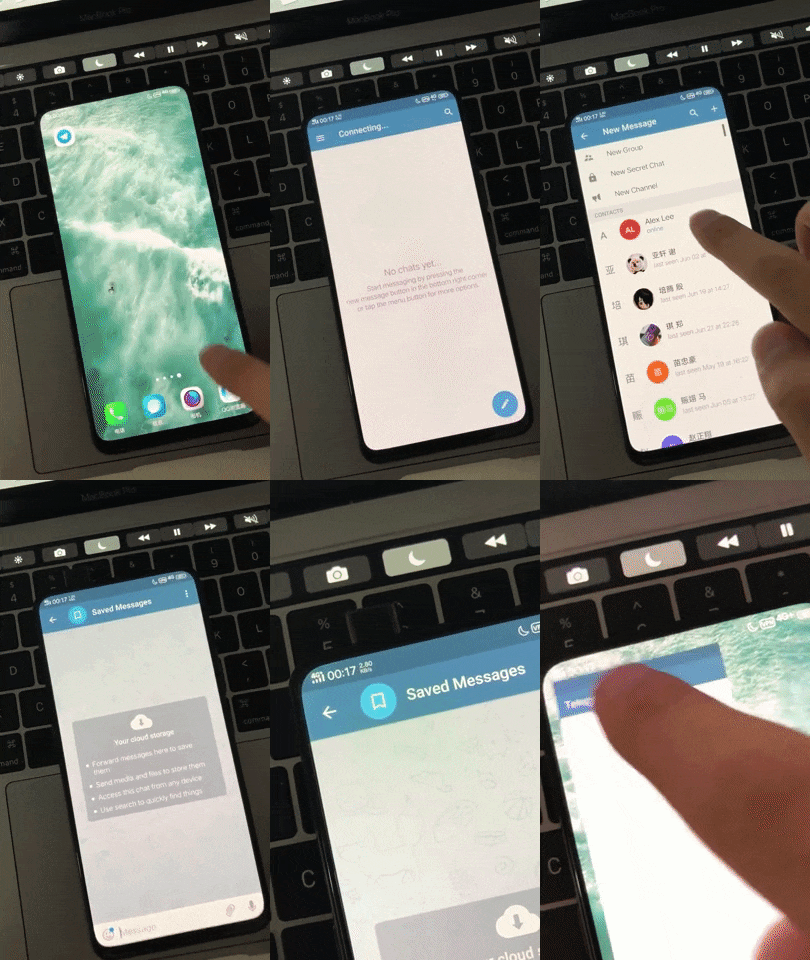
Vivo NEX pop-out camera. @Y-CHIA on Weibo[/caption]As pointed out in a report by Abacusnews a weibo user claimed that the pop-out camera was popping out several times while he was using certain apps. In a video made by the user, you can see the pop-out camera sliding out of the frame after the messaging app Telegram was opened. Creepy? There's more.Users have reported that while browsing on Tencent's QQ Browser or while using the travel booking app Ctrip, the camera pops out again. As per the report, Tencent's browser requires the camera to scan the QR code and so it prompts the device to pop-out the camera.This could mean that browsers and apps interact with cameras quite frequently, and due to the fact that there are no devices with pop-out cameras, we do not notice the interaction. Vivo has said that it is aware of the development but has not provided any further comment on the matter. Is it time we start covering our phone's front-facing camera?

Why AI notetakers are raising serious privacy and security concerns
China's low-cost AI models are changing the global AI race. Here's why Silicon Valley is worried
China's Kimi K3 challenges US AI leaders with frontier-level performance at lower cost
How did Instagram run ads promoting child abuse in India?
Why has India halted WhatsApp’s username feature before launch?