


The Big bang theory is on the mark, shows earths most powerful telescope
The research has solved cosmological problems that have haunted particle physicists and astrophysicists over the last two decades.

The moments just after the Big Bang happened more like the theory predicts, an international team of scientists using the most powerful telescope on Earth has discovered.
The research has solved cosmological problems that have haunted particle physicists and astrophysicists over the last two decades.
[caption id="attachment_851865" align="alignleft" width="380"]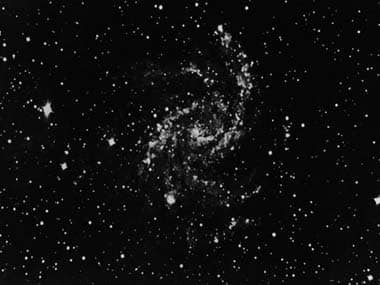 Getty images[/caption]
One of the most important problems in physics and astronomy was the inconsistency between the lithium isotopes previously observed in the oldest stars in our galaxy, which suggested levels about two hundred times more Li-6 and about three to five time less Li-7 than Big Bang nucleosynthesis predicts.
This serious problem in the understanding of the early Universe has invoked exotic physics and fruitless searches for pre-galactic production sources to reconcile the differences.
The team, led by Karin Lind of the University of Cambridge, has proven the decades-old inventory relied on lower quality observational data with analysis using several simplifications that resulted in spurious detections of lithium isotopes.
 More from News Analysis
Using observations of ancient stars with WM Keck Observatory's 10-meter telescope and state-of-the-art models of their atmospheres has shown that there is no conflict between their lithium-6 and lithium-7 content and predictions of the standard theory of Big Bang nucleosynthesis, restoring thus the order in our theory of the early universe.
Taking accurate measurements of lithium-6 and lithium-7 in old stars is extremely challenging, both from a theoretical and observational perspective, in particular for lithium-6, because being the less abundant isotope of lithium, its signature is very weak.
The required data can only be obtained with the largest telescopes on Earth such as the Keck Observatory on the summit of Mauna Kea, Hawaii equipped with the powerful High Resolution Echelle Spectrometer (HIRES) spectrograph to disperse the stellar light into its constituent colours and absorption features.
The study was published in the journal Astronomy & Astrophysics.
PTI

Why AI notetakers are raising serious privacy and security concerns
China's low-cost AI models are changing the global AI race. Here's why Silicon Valley is worried
China's Kimi K3 challenges US AI leaders with frontier-level performance at lower cost
How did Instagram run ads promoting child abuse in India?
Why has India halted WhatsApp’s username feature before launch?