
Advertisement


Sections
Tech companies need to take responsibility for the chaos they create: Apple CEO Tim Cook
if you built a chaos factory, you can't dodge the responsibility for the chaos, said Cook at his Stanford commencement speech

Apple CEO Tim Cook pulled no punches at his recent commencement speech which he delivered at the Stanford University yesterday. He called on tech companies to start taking responsibilities for the chaos they had created in society. Cook did not name any company though.Cook said that Stanford University and Silicon Valley's roots were woven together, but it was pertinent to look at the dark clouds too. Speaking about how the last four years have seen the world of innovation take a nasty turn, Cook said, "Crisis has tempered optimism; consequences have challenged idealism and reality has shaken blind faith. And yet, we are still drawn here. For good reason. Big dreams live here. As do the genius and passion to make them real," said Cook going on to say that technology not just magnified the good parts but also the bad aspects.[caption id="attachment_4410431" align="alignnone" width="1280"]![Tim Cook. Image: Reuters]() Tim Cook. Image: Reuters[/caption]"Lately it seems this industry is becoming better known for a less noble innovation — the belief you can claim credit, without accepting responsibility. We see it every day now with every data breach, every privacy violation, every blind eye turned to hate speech, fake news poisoning our national conversation, the false miracles in exchange for a single drop of your blood,” said Cook in his speech.While acknowledging the good that has come out of Silicon Valley and in Stanford's backyard, Cook also said that it was high time tech companies took responsibility for their actions."What you build and what you create defines who you are. It feels a bit crazy that anyone would have to say this: But if you built a chaos factory, you can't dodge the responsibility for the chaos," said Cook. Cook spoke about the importance of privacy and how any kind of surveillance can only lead to censorship of our own thoughts — bit by bit — effectively leading us to think less and be less innovative. He said that digital surveillance had the potential to threaten innovation and it could have stopped Silicon Valley before it ever got started.In the more light-hearted moments of his speech, Cook also mentioned how not many people know that he was in his University's (Auburn University) sailing team for all four years of his graduation. And the fact that his team managed to beat Stanford University's team every single time.Cook ended his speech on a poignant note, reminiscing about Apple founder Steve Jobs' speech at Stanford, where Jobs had said, "Your time is limited, so don't waste it living someone else's life.Adding a corollary to it, Cook said, "Your mentors may leave you prepared, but they can't leave you ready. When Steve got sick, I had hardwired my thinking to the belief that he would get better. I'd not only thought he would hold on, but I was convinced, down to my core, that he would still be guiding Apple, long after I myself was gone. Then one day, he called me over to his house and told me that it wasn't going to be that way...When he was truly gone, I learned the real visceral difference between preparation and readiness."
Tim Cook. Image: Reuters[/caption]"Lately it seems this industry is becoming better known for a less noble innovation — the belief you can claim credit, without accepting responsibility. We see it every day now with every data breach, every privacy violation, every blind eye turned to hate speech, fake news poisoning our national conversation, the false miracles in exchange for a single drop of your blood,” said Cook in his speech.While acknowledging the good that has come out of Silicon Valley and in Stanford's backyard, Cook also said that it was high time tech companies took responsibility for their actions."What you build and what you create defines who you are. It feels a bit crazy that anyone would have to say this: But if you built a chaos factory, you can't dodge the responsibility for the chaos," said Cook. Cook spoke about the importance of privacy and how any kind of surveillance can only lead to censorship of our own thoughts — bit by bit — effectively leading us to think less and be less innovative. He said that digital surveillance had the potential to threaten innovation and it could have stopped Silicon Valley before it ever got started.In the more light-hearted moments of his speech, Cook also mentioned how not many people know that he was in his University's (Auburn University) sailing team for all four years of his graduation. And the fact that his team managed to beat Stanford University's team every single time.Cook ended his speech on a poignant note, reminiscing about Apple founder Steve Jobs' speech at Stanford, where Jobs had said, "Your time is limited, so don't waste it living someone else's life.Adding a corollary to it, Cook said, "Your mentors may leave you prepared, but they can't leave you ready. When Steve got sick, I had hardwired my thinking to the belief that he would get better. I'd not only thought he would hold on, but I was convinced, down to my core, that he would still be guiding Apple, long after I myself was gone. Then one day, he called me over to his house and told me that it wasn't going to be that way...When he was truly gone, I learned the real visceral difference between preparation and readiness."
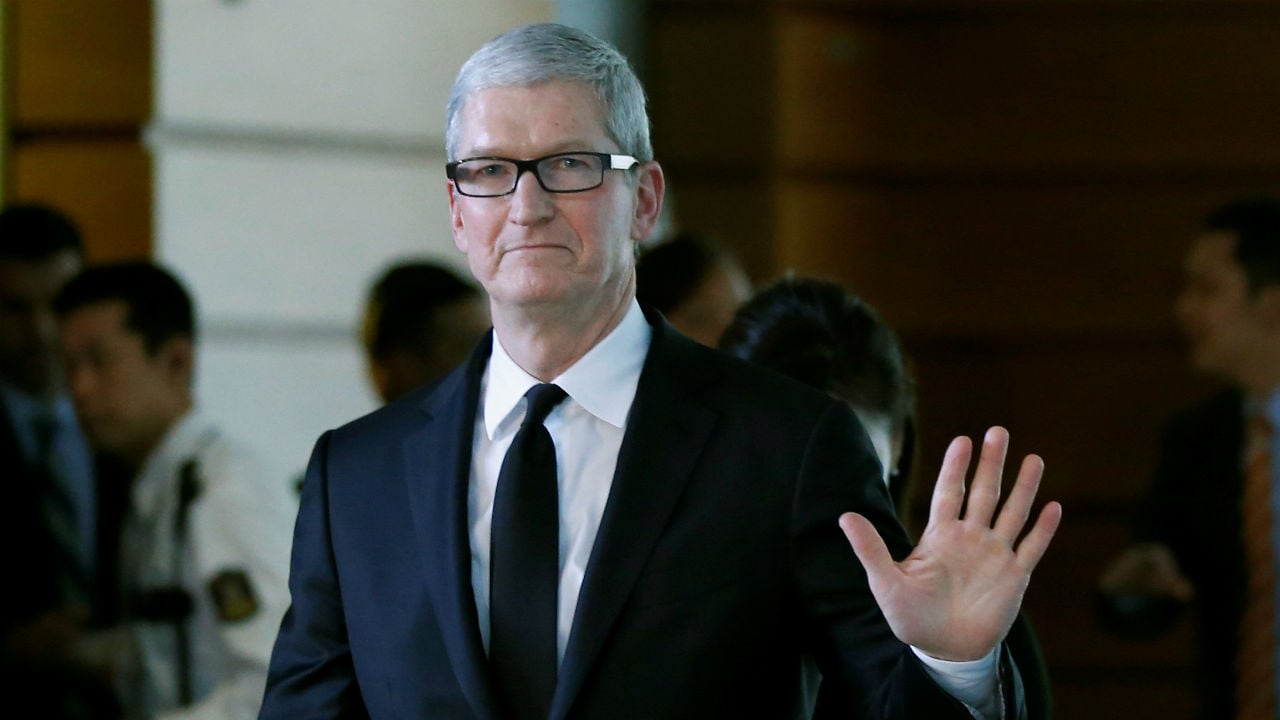 Tim Cook. Image: Reuters[/caption]"Lately it seems this industry is becoming better known for a less noble innovation — the belief you can claim credit, without accepting responsibility. We see it every day now with every data breach, every privacy violation, every blind eye turned to hate speech, fake news poisoning our national conversation, the false miracles in exchange for a single drop of your blood,” said Cook in his speech.While acknowledging the good that has come out of Silicon Valley and in Stanford's backyard, Cook also said that it was high time tech companies took responsibility for their actions."What you build and what you create defines who you are. It feels a bit crazy that anyone would have to say this: But if you built a chaos factory, you can't dodge the responsibility for the chaos," said Cook. Cook spoke about the importance of privacy and how any kind of surveillance can only lead to censorship of our own thoughts — bit by bit — effectively leading us to think less and be less innovative. He said that digital surveillance had the potential to threaten innovation and it could have stopped Silicon Valley before it ever got started.In the more light-hearted moments of his speech, Cook also mentioned how not many people know that he was in his University's (Auburn University) sailing team for all four years of his graduation. And the fact that his team managed to beat Stanford University's team every single time.Cook ended his speech on a poignant note, reminiscing about Apple founder Steve Jobs' speech at Stanford, where Jobs had said, "Your time is limited, so don't waste it living someone else's life.Adding a corollary to it, Cook said, "Your mentors may leave you prepared, but they can't leave you ready. When Steve got sick, I had hardwired my thinking to the belief that he would get better. I'd not only thought he would hold on, but I was convinced, down to my core, that he would still be guiding Apple, long after I myself was gone. Then one day, he called me over to his house and told me that it wasn't going to be that way...When he was truly gone, I learned the real visceral difference between preparation and readiness."
First Published:Jun 17, 2019, 10:17:59 IST
Advertisement
Advertisement

Why AI notetakers are raising serious privacy and security concerns
AI notetakers promise effortless meeting summaries, but experts warn they could expose confidential conversations, corporate secrets and personal voiceprints. As businesses increasingly adopt AI-powered meeting assistants, questions over data storage, privacy, consent and legal risks are becoming impossible to ignore
5 min read
China's low-cost AI models are changing the global AI race. Here's why Silicon Valley is worried
As Chinese firms continue to improve performance while keeping prices low, the AI race is no longer just about building the smartest model—it is increasingly becoming a battle over who can deliver the best value
2 min read
China's Kimi K3 challenges US AI leaders with frontier-level performance at lower cost
Chinese artificial intelligence startup Moonshot AI has unveiled its latest open-weight AI model, Kimi K3, with early results suggesting it could compete with some of the world's most advanced AI systems developed by leading US companies
2 min read
How did Instagram run ads promoting child abuse in India?
India has issued a notice to Meta after an investigation alleged that Instagram displayed paid advertisements promoting child sexual abuse material. MeitY ordered Meta to remove such Instagram ads and explain within seven days how they were approved
8 min read
Why has India halted WhatsApp’s username feature before launch?
India has halted WhatsApp’s planned username feature, citing concerns about cybercrime, impersonation, and law enforcement challenges. As Meta races to address security concerns, here’s why MeitY has paused the rollout, what the feature does, and how it could influence privacy and online safety in India
3 min read
Advertisement
Advertisement