
Advertisement


Sections
Samsung Galaxy A70s will reportedly sport the first-ever 64 MP camera sensor
Samsung Galaxy A70s is expected to be released in the second half of the year.

Samsung Galaxy A70 is barely a month old on the shelves, but if the reports are to be believed, the phone's successor is already being worked on and may be released by the second half of this year.A South Korean daily reveals that Samsung is working on a purported Galaxy A70s. The report doesn't exactly make it clear if this will be a full-fledged successor to the Galaxy A70 (review) or just a hardware refresh. However, the rumoured highlight of the phone sure sounds like the Galaxy A70s will be a major upgrade — at least in the camera department.Reportedly, the Galaxy A70s will be the first-ever smartphone to sport a 64 MP camera sensor.[caption id="attachment_6692851" align="alignnone" width="1024"]![Samsung Galaxy A70. Image: tech2/Nandini Yadav]() Samsung Galaxy A70. Image: tech2/Nandini Yadav[/caption]This will be the same 64 MP ISOCELL Bright GW1 image sensor that Samsung unveiled earlier this month. As per Samsung, this new sensor has the highest resolution in Samsung’s 0.8μm-pixel image sensor lineup and also features the “industry’s highest resolution” lens. Some reports also suggest that the Samsung Galaxy Note 10 may feature the same camera sensor.[caption id="attachment_6600931" align="alignnone" width="898"]
Samsung Galaxy A70. Image: tech2/Nandini Yadav[/caption]This will be the same 64 MP ISOCELL Bright GW1 image sensor that Samsung unveiled earlier this month. As per Samsung, this new sensor has the highest resolution in Samsung’s 0.8μm-pixel image sensor lineup and also features the “industry’s highest resolution” lens. Some reports also suggest that the Samsung Galaxy Note 10 may feature the same camera sensor.[caption id="attachment_6600931" align="alignnone" width="898"]![64 MP ISOCELL Bright GW1 image sensor]() 64 MP ISOCELL Bright GW1 image sensor[/caption]The 64 MP ISOCELL Bright GW1 uses pixel-merging Tetracell technology to churn out 16 MP images in low lighting conditions by merging four pixels into one and 64 MP images with "color filter descrambling" in well-lit conditions.There is support for real-time high dynamic range of up to 100 decibels (dB) which can give "richer hues" says Samsung. Conventional sensors have a dynamic range of about 60 dB while the human eye is considered to be around 120 dB.
64 MP ISOCELL Bright GW1 image sensor[/caption]The 64 MP ISOCELL Bright GW1 uses pixel-merging Tetracell technology to churn out 16 MP images in low lighting conditions by merging four pixels into one and 64 MP images with "color filter descrambling" in well-lit conditions.There is support for real-time high dynamic range of up to 100 decibels (dB) which can give "richer hues" says Samsung. Conventional sensors have a dynamic range of about 60 dB while the human eye is considered to be around 120 dB.
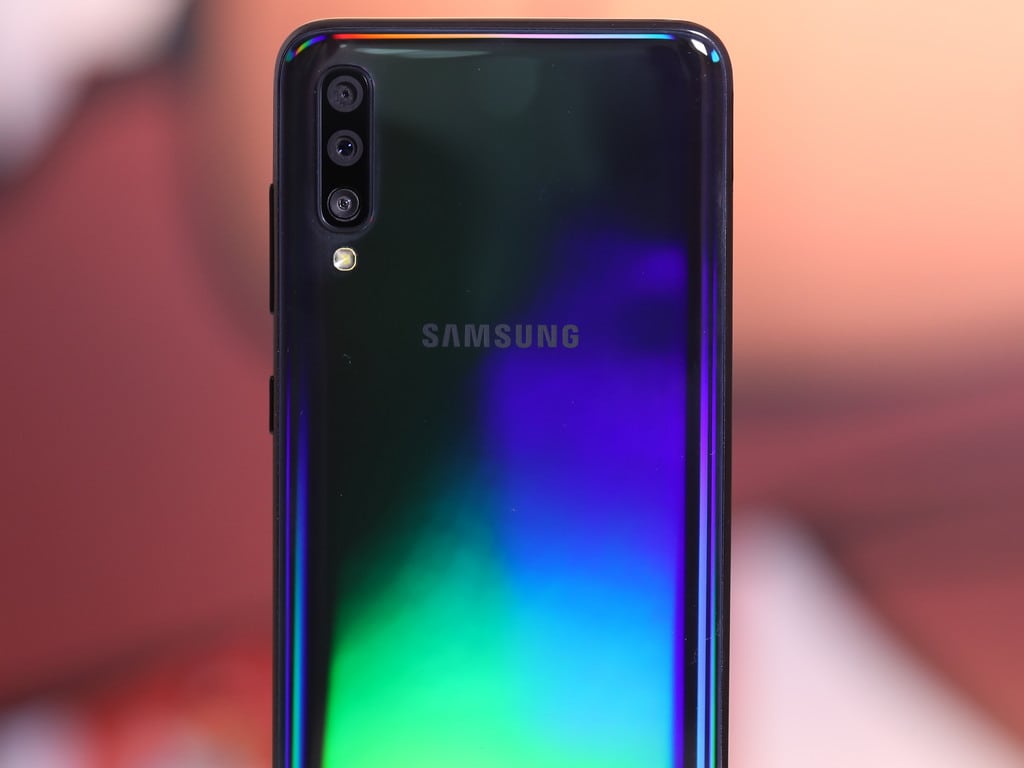 Samsung Galaxy A70. Image: tech2/Nandini Yadav[/caption]This will be the same 64 MP ISOCELL Bright GW1 image sensor that Samsung unveiled earlier this month. As per Samsung, this new sensor has the highest resolution in Samsung’s 0.8μm-pixel image sensor lineup and also features the “industry’s highest resolution” lens. Some reports also suggest that the Samsung Galaxy Note 10 may feature the same camera sensor.[caption id="attachment_6600931" align="alignnone" width="898"]
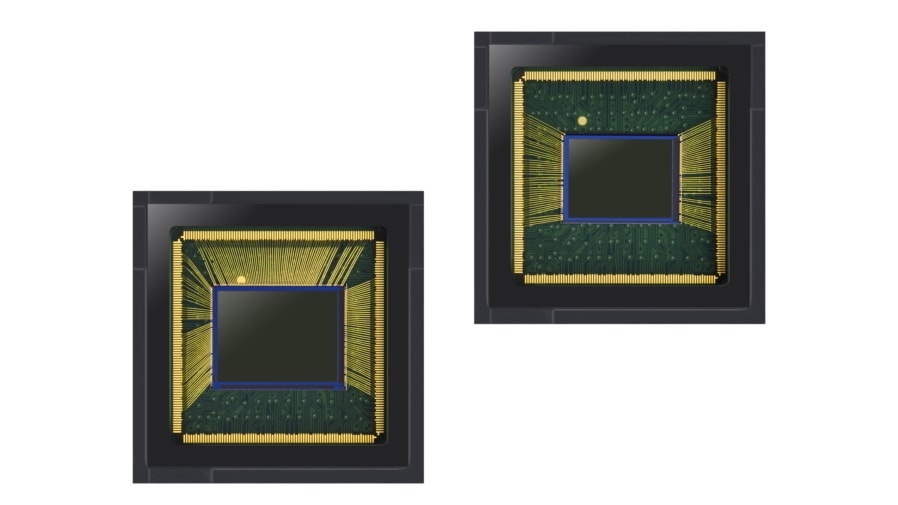 64 MP ISOCELL Bright GW1 image sensor[/caption]The 64 MP ISOCELL Bright GW1 uses pixel-merging Tetracell technology to churn out 16 MP images in low lighting conditions by merging four pixels into one and 64 MP images with "color filter descrambling" in well-lit conditions.There is support for real-time high dynamic range of up to 100 decibels (dB) which can give "richer hues" says Samsung. Conventional sensors have a dynamic range of about 60 dB while the human eye is considered to be around 120 dB.
First Published:May 24, 2019, 08:21:08 IST
Advertisement
Advertisement

Why AI notetakers are raising serious privacy and security concerns
AI notetakers promise effortless meeting summaries, but experts warn they could expose confidential conversations, corporate secrets and personal voiceprints. As businesses increasingly adopt AI-powered meeting assistants, questions over data storage, privacy, consent and legal risks are becoming impossible to ignore
5 min read
China's low-cost AI models are changing the global AI race. Here's why Silicon Valley is worried
As Chinese firms continue to improve performance while keeping prices low, the AI race is no longer just about building the smartest model—it is increasingly becoming a battle over who can deliver the best value
2 min read
China's Kimi K3 challenges US AI leaders with frontier-level performance at lower cost
Chinese artificial intelligence startup Moonshot AI has unveiled its latest open-weight AI model, Kimi K3, with early results suggesting it could compete with some of the world's most advanced AI systems developed by leading US companies
2 min read
How did Instagram run ads promoting child abuse in India?
India has issued a notice to Meta after an investigation alleged that Instagram displayed paid advertisements promoting child sexual abuse material. MeitY ordered Meta to remove such Instagram ads and explain within seven days how they were approved
8 min read
Why has India halted WhatsApp’s username feature before launch?
India has halted WhatsApp’s planned username feature, citing concerns about cybercrime, impersonation, and law enforcement challenges. As Meta races to address security concerns, here’s why MeitY has paused the rollout, what the feature does, and how it could influence privacy and online safety in India
3 min read
Advertisement
Advertisement