
Advertisement


Sections
Rocket Lab's Electron rocket successfully deploys three small satellites into Earth's orbit
Rocket Lab is also launching a rocket for Moon Express as part of the Google Lunar X Prize competition.

Rocket Lab, a US spaceflight startup, has successfully deployed its second Electron rocket into Earth's orbit from its launch facility in New Zealand on 21 January. The rocket has reportedly deployed three commercial satellites making it the first time that Electron has completed a full mission.[caption id="attachment_4313859" align="alignleft" width="380"]![Electron Rocket being prepped for launch. Twitter]() Electron rocket being prepped for launch. Twitter[/caption]The Electron rocket is specially designed for the deployment of payloads weighing between 330 and 500 pounds owing its small size of around 55 feet as compared to the behemoth that is SpaceX's Falcon 9 rocket standing tall at 180 feet.Electron is expected to become quite popular in the future for those who wish to deploy small scale satellites into Earth's orbit. As per a report by The Verge, earlier, these small satellite owners had to hitch a ride with rockets launching bigger satellites which meant that the former would not get favourable launch sites or desirable orbits.According to The Verge, Rocket Lab claims an individual launch could cost around $4.9 million, which is quite low when compared to the cost of other space agencies.“Reaching orbit on a second test flight is significant on its own, but successfully deploying customer payloads so early in a new rocket program is almost unprecedented,” Peter Beck, Rocket Lab’s CEO, said in a statement.In the first launch called "It's a Test", the rocket did not make it into orbit after reportedly some communication equipment on the ground lost contact with the rocket during the flight.According to The Verge report, this second Electron launch was originally planned for December. However, bad weather and technical difficulties forced the company to set up a launch schedule in January.The satellites in question, aboard the Electron rocket, are a Dove Earth-imaging satellite for Planet and two Lemur satellites for Spire which are responsible for tracking ships and weather said The Verge report.[caption id="attachment_4313873" align="alignnone" width="800"]
Electron rocket being prepped for launch. Twitter[/caption]The Electron rocket is specially designed for the deployment of payloads weighing between 330 and 500 pounds owing its small size of around 55 feet as compared to the behemoth that is SpaceX's Falcon 9 rocket standing tall at 180 feet.Electron is expected to become quite popular in the future for those who wish to deploy small scale satellites into Earth's orbit. As per a report by The Verge, earlier, these small satellite owners had to hitch a ride with rockets launching bigger satellites which meant that the former would not get favourable launch sites or desirable orbits.According to The Verge, Rocket Lab claims an individual launch could cost around $4.9 million, which is quite low when compared to the cost of other space agencies.“Reaching orbit on a second test flight is significant on its own, but successfully deploying customer payloads so early in a new rocket program is almost unprecedented,” Peter Beck, Rocket Lab’s CEO, said in a statement.In the first launch called "It's a Test", the rocket did not make it into orbit after reportedly some communication equipment on the ground lost contact with the rocket during the flight.According to The Verge report, this second Electron launch was originally planned for December. However, bad weather and technical difficulties forced the company to set up a launch schedule in January.The satellites in question, aboard the Electron rocket, are a Dove Earth-imaging satellite for Planet and two Lemur satellites for Spire which are responsible for tracking ships and weather said The Verge report.[caption id="attachment_4313873" align="alignnone" width="800"]![Rocket Lab’s view from space during its second test flight. Rocket Lab]() Rocket Lab’s view from space during its second test flight. Rocket Lab[/caption]The report also said that there is supposed to be the third launch as well, but owing to the success of the second one, the third might not happen. Rocket Lab is also launching a rocket for Moon Express as part of the Google Lunar X Prize competition.It is not known as of now who will be Rocket Lab's first official customer or when it will launch next.However, according to the report Rocket Lab has five completed rockets at its disposal and it plans to launch at least 50 times a year in the near future.
Rocket Lab’s view from space during its second test flight. Rocket Lab[/caption]The report also said that there is supposed to be the third launch as well, but owing to the success of the second one, the third might not happen. Rocket Lab is also launching a rocket for Moon Express as part of the Google Lunar X Prize competition.It is not known as of now who will be Rocket Lab's first official customer or when it will launch next.However, according to the report Rocket Lab has five completed rockets at its disposal and it plans to launch at least 50 times a year in the near future.
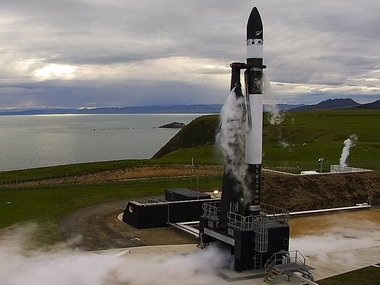 Electron rocket being prepped for launch. Twitter[/caption]The Electron rocket is specially designed for the deployment of payloads weighing between 330 and 500 pounds owing its small size of around 55 feet as compared to the behemoth that is SpaceX's Falcon 9 rocket standing tall at 180 feet.Electron is expected to become quite popular in the future for those who wish to deploy small scale satellites into Earth's orbit. As per a report by The Verge, earlier, these small satellite owners had to hitch a ride with rockets launching bigger satellites which meant that the former would not get favourable launch sites or desirable orbits.According to The Verge, Rocket Lab claims an individual launch could cost around $4.9 million, which is quite low when compared to the cost of other space agencies.“Reaching orbit on a second test flight is significant on its own, but successfully deploying customer payloads so early in a new rocket program is almost unprecedented,” Peter Beck, Rocket Lab’s CEO, said in a statement.
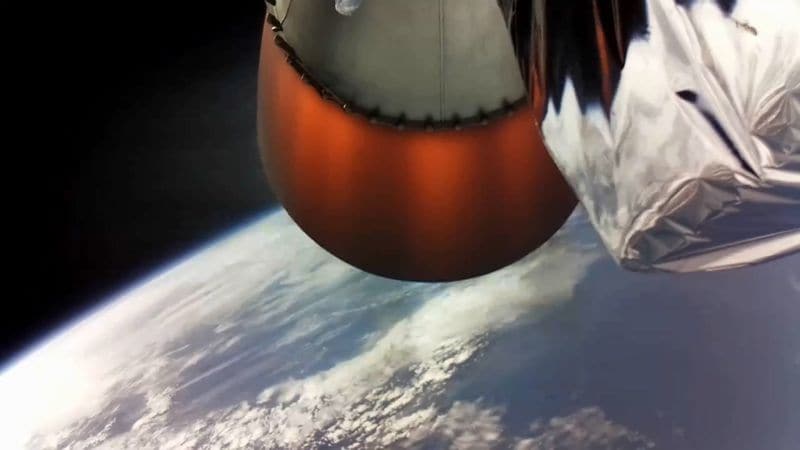 Rocket Lab’s view from space during its second test flight. Rocket Lab[/caption]The report also said that there is supposed to be the third launch as well, but owing to the success of the second one, the third might not happen. Rocket Lab is also launching a rocket for Moon Express as part of the Google Lunar X Prize competition.It is not known as of now who will be Rocket Lab's first official customer or when it will launch next.However, according to the report Rocket Lab has five completed rockets at its disposal and it plans to launch at least 50 times a year in the near future.
First Published:Jan 22, 2018, 13:22:48 IST
Advertisement
Advertisement

Why AI notetakers are raising serious privacy and security concerns
AI notetakers promise effortless meeting summaries, but experts warn they could expose confidential conversations, corporate secrets and personal voiceprints. As businesses increasingly adopt AI-powered meeting assistants, questions over data storage, privacy, consent and legal risks are becoming impossible to ignore
5 min read
China's low-cost AI models are changing the global AI race. Here's why Silicon Valley is worried
As Chinese firms continue to improve performance while keeping prices low, the AI race is no longer just about building the smartest model—it is increasingly becoming a battle over who can deliver the best value
2 min read
China's Kimi K3 challenges US AI leaders with frontier-level performance at lower cost
Chinese artificial intelligence startup Moonshot AI has unveiled its latest open-weight AI model, Kimi K3, with early results suggesting it could compete with some of the world's most advanced AI systems developed by leading US companies
2 min read
How did Instagram run ads promoting child abuse in India?
India has issued a notice to Meta after an investigation alleged that Instagram displayed paid advertisements promoting child sexual abuse material. MeitY ordered Meta to remove such Instagram ads and explain within seven days how they were approved
8 min read
Why has India halted WhatsApp’s username feature before launch?
India has halted WhatsApp’s planned username feature, citing concerns about cybercrime, impersonation, and law enforcement challenges. As Meta races to address security concerns, here’s why MeitY has paused the rollout, what the feature does, and how it could influence privacy and online safety in India
3 min read
Advertisement
Advertisement