
Advertisement


Sections
PSLV-C47/CartoSAT-3 mission: ISRO postpones planned 25 Nov launch, reasons for delay unclear
The timing of the launch remains the same, at 9.28 am IST, from the second launch pad of Satish Dhawan Space Centre.

The Indian Space Research Organisation (ISRO) has postponed the launch of an Indian CartoSAT-3 satellite and 13 other American nanosatellites that will have been a part of the launch slated on 25 November. The revised launch date has been moved down by two days, now scheduled on 27 November at 9.28 am IST.ISRO hasn't clarified why the postponement was necessary – whether an anomaly was discovered in CartoSAT-3 during pre-flight testing, in the PSLV-C47 launch vehicle, or suboptimal weather conditions.[caption id="attachment_6679951" align="alignnone" width="1024"]![The PSLV-C46 rocket lifting off from Sriharikota with RISAT-2B. Image: ISRO]() The PSLV-C46 rocket lifting off from Sriharikota with RISAT-2B. Image: ISRO[/caption]The 13 nanosatellites from the US is a part of the commercial arrangement with NewSpace India Ltd (NSIL), the new company that was set up recently under the Department of Space.
The PSLV-C46 rocket lifting off from Sriharikota with RISAT-2B. Image: ISRO[/caption]The 13 nanosatellites from the US is a part of the commercial arrangement with NewSpace India Ltd (NSIL), the new company that was set up recently under the Department of Space.![A multi-spectral image captured by Cartosat-2 of Alexandria, Egypt on 27 June 2017, a few months into becoming an operation satellite. Image: ISRO]() A multi-spectral image captured by Cartosat-2 of Alexandria, Egypt on 27 June 2017, a few months into becoming an operation satellite. Image: ISRO[/caption]Of the fourteen passengers on the PSLV-C47, thirteen are commercial nanosatellites from the US, part of a commercial arrangement between NewSpace India Limited (NSIL), Department of Space.ISRO also has two PSLV rideshare missions lined up in December 2019.Customers with satellites on the PSLV-C46 and PSLV-C47 rideshare missions include Boston-based satellite communications company Analytical Space, American data and analytics company Spire Global, Cambodian small SAR-satellite manufacturers iQPS, and Luxembourg-based Kleos Space, according to a Spaceflight report.
A multi-spectral image captured by Cartosat-2 of Alexandria, Egypt on 27 June 2017, a few months into becoming an operation satellite. Image: ISRO[/caption]Of the fourteen passengers on the PSLV-C47, thirteen are commercial nanosatellites from the US, part of a commercial arrangement between NewSpace India Limited (NSIL), Department of Space.ISRO also has two PSLV rideshare missions lined up in December 2019.Customers with satellites on the PSLV-C46 and PSLV-C47 rideshare missions include Boston-based satellite communications company Analytical Space, American data and analytics company Spire Global, Cambodian small SAR-satellite manufacturers iQPS, and Luxembourg-based Kleos Space, according to a Spaceflight report.
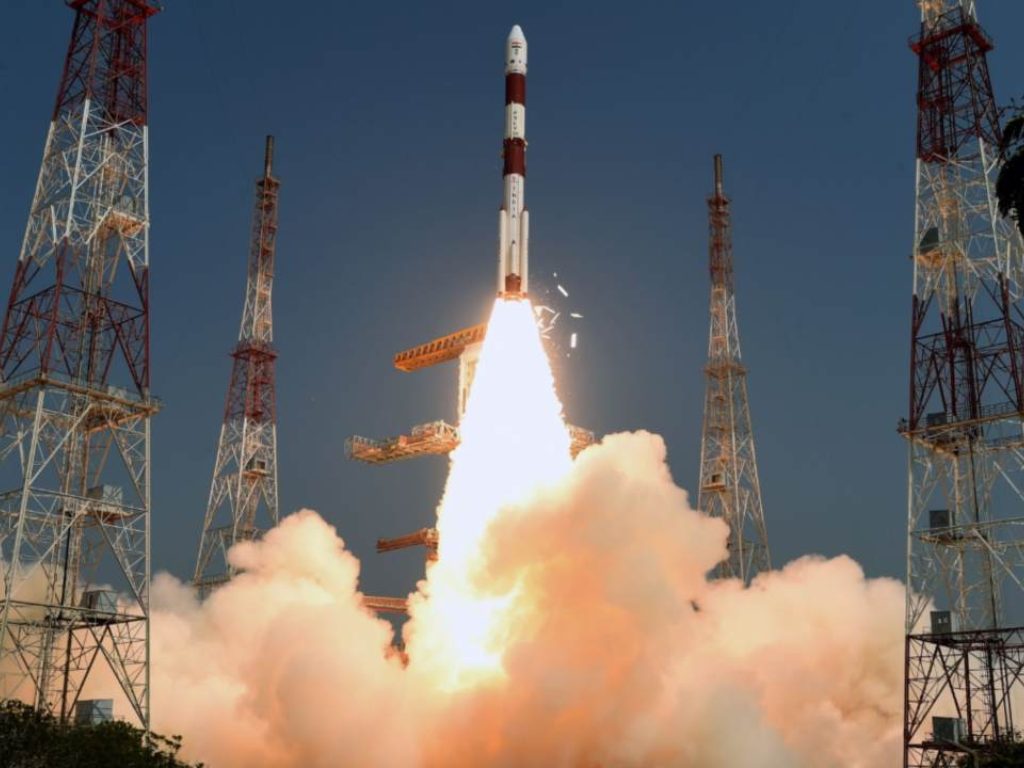 The PSLV-C46 rocket lifting off from Sriharikota with RISAT-2B. Image: ISRO[/caption]The 13 nanosatellites from the US is a part of the commercial arrangement with NewSpace India Ltd (NSIL), the new company that was set up recently under the Department of Space.
Primary payload on PSLV-C47 – India's CartoSAT-3 satellite
CartoSAT-3 is the third in a series of indigenous Earth observation satellites built by ISRO. With its highly-advanced remote sensing capability, CartoSAT-3 is a leap of advancement over its predecessor CartoSAT-2, with a wider spatial range (of view) and finer resolution (of up to 0.25 metres or 25 centimetres).If all goes to plan, the satellite will be placed at an altitude of 509 km, at an inclination of 97.5 degrees by mid-day on 25 November.CartoSAT-3 is undoubtedly one of the most advanced imaging satellites ever built by ISRO, with the capability to produce some of the most high-resolution aerial imagery in the world — certainly the highest of any ISRO satellites. It will also image across multiple spectra — panchromatic (captures all visible colours of light), multispectral (captures light within specific ranges in the electromagnetic spectrum) and hyperspectral (captures light from across the electromagnetic spectrum) earth observation mission.[caption id="attachment_3880649" align="alignnone" width="940"]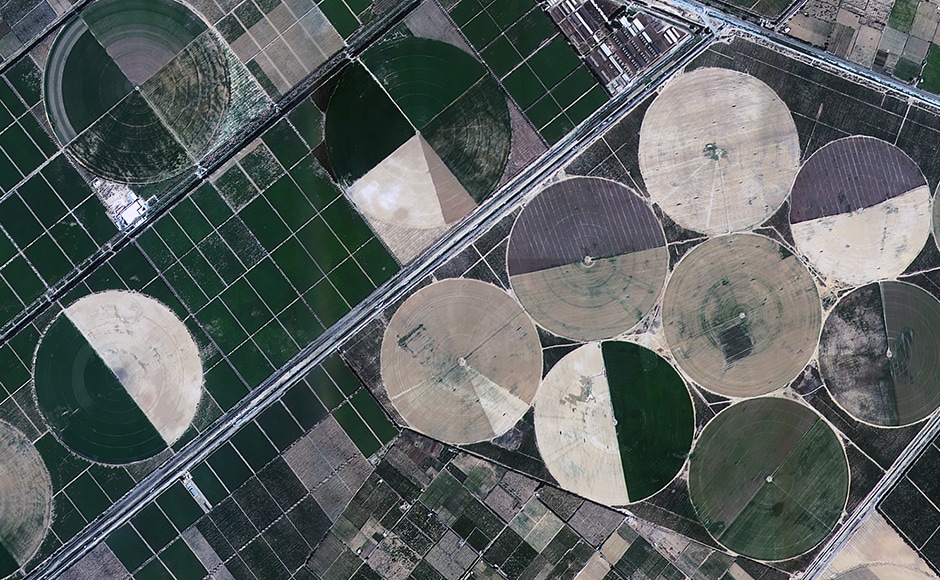 A multi-spectral image captured by Cartosat-2 of Alexandria, Egypt on 27 June 2017, a few months into becoming an operation satellite. Image: ISRO[/caption]Of the fourteen passengers on the PSLV-C47, thirteen are commercial nanosatellites from the US, part of a commercial arrangement between NewSpace India Limited (NSIL), Department of Space.ISRO also has two PSLV rideshare missions lined up in December 2019.Customers with satellites on the PSLV-C46 and PSLV-C47 rideshare missions include Boston-based satellite communications company Analytical Space, American data and analytics company Spire Global, Cambodian small SAR-satellite manufacturers iQPS, and Luxembourg-based Kleos Space, according to a Spaceflight report.
First Published:Nov 21, 2019, 15:13:30 IST
Advertisement
Advertisement

Why AI notetakers are raising serious privacy and security concerns
AI notetakers promise effortless meeting summaries, but experts warn they could expose confidential conversations, corporate secrets and personal voiceprints. As businesses increasingly adopt AI-powered meeting assistants, questions over data storage, privacy, consent and legal risks are becoming impossible to ignore
5 min read
China's low-cost AI models are changing the global AI race. Here's why Silicon Valley is worried
As Chinese firms continue to improve performance while keeping prices low, the AI race is no longer just about building the smartest model—it is increasingly becoming a battle over who can deliver the best value
2 min read
China's Kimi K3 challenges US AI leaders with frontier-level performance at lower cost
Chinese artificial intelligence startup Moonshot AI has unveiled its latest open-weight AI model, Kimi K3, with early results suggesting it could compete with some of the world's most advanced AI systems developed by leading US companies
2 min read
How did Instagram run ads promoting child abuse in India?
India has issued a notice to Meta after an investigation alleged that Instagram displayed paid advertisements promoting child sexual abuse material. MeitY ordered Meta to remove such Instagram ads and explain within seven days how they were approved
8 min read
Why has India halted WhatsApp’s username feature before launch?
India has halted WhatsApp’s planned username feature, citing concerns about cybercrime, impersonation, and law enforcement challenges. As Meta races to address security concerns, here’s why MeitY has paused the rollout, what the feature does, and how it could influence privacy and online safety in India
3 min read
Advertisement
Advertisement