
Advertisement


Sections
PepsiCo to start distribution of Aquafina water in aluminum cans from 2020
PepsiCo aims to make aims packaging either 100% recyclable, compostable or biodegradable by 2025.

PepsiCo is taking steps to become more sustainable and eco-friendly.In a recent press release, the company announced it will now offer its water brand Aquafina in aluminium cans. Aluminium is nearly 100 percent recyclable and retains its properties after the recycling process and almost 75 percent of all the aluminum ever produced is still in use in the US till today.The company also said it will stop producing its sparkling flavoured water Bubly in its plastic packaging. A canned version of the beverage is in production but it is not clear if that will be the only product from next year.LIFEWTR, its premium bottled water offering will now be packaged in 100 percent recycled polyethylene terephthalate (rPET). It is a highly recyclable plastic resin that is inexpensive, lightweight, and can be recycled multiple times. This means that the company won’t be using virgin plastic i.e. resin that has never been used or processed before and is made from petrochemicals like petrol, natural gas or crude oil.[caption id="attachment_7235061" align="alignnone" width="1280"]![The new eco-friendly packaging of the PepsiCo products. Image credit: PepsiCo]() The new eco-friendly packaging of the PepsiCo products. Image credit: PepsiCo[/caption]The company wants to move from plastic bottles to more environmentally conscious packaging.According to a press release, this move is estimated to remove ‘more than 8,000 metric tons of plastic and around 11,000 metric tons of greenhouse gas.’ While this is a start, it won’t be making much of a dent into the plastic that plagues the beverage industry. More than 35.9 percent of the plastic used today comes from packaging, and it will keep increasing if companies do not stop using plastic.These changes in PepsiCo will come in effect from next year and will be distributed in food outlets in the US. The company is also looking toward making its packaging either 100 percent recyclable, compostable or biodegradable by 2025. It also aims to use 25 percent of recycled plastic in its packaging.Naked Juice, parented by PepsiCo, has already incorporated the rPET packaging from 2009.[caption id="attachment_7235101" align="alignnone" width="1280"]
The new eco-friendly packaging of the PepsiCo products. Image credit: PepsiCo[/caption]The company wants to move from plastic bottles to more environmentally conscious packaging.According to a press release, this move is estimated to remove ‘more than 8,000 metric tons of plastic and around 11,000 metric tons of greenhouse gas.’ While this is a start, it won’t be making much of a dent into the plastic that plagues the beverage industry. More than 35.9 percent of the plastic used today comes from packaging, and it will keep increasing if companies do not stop using plastic.These changes in PepsiCo will come in effect from next year and will be distributed in food outlets in the US. The company is also looking toward making its packaging either 100 percent recyclable, compostable or biodegradable by 2025. It also aims to use 25 percent of recycled plastic in its packaging.Naked Juice, parented by PepsiCo, has already incorporated the rPET packaging from 2009.[caption id="attachment_7235101" align="alignnone" width="1280"]![Plastic takes a long time to decompose,]() Plastic takes a long time to decompose,[/caption]Plastic takes 1,000 years to decompose and even then it do not completely disappear. It breaks down to form microplastics and, according to a recent WHO report, one person consumes enough plastic, in a week, to make a credit card.The main problem in using rPET is that the bottles made are not recovered properly. This means that there aren't enough bottles that can be recycled to make these rPET bottles.PepsiCo’s competitor CocaCola has also said that it will be using rPET bottles by 2030.According to the official statement, these changes will be made in the US and not in India. The statement also does not talk about the other products in its portfolio that uses plastic packaging, like chips and aerated drinks.A cause for concern that a Twitter user pointed out is that water bottles have caps that allow them to be re-screwed and used over a longer time. With a can, there is no way to do that.This would mean that a consumer has three choices:1) to drink all the water in one go2) waste the water by throwing the can away3) carry the open can and risk spilling water everywhere.None of the options sound too appealing.
Plastic takes a long time to decompose,[/caption]Plastic takes 1,000 years to decompose and even then it do not completely disappear. It breaks down to form microplastics and, according to a recent WHO report, one person consumes enough plastic, in a week, to make a credit card.The main problem in using rPET is that the bottles made are not recovered properly. This means that there aren't enough bottles that can be recycled to make these rPET bottles.PepsiCo’s competitor CocaCola has also said that it will be using rPET bottles by 2030.According to the official statement, these changes will be made in the US and not in India. The statement also does not talk about the other products in its portfolio that uses plastic packaging, like chips and aerated drinks.A cause for concern that a Twitter user pointed out is that water bottles have caps that allow them to be re-screwed and used over a longer time. With a can, there is no way to do that.This would mean that a consumer has three choices:1) to drink all the water in one go2) waste the water by throwing the can away3) carry the open can and risk spilling water everywhere.None of the options sound too appealing.
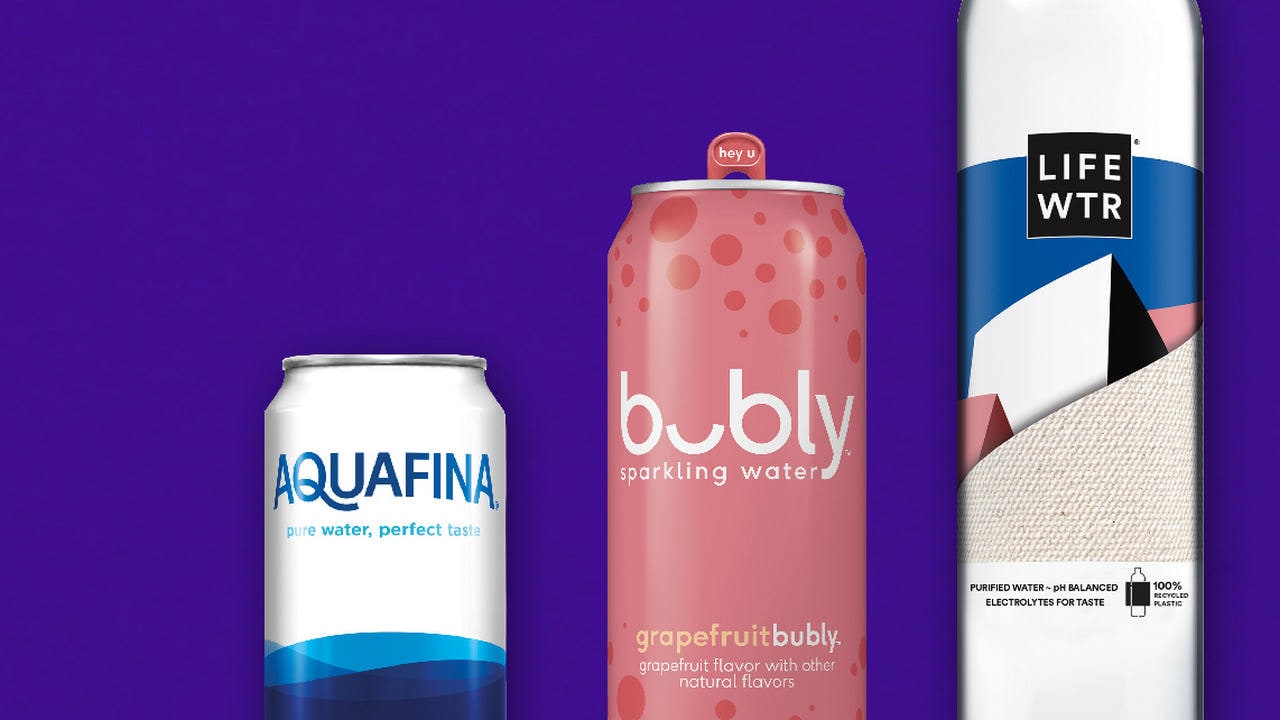 The new eco-friendly packaging of the PepsiCo products. Image credit: PepsiCo[/caption]The company wants to move from plastic bottles to more environmentally conscious packaging.According to a press release, this move is estimated to remove ‘more than 8,000 metric tons of plastic and around 11,000 metric tons of greenhouse gas.’ While this is a start, it won’t be making much of a dent into the plastic that plagues the beverage industry. More than 35.9 percent of the plastic used today comes from packaging, and it will keep increasing if companies do not stop using plastic.These changes in PepsiCo will come in effect from next year and will be distributed in food outlets in the US. The company is also looking toward making its packaging either 100 percent recyclable, compostable or biodegradable by 2025. It also aims to use 25 percent of recycled plastic in its packaging.Naked Juice, parented by PepsiCo, has already incorporated the rPET packaging from 2009.[caption id="attachment_7235101" align="alignnone" width="1280"]
 Plastic takes a long time to decompose,[/caption]Plastic takes 1,000 years to decompose and even then it do not completely disappear. It breaks down to form microplastics and, according to a recent WHO report, one person consumes enough plastic, in a week, to make a credit card.The main problem in using rPET is that the bottles made are not recovered properly. This means that there aren't enough bottles that can be recycled to make these rPET bottles.PepsiCo’s competitor CocaCola has also said that it will be using rPET bottles by 2030.According to the official statement, these changes will be made in the US and not in India. The statement also does not talk about the other products in its portfolio that uses plastic packaging, like chips and aerated drinks.A cause for concern that a Twitter user pointed out is that water bottles have caps that allow them to be re-screwed and used over a longer time. With a can, there is no way to do that.This would mean that a consumer has three choices:1) to drink all the water in one go2) waste the water by throwing the can away3) carry the open can and risk spilling water everywhere.None of the options sound too appealing.
First Published:Aug 27, 2019, 17:00:57 IST
Advertisement
Advertisement

Why AI notetakers are raising serious privacy and security concerns
AI notetakers promise effortless meeting summaries, but experts warn they could expose confidential conversations, corporate secrets and personal voiceprints. As businesses increasingly adopt AI-powered meeting assistants, questions over data storage, privacy, consent and legal risks are becoming impossible to ignore
5 min read
China's low-cost AI models are changing the global AI race. Here's why Silicon Valley is worried
As Chinese firms continue to improve performance while keeping prices low, the AI race is no longer just about building the smartest model—it is increasingly becoming a battle over who can deliver the best value
2 min read
China's Kimi K3 challenges US AI leaders with frontier-level performance at lower cost
Chinese artificial intelligence startup Moonshot AI has unveiled its latest open-weight AI model, Kimi K3, with early results suggesting it could compete with some of the world's most advanced AI systems developed by leading US companies
2 min read
How did Instagram run ads promoting child abuse in India?
India has issued a notice to Meta after an investigation alleged that Instagram displayed paid advertisements promoting child sexual abuse material. MeitY ordered Meta to remove such Instagram ads and explain within seven days how they were approved
8 min read
Why has India halted WhatsApp’s username feature before launch?
India has halted WhatsApp’s planned username feature, citing concerns about cybercrime, impersonation, and law enforcement challenges. As Meta races to address security concerns, here’s why MeitY has paused the rollout, what the feature does, and how it could influence privacy and online safety in India
3 min read
Advertisement
Advertisement