
Advertisement


Sections
Paper plane protests garner more support in Russia in an act to make establishment lift ban on Telegram
Telegram’s founder, Russian entrepreneur Pavel Durov, called for “digital resistance”

Thousands of people marched through Moscow, throwing paper planes and calling for authorities to unblock the popular Telegram instant messaging app on 30 April. Protesters chanted slogans against President Vladimir Putin as they launched the planes, a reference to the app’s logo.[caption id="attachment_4442133" align="alignleft" width="380"]![Image: Telegram, Pavel Durov's channel.]() Image: Telegram, Pavel Durov's channel.[/caption]“Putin’s regime has declared war on the internet, has declared war on free society... so we have to be here in support of Telegram,” one protester told Reuters. Russia began blocking Telegram on 16 April after the app refused to comply with a court order to grant state security services access to its users’ encrypted messages.Russia’s FSB Federal Security service has said it needs access to some of those messages for its work, that includes guarding against militant attacks.In the process of blocking the app, state watchdog Roskomnadzor also cut off access to a slew of other websites. Telegram’s founder, Russian entrepreneur Pavel Durov, called for “digital resistance” in response to the decision and promised to fund anyone developing proxies and VPNs to dodge the block.More than 12,000 people joined the march on 30 April, said White Counter, a volunteer group that counts people at protests.“Thousands of young and progressive people are currently protesting in Moscow in defense of internet freedom,” Telegram’s Durov wrote on his social media page.“This is unprecedented. I am proud to have been born in the same country as you. Your energy changes the world,” Durov wrote.Telegram has more than 200 million global users and is ranked as the world’s ninth most popular mobile messaging service. Iran’s judiciary has also banned the app to protect national security, Iranian state TV reported on 30 April.
Image: Telegram, Pavel Durov's channel.[/caption]“Putin’s regime has declared war on the internet, has declared war on free society... so we have to be here in support of Telegram,” one protester told Reuters. Russia began blocking Telegram on 16 April after the app refused to comply with a court order to grant state security services access to its users’ encrypted messages.Russia’s FSB Federal Security service has said it needs access to some of those messages for its work, that includes guarding against militant attacks.In the process of blocking the app, state watchdog Roskomnadzor also cut off access to a slew of other websites. Telegram’s founder, Russian entrepreneur Pavel Durov, called for “digital resistance” in response to the decision and promised to fund anyone developing proxies and VPNs to dodge the block.More than 12,000 people joined the march on 30 April, said White Counter, a volunteer group that counts people at protests.“Thousands of young and progressive people are currently protesting in Moscow in defense of internet freedom,” Telegram’s Durov wrote on his social media page.“This is unprecedented. I am proud to have been born in the same country as you. Your energy changes the world,” Durov wrote.Telegram has more than 200 million global users and is ranked as the world’s ninth most popular mobile messaging service. Iran’s judiciary has also banned the app to protect national security, Iranian state TV reported on 30 April.
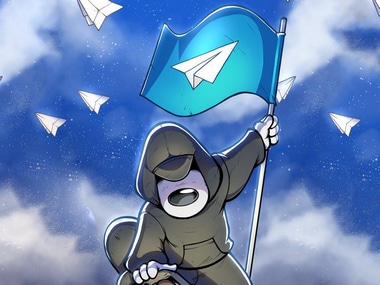 Image: Telegram, Pavel Durov's channel.[/caption]“Putin’s regime has declared war on the internet, has declared war on free society... so we have to be here in support of Telegram,” one protester told Reuters. Russia began blocking Telegram on 16 April after the app refused to comply with a court order to grant state security services access to its users’ encrypted messages.Russia’s FSB Federal Security service has said it needs access to some of those messages for its work, that includes guarding against militant attacks.In the process of blocking the app, state watchdog Roskomnadzor also cut off access to a slew of other websites. Telegram’s founder, Russian entrepreneur Pavel Durov, called for “digital resistance” in response to the decision and promised to fund anyone developing proxies and VPNs to dodge the block.More than 12,000 people joined the march on 30 April, said White Counter, a volunteer group that counts people at protests.“Thousands of young and progressive people are currently protesting in Moscow in defense of internet freedom,” Telegram’s Durov wrote on his social media page.“This is unprecedented. I am proud to have been born in the same country as you. Your energy changes the world,” Durov wrote.Telegram has more than 200 million global users and is ranked as the world’s ninth most popular mobile messaging service. Iran’s judiciary has also banned the app to protect national security, Iranian state TV reported on 30 April.
First Published:May 01, 2018, 08:31:08 IST
Advertisement
Advertisement

Why AI notetakers are raising serious privacy and security concerns
AI notetakers promise effortless meeting summaries, but experts warn they could expose confidential conversations, corporate secrets and personal voiceprints. As businesses increasingly adopt AI-powered meeting assistants, questions over data storage, privacy, consent and legal risks are becoming impossible to ignore
5 min read
China's low-cost AI models are changing the global AI race. Here's why Silicon Valley is worried
As Chinese firms continue to improve performance while keeping prices low, the AI race is no longer just about building the smartest model—it is increasingly becoming a battle over who can deliver the best value
2 min read
China's Kimi K3 challenges US AI leaders with frontier-level performance at lower cost
Chinese artificial intelligence startup Moonshot AI has unveiled its latest open-weight AI model, Kimi K3, with early results suggesting it could compete with some of the world's most advanced AI systems developed by leading US companies
2 min read
How did Instagram run ads promoting child abuse in India?
India has issued a notice to Meta after an investigation alleged that Instagram displayed paid advertisements promoting child sexual abuse material. MeitY ordered Meta to remove such Instagram ads and explain within seven days how they were approved
8 min read
Why has India halted WhatsApp’s username feature before launch?
India has halted WhatsApp’s planned username feature, citing concerns about cybercrime, impersonation, and law enforcement challenges. As Meta races to address security concerns, here’s why MeitY has paused the rollout, what the feature does, and how it could influence privacy and online safety in India
3 min read
Advertisement
Advertisement