
Advertisement


Sections
Oppo F9 Pro vs Nokia 7 Plus vs Mi A2 vs Galaxy A6 Plus vs Vivo V9: Specs battle
The Oppo F9 Pro features an updated design over the F7 and gets Oppo's fast VOOC charging standard.

Oppo today launched it's latest F-series mid-ranger in India, the Oppo F9 Pro, at a price of Rs 23,990. Though that places it right where it's predecessor, the Oppo F7 stood, the sub-Rs 25,000 segment is filled with smartphones which are all quite impressive on paper.[caption id="attachment_5013701" align="alignnone" width="1024"]![The Oppo F9 Pro has been priced at Rs 23,990. Image: Oppo India]() The Oppo F9 Pro has been priced at Rs 23,990. Image: Oppo India[/caption]Before we dive into a specifications war, let's have a look at what's new in the Oppo F9 Pro. To begin with, one of the biggest upgrades the F9 Plus brings to the Oppo F7 is on the design front. Oppo introduces new gradient colour combinations, which makes the F9 Pro look a lot like Huawei's phones, but with its own set of additions. The phone will be sold in three colours — Sunrise Red, Twilight Blue and Starry Purple.The Oppo F9 Pro also showcases what Oppo likes to call a ‘Waterdrop Screen’ design, which is basically a notch made smaller. The name has been derived from the fact that the notch on the front actually looks like a waterdrop and houses nothing but the front-facing camera. With this design, Oppo manages to achieve an impressive screen-to-body ratio of 90.8 percent and also fit in a large 6.3-inch display into a body which is just marginally larger.[caption id="attachment_5013691" align="alignnone" width="1280"]
The Oppo F9 Pro has been priced at Rs 23,990. Image: Oppo India[/caption]Before we dive into a specifications war, let's have a look at what's new in the Oppo F9 Pro. To begin with, one of the biggest upgrades the F9 Plus brings to the Oppo F7 is on the design front. Oppo introduces new gradient colour combinations, which makes the F9 Pro look a lot like Huawei's phones, but with its own set of additions. The phone will be sold in three colours — Sunrise Red, Twilight Blue and Starry Purple.The Oppo F9 Pro also showcases what Oppo likes to call a ‘Waterdrop Screen’ design, which is basically a notch made smaller. The name has been derived from the fact that the notch on the front actually looks like a waterdrop and houses nothing but the front-facing camera. With this design, Oppo manages to achieve an impressive screen-to-body ratio of 90.8 percent and also fit in a large 6.3-inch display into a body which is just marginally larger.[caption id="attachment_5013691" align="alignnone" width="1280"]![The Oppo F9 Pro goes on sale on 31 August and will be available in three colour combinations. Image: Oppo India]() The Oppo F9 Pro goes on sale on 31 August and will be available in three colour combinations. Image: Oppo India[/caption]Inside, nothing much has changed. We get an octa-core MediaTek Helio P60 SoC which is adequate, but nothing to write home about. Phones priced at a third of its price (the Realme 1) also feature the same chipset, so it does come across as a surprise that Oppo decided to stick to it.The base RAM has been increased to 6 GB, up from 4 GB, and you get 64 GB of internal storage which is expandable up to 256 GB via a microSD card. Oppo has also thrown in a beefy 3,500 mAh battery with support for its fast VOOC charging standard.Competition in the price range includes the overall performer, the Nokia 7 Plus, Oppo's direct rival, the Vivo V9, the Samsung Galaxy A6 Plus and the Xiaomi Mi A2.
The Oppo F9 Pro goes on sale on 31 August and will be available in three colour combinations. Image: Oppo India[/caption]Inside, nothing much has changed. We get an octa-core MediaTek Helio P60 SoC which is adequate, but nothing to write home about. Phones priced at a third of its price (the Realme 1) also feature the same chipset, so it does come across as a surprise that Oppo decided to stick to it.The base RAM has been increased to 6 GB, up from 4 GB, and you get 64 GB of internal storage which is expandable up to 256 GB via a microSD card. Oppo has also thrown in a beefy 3,500 mAh battery with support for its fast VOOC charging standard.Competition in the price range includes the overall performer, the Nokia 7 Plus, Oppo's direct rival, the Vivo V9, the Samsung Galaxy A6 Plus and the Xiaomi Mi A2.
While the Mi A2 and the Nokia 7 Plus offer a better processor on paper, the Oppo F9 Pro certainly has an edge over the two if selfies are all that you care about. The Galaxy A6 Plus, on the other hand, is still the only phone in the mix that offers an AMOLED display at the price making it a great buy if you watch a lot of video content.[caption id="attachment_4444195" align="alignnone" width="1280"]![The Nokia 7 Plus still seems to be the phone to beat in this segment. Image: tech2/Rehan Hooda]() The Nokia 7 Plus still seems to be the phone to beat in this segment. Image: tech2/Rehan Hooda[/caption]The Vivo V9 though does seem to lose steam and fails to make much of a dent when it comes to comparing phones in this range. But with Vivo planning to launch the Vivo V11 Pro on 6 September, the F9 Pro might have an upgraded direct rival to take on.Do hold on for our in-depth review of the smartphone though if you want to find out how it fares and whether it makes sense shelling out Rs 23,990 for the device.The Oppo F9 Pro goes on sale later this month on 31 August, exclusively on Flipkart online, and will be available through offline outlets as well. Meanwhile, you can go ahead and pre-order the phone on Flipkart right now.
The Nokia 7 Plus still seems to be the phone to beat in this segment. Image: tech2/Rehan Hooda[/caption]The Vivo V9 though does seem to lose steam and fails to make much of a dent when it comes to comparing phones in this range. But with Vivo planning to launch the Vivo V11 Pro on 6 September, the F9 Pro might have an upgraded direct rival to take on.Do hold on for our in-depth review of the smartphone though if you want to find out how it fares and whether it makes sense shelling out Rs 23,990 for the device.The Oppo F9 Pro goes on sale later this month on 31 August, exclusively on Flipkart online, and will be available through offline outlets as well. Meanwhile, you can go ahead and pre-order the phone on Flipkart right now.
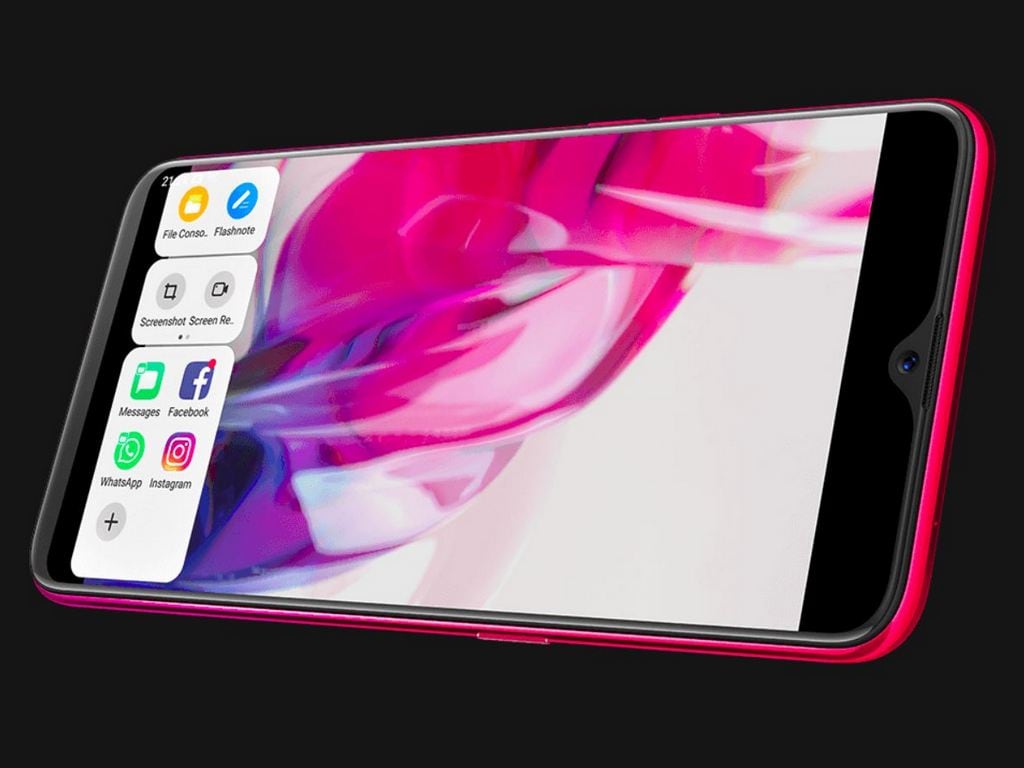 The Oppo F9 Pro has been priced at Rs 23,990. Image: Oppo India[/caption]Before we dive into a specifications war, let's have a look at what's new in the Oppo F9 Pro. To begin with, one of the biggest upgrades the F9 Plus brings to the Oppo F7 is on the design front. Oppo introduces new gradient colour combinations, which makes the F9 Pro look a lot like Huawei's phones, but with its own set of additions. The phone will be sold in three colours — Sunrise Red, Twilight Blue and Starry Purple.The Oppo F9 Pro also showcases what Oppo likes to call a ‘Waterdrop Screen’ design, which is basically a notch made smaller. The name has been derived from the fact that the notch on the front actually looks like a waterdrop and houses nothing but the front-facing camera. With this design, Oppo manages to achieve an impressive screen-to-body ratio of 90.8 percent and also fit in a large 6.3-inch display into a body which is just marginally larger.[caption id="attachment_5013691" align="alignnone" width="1280"]
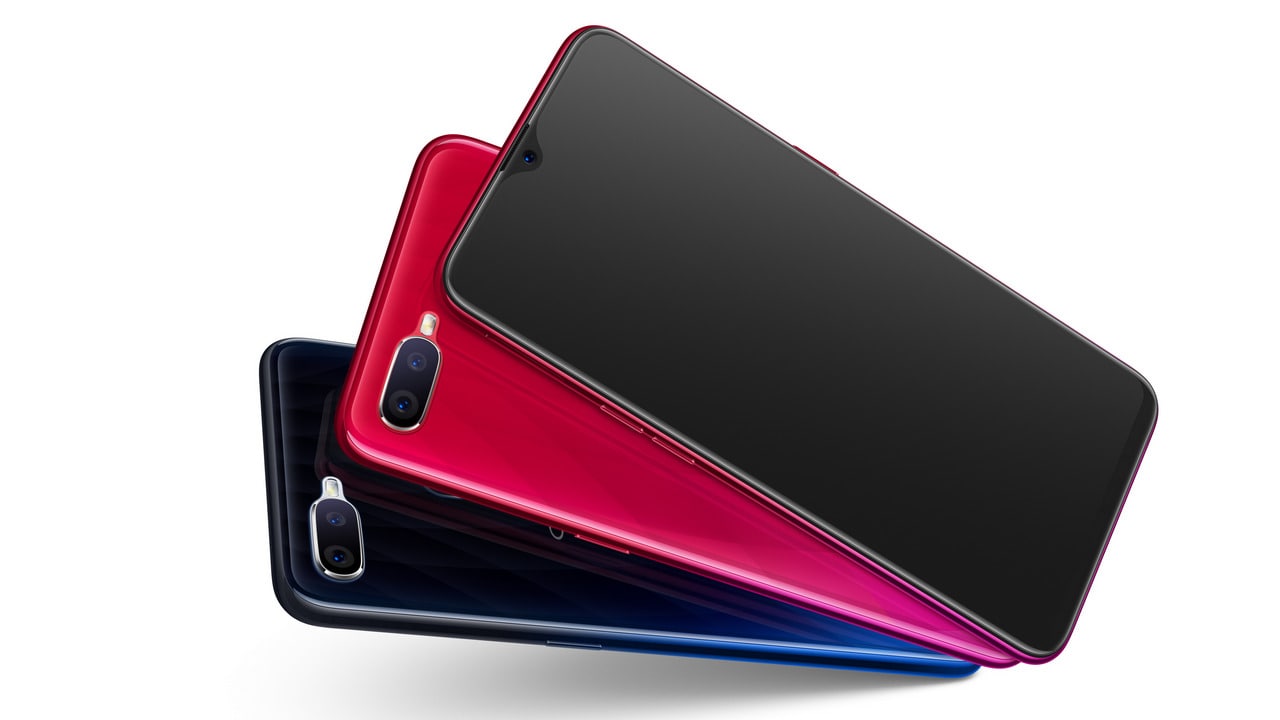 The Oppo F9 Pro goes on sale on 31 August and will be available in three colour combinations. Image: Oppo India[/caption]Inside, nothing much has changed. We get an octa-core MediaTek Helio P60 SoC which is adequate, but nothing to write home about. Phones priced at a third of its price (the Realme 1) also feature the same chipset, so it does come across as a surprise that Oppo decided to stick to it.The base RAM has been increased to 6 GB, up from 4 GB, and you get 64 GB of internal storage which is expandable up to 256 GB via a microSD card. Oppo has also thrown in a beefy 3,500 mAh battery with support for its fast VOOC charging standard.Competition in the price range includes the overall performer, the Nokia 7 Plus, Oppo's direct rival, the Vivo V9, the Samsung Galaxy A6 Plus and the Xiaomi Mi A2.
| Smartphone | Oppo F9 Pro | Vivo V9 | Samsung Galaxy A6+ | Xiaomi Mi A2 | Nokia 7 Plus |
| Display Size (inch) | 6.3 | 6.3 | 6 | 5.99 | 6 |
| Resolution (pixels) | 2340 x 1080 | 2280 x 1080 | 1080 x 2220 | 2,160 x 1,080 | 1,080 x 2160 |
| Pixel Density (PPI) | 409 | 400 | 411 | 403 | 403 |
| Display Type | IPS LCD | IPS LCD | Super AMOLED | LTPS IPS LCD | IPS LCD |
| Dimensions(mm) | 156.7 x 74 x 8 | 154.81 x 75.03 x 7.89 | 160.2 x 75.7 x 7.9 | 158.7 x 75.4 x 7.3 | 158.4x75.6x8 |
| Weight (gm) | 169 | 150 | 186 | 168 | TBA |
| Dual SIM | Yes | Yes | Yes | Yes | Yes |
| SIM Type | Nano-SIM | Nano-SIM | Nano-SIM | Nano-SIM | Nano-SIM |
| Connectivity Types | GSM / HSPA / LTE | GSM / WCDMA / LTE | GSM / HSPA / LTE | GSM / CDMA / HSPA / LTE | GSM / CDMA / HSPA / EVDO / LTE |
| Processor | Mediatek Helio P60 | Qualcomm Snapdragon 626 | Qualcomm Snapdragon 450 | Qualcomm Snapdragon 660 | Qualcomm Snapdragon 660 |
| CPU Cores | Octa-core | Octa-core | Octa-core | Octa-core | Octa-core |
| CPU Clock Speed (GHz) | 4x2.0 GHz Cortex-A73 & 4x2.0 GHz Cortex-A53 | 8x Cortex-A53 @ 2.2 Ghz | 8x ARM Cortex A53 @ 1.8 | 4x Kryo 260 @ 2.2 GHz & 4x Kryo 260 @ 1.8 GHz | 4x Kryo 260 @ 2.2 GHz & 4x Kryo 260 @ 1.8 GHz |
| GPU | Mali-G72 MP3 | Adreno 506 | Adreno 506 | Adreno 512 | Adreno 512 |
| RAM | 6 GB | 4 GB | 4/3 GB | 4 GB, 6 GB | 4 GB |
| Ruggedness | — | — | — | – | IP54 |
| On-Board Memory | 64 GB | 64 GB | 32, 64 GB | 32 GB, 64 GB, 128 GB | 64 GB |
| Expandable Memory | Yes, upto 256 GB | Yes, upto 256 GB | Yes, up to 256 GB | No | Yes, up to 256 GB |
| Sensors | Fingerprint (rear-mounted), accelerometer, gyro, proximity, compass | Fingerprint scanner, accelerometer, gyro, proximity, compass | Fingerprint (rear-mounted), accelerometer, gyro, proximity, compass | Fingerprint, Accelerometer, Gyroscope, Proximity, Compass | Fingerprint, Accelerometer, Gyroscope, Proximity, Compass |
| Primary Camera | 16 MP, f/1.8 2 MP, f/2.4 | 16 MP f/2.0 and 5 MP | 16 MP, f/1.7 5 MP, f/1.9 | 12 MP, f/1.75 and 20 MP, f/1.75 | 12 MP, f/1.75 and 13 MP, f/2.6 |
| Optical Image Stabilization | No | No | No | - | TBA |
| Camera Array | Dual Camera | Dual Camera | Dual Camera | Dual Camera | Dual Camera |
| Autofocus System | Phase detection autofocus | Phase Detection Autofocus | Phase-detection autofocus | Phase detection | Dual pixel phase detection Autofocus |
| Secondary Camera | 25 MP, f/2.0 | 24 MP, f/2.0 | 24 MP, f/1.9 | 20 MP, f/2.2 | 16 MP, f/2.0 |
| Video Capture | 1080p@30fps | 4K @ 30fps | 1080p@30fps | 720p @120 fps, 1080p @ 30 fps, 2160p @ 30 fps | 720p @120 fps, 1080p @ 30 fps, 2160p @ 30 fps |
| Flash | LED | Dual-LED | LED | LED | Dual-LED |
| OS Version | Android Oreo 8.1 | Android Oreo 8.1 | Android 8.0 Oreo | Android Oreo 8.1 | Android Oreo 8.1 |
| AI (Smart Assistant) | Google Assistant | Google Assistant | Yes, Bixby | Google Assistant | Google Assistant |
| GPS | Yes | Yes | Yes | Yes | Yes |
| Wi-Fi | Wi-Fi 802.11 a/b/g/n/ac, dual-band, WiFi Direct, hotspot | Wi-Fi 802.11 a/b/g/n/ac, dual-band, WiFi Direct, hotspot | Wi-Fi 802.11 a/b/g/n, WiFi Direct, hotspot | Wi-Fi 802.11 a/b/g/n/ac, Dual-band, Wi-Fi Direct, Hotspot | Wi-Fi 802.11 a/b/g/n/ac, Dual-band, Wi-Fi Direct, Hotspot |
| Bluetooth | v4.2, A2DP, LE | v4.2, A2DP, LE | v4.2, A2DP, LE | v5, A2DP, LE | v5, A2DP, LE |
| NFC | No | No | Yes | No | Yes |
| Infrared | No | No | No | Yes | No |
| Fingerprint Scanner | Yes, Rear button | Yes, Rear button | Yes, Rear button | Yes | Yes, Rear button |
| 3.5mm jack | Yes | Yes | Yes | Yes | Yes |
| Radio | No | Yes | Yes, FM Radio | No | FM Radio |
| USB Type | microUSB | microUSB 2.0 | microUSB | Type-C Reversible connector | Type-C Reversible connector |
| USB Standard | USB v2.0 | USB v2.0 | USB v2.0 | USB v2.0 | USB v2.0 |
| Battery (mAh) | 3,500 | 3,260 | 3,500 | 3,010 | 3,800 |
| Fast charging | Yes, VOOC | No | No | Yes | Yes |
| Colors | Sunrise Red, Twilight Blue, Starry Purple | Pearl Black, Champagne Gold, Pearl Black, Sapphire Blue | Black, Gold, Blue, Lavender | Gold, Lake Blue, Black | Black/Copper, White/Copper |
| Prices in India | Rs 23,990 | Rs 20,990 | Rs 21,990 | Starting at Rs 16,999 | Rs 25,999 |
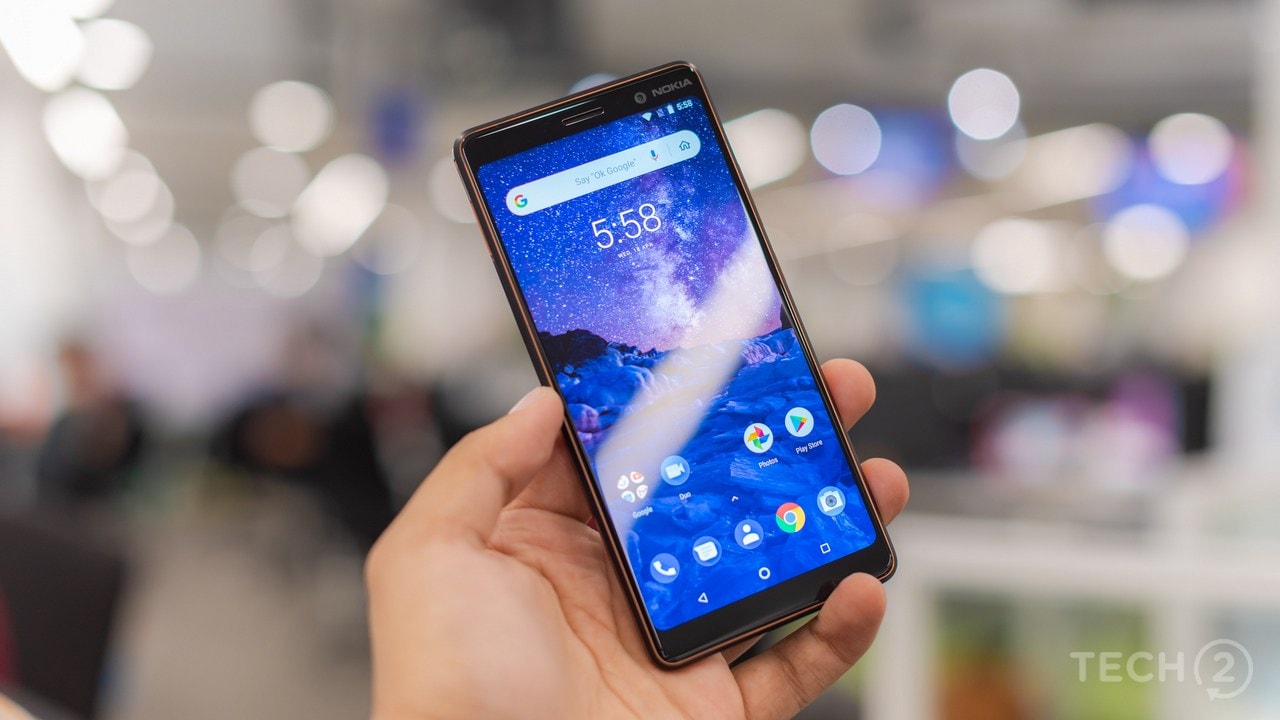 The Nokia 7 Plus still seems to be the phone to beat in this segment. Image: tech2/Rehan Hooda[/caption]The Vivo V9 though does seem to lose steam and fails to make much of a dent when it comes to comparing phones in this range. But with Vivo planning to launch the Vivo V11 Pro on 6 September, the F9 Pro might have an upgraded direct rival to take on.Do hold on for our in-depth review of the smartphone though if you want to find out how it fares and whether it makes sense shelling out Rs 23,990 for the device.The Oppo F9 Pro goes on sale later this month on 31 August, exclusively on Flipkart online, and will be available through offline outlets as well. Meanwhile, you can go ahead and pre-order the phone on Flipkart right now.
First Published:Aug 22, 2018, 07:31:50 IST
Advertisement
Advertisement

Why AI notetakers are raising serious privacy and security concerns
AI notetakers promise effortless meeting summaries, but experts warn they could expose confidential conversations, corporate secrets and personal voiceprints. As businesses increasingly adopt AI-powered meeting assistants, questions over data storage, privacy, consent and legal risks are becoming impossible to ignore
5 min read
China's low-cost AI models are changing the global AI race. Here's why Silicon Valley is worried
As Chinese firms continue to improve performance while keeping prices low, the AI race is no longer just about building the smartest model—it is increasingly becoming a battle over who can deliver the best value
2 min read
China's Kimi K3 challenges US AI leaders with frontier-level performance at lower cost
Chinese artificial intelligence startup Moonshot AI has unveiled its latest open-weight AI model, Kimi K3, with early results suggesting it could compete with some of the world's most advanced AI systems developed by leading US companies
2 min read
How did Instagram run ads promoting child abuse in India?
India has issued a notice to Meta after an investigation alleged that Instagram displayed paid advertisements promoting child sexual abuse material. MeitY ordered Meta to remove such Instagram ads and explain within seven days how they were approved
8 min read
Why has India halted WhatsApp’s username feature before launch?
India has halted WhatsApp’s planned username feature, citing concerns about cybercrime, impersonation, and law enforcement challenges. As Meta races to address security concerns, here’s why MeitY has paused the rollout, what the feature does, and how it could influence privacy and online safety in India
3 min read
Advertisement
Advertisement