


NASA's 2020 Mars mission rover will pack 23 cameras for enhanced vision
When NASA's Mars Pathfinder touched down in 1997, it had five cameras. The subsequent Spirit and Opportunity rovers were designed with 10 cameras each.

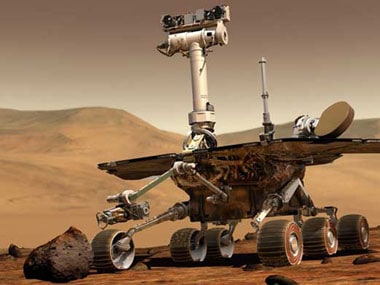
Representational image[/caption]They will provide dramatic views during the rover's descent to Mars and be the first to capture images of a parachute as it opens on another planet.There will even be a camera inside the rover's body, which will study samples as they are stored and left on the surface for collection by a future mission, NASA said on 31 October.When NASA's Mars Pathfinder touched down in 1997, it had five cameras. The subsequent Spirit and Opportunity rovers were designed with 10 cameras each, including on their landers. The Curiosity rover has 17 cameras."Camera technology keeps improving," said Justin Maki of NASA's Jet Propulsion Laboratory in Pasadena, California. "Each successive mission is able to utilise these improvements, with better performance and lower cost," Maki said.The cameras on 2020 will include more colour and 3-D imaging than on Curiosity, said Jim Bell of Arizona State University. "Routinely using 3-D images at high resolution could pay off in a big way," Bell said. "They're useful for both long-range and near-field science targets."

Why AI notetakers are raising serious privacy and security concerns
China's low-cost AI models are changing the global AI race. Here's why Silicon Valley is worried
China's Kimi K3 challenges US AI leaders with frontier-level performance at lower cost
How did Instagram run ads promoting child abuse in India?
Why has India halted WhatsApp’s username feature before launch?