


NASA technology to track heartbeats helps in disaster relief after the earthquake in Mexico
A suitcase-sized radar instrument capable of detecting human heartbeats under rubble is helping disaster relief workers on the ground in Mexico City.

A suitcase-sized radar instrument capable of detecting human heartbeats under rubble is helping disaster relief workers on the ground in Mexico City respond to the 7.1-magnitude earthquake on 19 September that killed hundreds, NASA has said. FINDER, which stands for Finding Individuals for Disaster and Emergency Response, was developed as a collaboration between NASA and the US Department of Homeland Security.[caption id="attachment_4079355" align="alignleft" width="380"]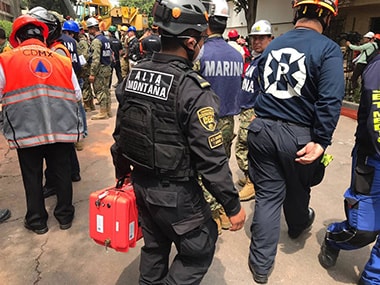 Image: SpecOps Group, Inc[/caption]"Our hearts go out to the people of Mexico," said Neil Chamberlain, Task Manager for FINDER at NASA's Jet Propulsion Laboratory, Pasadena, California. "We're glad to know our technology is being used to make a difference there," Chamberlain added. When the instrument was deployed in Nepal after a major earthquake in 2015, it helped find four men trapped under a collapsed textile factory.FINDER sends a low-powered microwave signal — about one-thousandth of a cell phone's output — through rubble. It looks for changes in the reflections of those signals coming back from tiny motions caused by the victims' breathing and heartbeats. In tests, FINDER has detected heartbeats through 30 feet of rubble or 20 feet of solid concrete. The technology evolved from JPL's efforts to develop low-cost, small spacecraft radios, using signal processing developed to measure small changes in spacecraft motion.Since 2015, two private companies have acquired licenses for the technology. They have since taken it to disaster zones, training relief workers to use it and manufacturing new units, NASA said. Both companies work with the direction of local governments when they travel to disaster sites. FINDER is used alongside a variety of other techniques, including trained dogs, acoustic sensing devices and thermal imagers. All these techniques are usually deployed together.

Why AI notetakers are raising serious privacy and security concerns
China's low-cost AI models are changing the global AI race. Here's why Silicon Valley is worried
China's Kimi K3 challenges US AI leaders with frontier-level performance at lower cost
How did Instagram run ads promoting child abuse in India?
Why has India halted WhatsApp’s username feature before launch?