
Advertisement


Sections
MWC 2019: Intel betting big on its 5G products, announces new chips and partnerships
Intel plans to also sell modems to automakers for use in connected vehicles, as well as to manufacturers for use in connecting industrial equipment.

Intel Corp on Monday announced new chips and partnerships that it hopes will persuade its investors that the billions of dollars in research and development that it has poured into 5G networking technology will pay off.Intel, the world’s second-largest chip maker by revenue, got into the wireless data business with its acquisition of German modem maker Infineon in 2011. Its sole major modem customer is Apple Inc, whose iPhones feature Intel modem chips to connect to mobile data networks.[caption id="attachment_6148981" align="alignnone" width="1280"]![Intel booth at Mobile World Congress 2019. Image: Intel]() Intel booth at Mobile World Congress 2019. Image: Intel[/caption]But the cutthroat modem business, where Intel competes against rivals such as Qualcomm Inc and MediaTek Inc, has lower margins than Intel is accustomed to making on its flagship processor chips that go into personal computers and data centres.But Bob Swan, Intel’s chief executive, said Intel’s future in 5G networks, which are expected to roll out this year and next and be much faster than current 4G networks, extends beyond selling modems to phone makers.Intel plans to also sell modems to automakers for use in connected vehicles, as well as to manufacturers for use in connecting industrial equipment. And Intel also plans to land its other chips — including processors and the so-called programmable chips it gained by acquiring Altera Inc in 2016 — in a variety of networking gear, he said.“Where investors have been most anxious is, we were catching up for a while. Catching up, in their minds, means not making any money,” Swan said at a press event in Palo Alto, California last week ahead of the Mobile World Congress conference being held in Spain this week.“Now we’re at a stage where we believe we have products that are as good as anybody in the industry’s as we move into 5G.”On Monday, at the conference, Intel said it had reached a deal for network gear makers Fibocom Wireless Inc, Arcadyan Technology Corp and others to include Intel modem chips in so-called modules and gateways that will help industrial equipment connect with 5G networks. The company also introduced new programmable chips that will compete against Xilinx Inc, which in its most recent quarter saw a revenue boost from 5G deals.Intel is also aiming to sell versions of its flagship processors for use in 5G base stations, which help carry mobile phone signals back to core networks and said it reached deals with Ericsson and ZTE Corp to use Intel processors in their 5G networking gear.[caption id="attachment_6148961" align="alignnone" width="1280"]
Intel booth at Mobile World Congress 2019. Image: Intel[/caption]But the cutthroat modem business, where Intel competes against rivals such as Qualcomm Inc and MediaTek Inc, has lower margins than Intel is accustomed to making on its flagship processor chips that go into personal computers and data centres.But Bob Swan, Intel’s chief executive, said Intel’s future in 5G networks, which are expected to roll out this year and next and be much faster than current 4G networks, extends beyond selling modems to phone makers.Intel plans to also sell modems to automakers for use in connected vehicles, as well as to manufacturers for use in connecting industrial equipment. And Intel also plans to land its other chips — including processors and the so-called programmable chips it gained by acquiring Altera Inc in 2016 — in a variety of networking gear, he said.“Where investors have been most anxious is, we were catching up for a while. Catching up, in their minds, means not making any money,” Swan said at a press event in Palo Alto, California last week ahead of the Mobile World Congress conference being held in Spain this week.“Now we’re at a stage where we believe we have products that are as good as anybody in the industry’s as we move into 5G.”On Monday, at the conference, Intel said it had reached a deal for network gear makers Fibocom Wireless Inc, Arcadyan Technology Corp and others to include Intel modem chips in so-called modules and gateways that will help industrial equipment connect with 5G networks. The company also introduced new programmable chips that will compete against Xilinx Inc, which in its most recent quarter saw a revenue boost from 5G deals.Intel is also aiming to sell versions of its flagship processors for use in 5G base stations, which help carry mobile phone signals back to core networks and said it reached deals with Ericsson and ZTE Corp to use Intel processors in their 5G networking gear.[caption id="attachment_6148961" align="alignnone" width="1280"]![The Intel FPGA Programmable Acceleration Card N3000 is designed for communications service providers to enable 5G next-generation core and virtualized radio access network solutions. Image: Intel]() The Intel FPGA Programmable Acceleration Card N3000 is designed for communications service providers to enable 5G next-generation core and virtualized radio access network solutions. Image: Intel[/caption]For all the latest updates from the Mobile World Congress 2019, please head to our MWC 2019 page.
The Intel FPGA Programmable Acceleration Card N3000 is designed for communications service providers to enable 5G next-generation core and virtualized radio access network solutions. Image: Intel[/caption]For all the latest updates from the Mobile World Congress 2019, please head to our MWC 2019 page.
 Intel booth at Mobile World Congress 2019. Image: Intel[/caption]But the cutthroat modem business, where Intel competes against rivals such as Qualcomm Inc and MediaTek Inc, has lower margins than Intel is accustomed to making on its flagship processor chips that go into personal computers and data centres.But Bob Swan, Intel’s chief executive, said Intel’s future in 5G networks, which are expected to roll out this year and next and be much faster than current 4G networks, extends beyond selling modems to phone makers.Intel plans to also sell modems to automakers for use in connected vehicles, as well as to manufacturers for use in connecting industrial equipment. And Intel also plans to land its other chips — including processors and the so-called programmable chips it gained by acquiring Altera Inc in 2016 — in a variety of networking gear, he said.“Where investors have been most anxious is, we were catching up for a while. Catching up, in their minds, means not making any money,” Swan said at a press event in Palo Alto, California last week ahead of the Mobile World Congress conference being held in Spain this week.“Now we’re at a stage where we believe we have products that are as good as anybody in the industry’s as we move into 5G.”
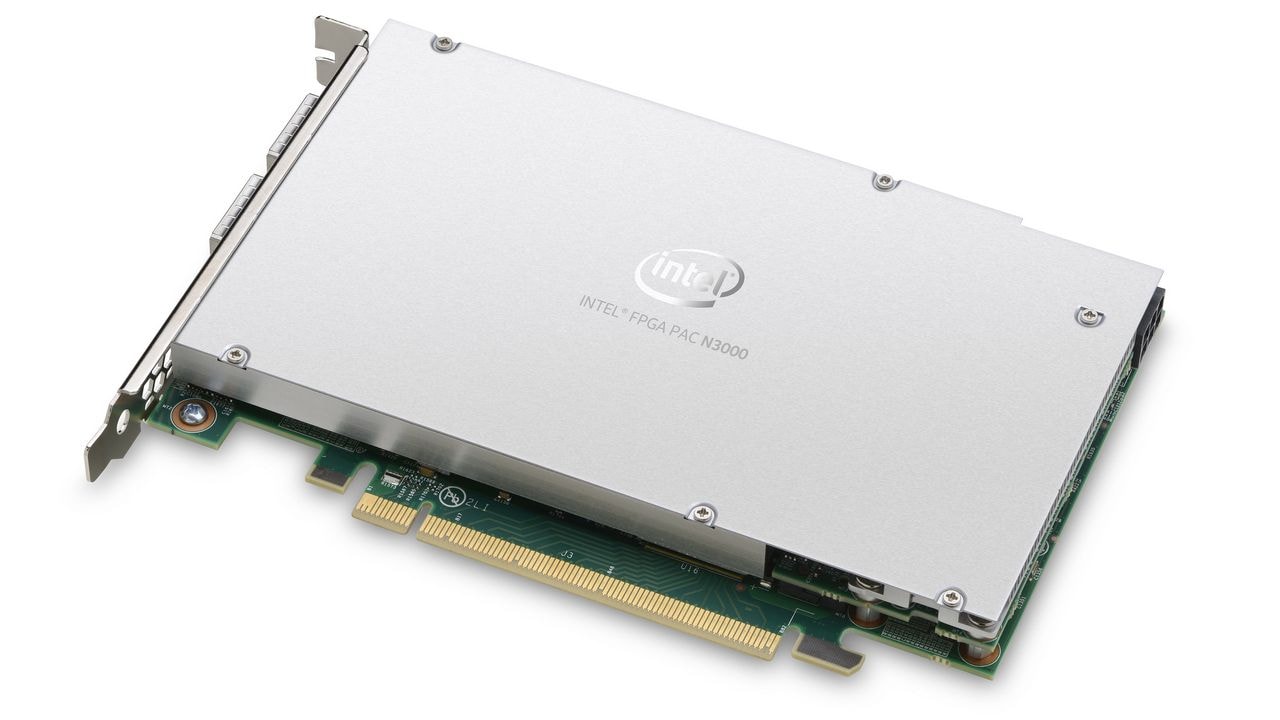 The Intel FPGA Programmable Acceleration Card N3000 is designed for communications service providers to enable 5G next-generation core and virtualized radio access network solutions. Image: Intel[/caption]For all the latest updates from the Mobile World Congress 2019, please head to our MWC 2019 page.
First Published:Feb 25, 2019, 13:13:40 IST
Advertisement
Advertisement

Why AI notetakers are raising serious privacy and security concerns
AI notetakers promise effortless meeting summaries, but experts warn they could expose confidential conversations, corporate secrets and personal voiceprints. As businesses increasingly adopt AI-powered meeting assistants, questions over data storage, privacy, consent and legal risks are becoming impossible to ignore
5 min read
China's low-cost AI models are changing the global AI race. Here's why Silicon Valley is worried
As Chinese firms continue to improve performance while keeping prices low, the AI race is no longer just about building the smartest model—it is increasingly becoming a battle over who can deliver the best value
2 min read
China's Kimi K3 challenges US AI leaders with frontier-level performance at lower cost
Chinese artificial intelligence startup Moonshot AI has unveiled its latest open-weight AI model, Kimi K3, with early results suggesting it could compete with some of the world's most advanced AI systems developed by leading US companies
2 min read
How did Instagram run ads promoting child abuse in India?
India has issued a notice to Meta after an investigation alleged that Instagram displayed paid advertisements promoting child sexual abuse material. MeitY ordered Meta to remove such Instagram ads and explain within seven days how they were approved
8 min read
Why has India halted WhatsApp’s username feature before launch?
India has halted WhatsApp’s planned username feature, citing concerns about cybercrime, impersonation, and law enforcement challenges. As Meta races to address security concerns, here’s why MeitY has paused the rollout, what the feature does, and how it could influence privacy and online safety in India
3 min read
Advertisement
Advertisement