


Move over banks, make way for mobile wallets
Surveys show that consumers are not only comfortable doing bank transactions on their smartphones but are willing to do away with traditional banking altogether.

North Carolina : More than half of the consumers interested in paying for goods with their smart phones do not want the service provided by their main bank, according to studies.
Eight out of 10 consumers said they would consider online payment provider PayPal Inc, owned by eBay Inc for services that turn smart phones into payment devices, according to the study by the Carlisle Gallagher Consulting Group. Six in 10 would use Google Inc , while five in 10 would use Apple Inc .
The findings show that banks face a threat to their payments business if they do not keep up with fast-changing technology, said Peter Olynick, card and payments leader at Carlisle Gallagher, a Charlotte, North Carolina-based firm that does work for some of the largest US banks.
[caption id="attachment_331821" align="alignleft" width="380" caption="If banks fall behind in mobile wallets, they could lose more of their banking business. Reuters"]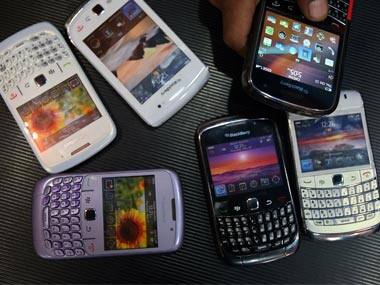 [/caption]
Banks make big money from moving money from buyers to sellers through credit and debit card networks. But smart phone payments may undermine that business, if companies find new networks to move money, such as cell phone networks.
 More from News Analysis
The survey of more than 600 consumers found that 48 percent were interested in "mobile wallets," or technology that transforms smart phones into payment tools. Of them, 53 percent said they would prefer an alternate provider over their primary bank.
The study asked customers about brand preferences, but did not ask about specific services. Among potential mobile wallet features, customers favored banks for basic financial services, but saw them as weaker when it came to providing coupons, product reviews and shopping assistance.
A host of banks, technology companies and telecommunications providers are exploring mobile wallets on their own and in partnerships.
PayPal has said it has made deals with 15 retailers that will allow consumers to pay for purchases with their cellphones. Google has teamed up with credit card companies, Citigroup Inc and Sprint Nextel Corp. Isis, a venture between Verizon Wireless , AT&T Inc and T-Mobile USA, has signed partnerships with all the major card networks. Apple does not currently compete in this market.
Bank of America Corp has been examining "bump technology" by which the bank installs a chip in a customer's phone that signals a device at a retailer when a customer checks out. "We've successfully tested the technology in several market trials and plan to offer the mobile payment services in the future," bank spokeswoman Tara Burke said.
JPMorgan Chase&Co has made investments and formed partnerships with mobile and digital payments companies to at least hold onto its current standing with customers as the technologies evolve. It was one of the first credit card issuers to place its cards in the Isis mobile wallet.
Wells Fargo Co has tested smartphone payment systems since 2007 and is evaluating various approaches, said Peter Ho, product manager for Wells Fargo consumer credit. "We are certainly talking to everyone in the ecosystem," Ho said.
The competitive threat to the payments business comes as banks absorb new regulations that crimped the "interchange fees" they charge merchants when consumers swipe debit cards.
If banks fall behind in mobile wallets, they could lose more of their banking business, Olynick said. Of the consumers most attracted to mobile wallets, more than 80 percent would consider using banking services from PayPal if the company offered them, he said.
Reuters

Why AI notetakers are raising serious privacy and security concerns
China's low-cost AI models are changing the global AI race. Here's why Silicon Valley is worried
China's Kimi K3 challenges US AI leaders with frontier-level performance at lower cost
How did Instagram run ads promoting child abuse in India?
Why has India halted WhatsApp’s username feature before launch?