
Advertisement


Sections
Meet the Indian students who built the world's smallest satellite, Kalamsat V2
This team of eight has been working on Kalamsat since the past six years.

Barely a month into 2019, ISRO has made the headlines once again, and it makes us all so proud. However, while everything ISRO does adds feathers to the space agency's hat, 24 January's PSLV C44 mission was more special than others.In this mission, the ISRO launch vehicle carried the Microsat-R to space, which was co-passengered by Kalamsat V2, and here's where the special bit comes in.[caption id="attachment_5961211" align="alignnone" width="1024"]![The brilliant students behind Kalamsat. Image: Space Kidz India]() The brilliant students behind Kalamsat. Image: Space Kidz India[/caption]Kalamsat, named after the former president A P J Abdul Kalam, is the lightest satellite that India has ever launched and it has been built by students of Hindustan Institute of Technology & Science, Chennai. Built at a cost of around Rs 12 lakh, the Kalamsat took over six years to build by these students.The eight-member pack is a part of a Chennai-based organisation called Space Kidz India, where they were mentored by Srimathy Kesan, Space Kidz India CEO."We have been working on the project for over six years now. These students are from various backgrounds and the youngest one is studying B.Sc Physics," Kesan told PTI.The satellite is meant to study the communication system of nano-satellites, which can be useful in many fields, predominantly disaster management.[caption id="attachment_5961101" align="alignnone" width="1024"]
The brilliant students behind Kalamsat. Image: Space Kidz India[/caption]Kalamsat, named after the former president A P J Abdul Kalam, is the lightest satellite that India has ever launched and it has been built by students of Hindustan Institute of Technology & Science, Chennai. Built at a cost of around Rs 12 lakh, the Kalamsat took over six years to build by these students.The eight-member pack is a part of a Chennai-based organisation called Space Kidz India, where they were mentored by Srimathy Kesan, Space Kidz India CEO."We have been working on the project for over six years now. These students are from various backgrounds and the youngest one is studying B.Sc Physics," Kesan told PTI.The satellite is meant to study the communication system of nano-satellites, which can be useful in many fields, predominantly disaster management.[caption id="attachment_5961101" align="alignnone" width="1024"]![]() Kalamsat[/caption]What's even cooler is that the earlier design of this nano-satellite was made back in 2017 by Rifath Sharook, who was then only 18 years old. Two years ago then, these students launched an experimental version of this light-weight satellite on NASA's sounding rocket. At that time, Sharook had broken the global space record for the smallest and lightest satellite launched.The work by these eight students has also created opportunity for other students who can now just focus on their experiment and do not need to worry about the launches or rocket modules for their satellites, because as announced by the ISRO chief, the fourth stage of the vehicle or PS4 platforms will now provide both platform and power to the satellites built by students.(Hurray to that!)So far, the agency has already sent up nine satellites built by students, but this is the first to be launched in the new PSLV variant.Last year, these students also launched Jaihind-1S, a 4 cm wide satellite, that was fired up in space by NASA. The Jaihind-1S was encased in a 3D-printed polylactic acid (PLA) exterior, weighed as much as a chicken's egg might (33 grams) and was designed as a contestant in the ‘Cubes in Space’ competition organized annually by the NASA's Colorado Space Grant consortium and partner organization, iDoodle learning.The tiny satellite was designed to study 20 different weather parameters, collect data of four of these parameters per second, and store this data on a built-in SD card.Cheers to these brilliant minds!
Kalamsat[/caption]What's even cooler is that the earlier design of this nano-satellite was made back in 2017 by Rifath Sharook, who was then only 18 years old. Two years ago then, these students launched an experimental version of this light-weight satellite on NASA's sounding rocket. At that time, Sharook had broken the global space record for the smallest and lightest satellite launched.The work by these eight students has also created opportunity for other students who can now just focus on their experiment and do not need to worry about the launches or rocket modules for their satellites, because as announced by the ISRO chief, the fourth stage of the vehicle or PS4 platforms will now provide both platform and power to the satellites built by students.(Hurray to that!)So far, the agency has already sent up nine satellites built by students, but this is the first to be launched in the new PSLV variant.Last year, these students also launched Jaihind-1S, a 4 cm wide satellite, that was fired up in space by NASA. The Jaihind-1S was encased in a 3D-printed polylactic acid (PLA) exterior, weighed as much as a chicken's egg might (33 grams) and was designed as a contestant in the ‘Cubes in Space’ competition organized annually by the NASA's Colorado Space Grant consortium and partner organization, iDoodle learning.The tiny satellite was designed to study 20 different weather parameters, collect data of four of these parameters per second, and store this data on a built-in SD card.Cheers to these brilliant minds!
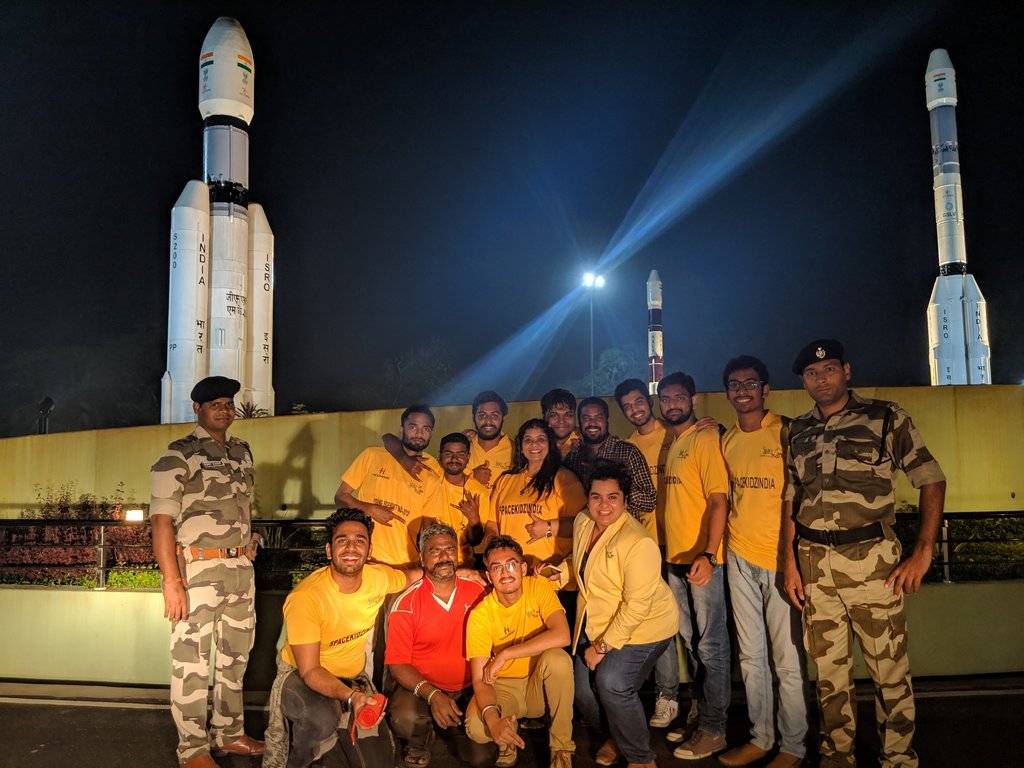 The brilliant students behind Kalamsat. Image: Space Kidz India[/caption]Kalamsat, named after the former president A P J Abdul Kalam, is the lightest satellite that India has ever launched and it has been built by students of Hindustan Institute of Technology & Science, Chennai. Built at a cost of around Rs 12 lakh, the Kalamsat took over six years to build by these students.The eight-member pack is a part of a Chennai-based organisation called Space Kidz India, where they were mentored by Srimathy Kesan, Space Kidz India CEO."We have been working on the project for over six years now. These students are from various backgrounds and the youngest one is studying B.Sc Physics," Kesan told PTI.The satellite is meant to study the communication system of nano-satellites, which can be useful in many fields, predominantly disaster management.[caption id="attachment_5961101" align="alignnone" width="1024"]
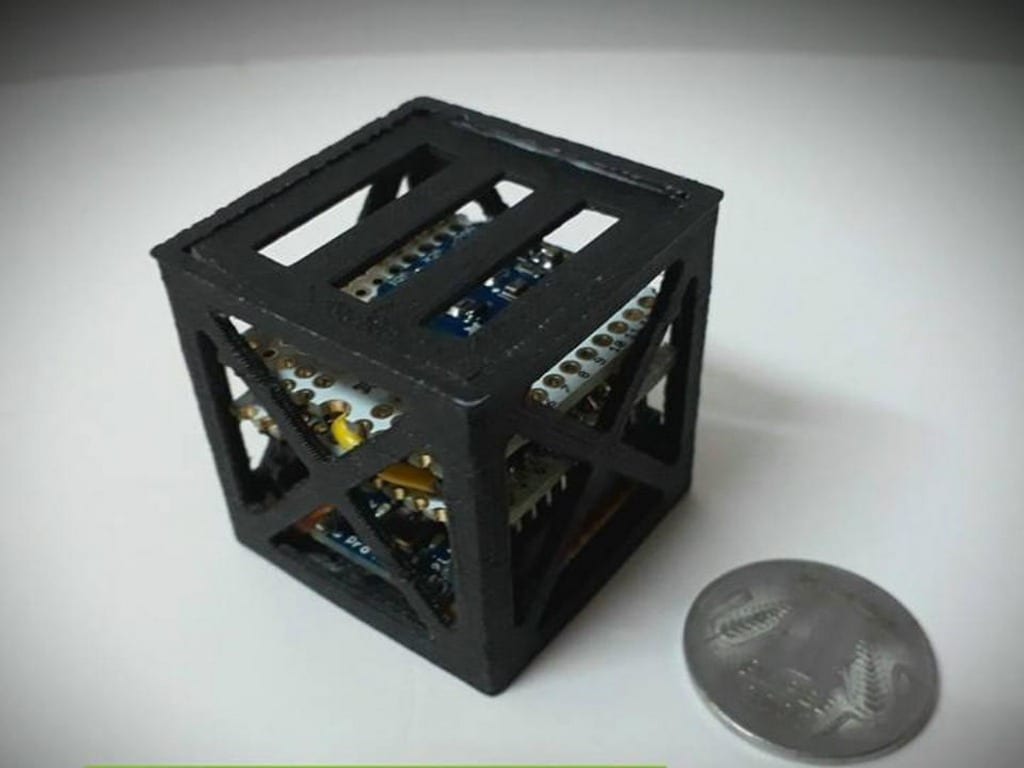 Kalamsat[/caption]What's even cooler is that the earlier design of this nano-satellite was made back in 2017 by Rifath Sharook, who was then only 18 years old. Two years ago then, these students launched an experimental version of this light-weight satellite on NASA's sounding rocket. At that time, Sharook had broken the global space record for the smallest and lightest satellite launched.The work by these eight students has also created opportunity for other students who can now just focus on their experiment and do not need to worry about the launches or rocket modules for their satellites, because as announced by the ISRO chief, the fourth stage of the vehicle or PS4 platforms will now provide both platform and power to the satellites built by students.(Hurray to that!)So far, the agency has already sent up nine satellites built by students, but this is the first to be launched in the new PSLV variant.Last year, these students also launched Jaihind-1S, a 4 cm wide satellite, that was fired up in space by NASA. The Jaihind-1S was encased in a 3D-printed polylactic acid (PLA) exterior, weighed as much as a chicken's egg might (33 grams) and was designed as a contestant in the ‘Cubes in Space’ competition organized annually by the NASA's Colorado Space Grant consortium and partner organization, iDoodle learning.The tiny satellite was designed to study 20 different weather parameters, collect data of four of these parameters per second, and store this data on a built-in SD card.Cheers to these brilliant minds!
First Published:Jan 25, 2019, 17:41:00 IST
Advertisement
Advertisement

Why AI notetakers are raising serious privacy and security concerns
AI notetakers promise effortless meeting summaries, but experts warn they could expose confidential conversations, corporate secrets and personal voiceprints. As businesses increasingly adopt AI-powered meeting assistants, questions over data storage, privacy, consent and legal risks are becoming impossible to ignore
5 min read
China's low-cost AI models are changing the global AI race. Here's why Silicon Valley is worried
As Chinese firms continue to improve performance while keeping prices low, the AI race is no longer just about building the smartest model—it is increasingly becoming a battle over who can deliver the best value
2 min read
China's Kimi K3 challenges US AI leaders with frontier-level performance at lower cost
Chinese artificial intelligence startup Moonshot AI has unveiled its latest open-weight AI model, Kimi K3, with early results suggesting it could compete with some of the world's most advanced AI systems developed by leading US companies
2 min read
How did Instagram run ads promoting child abuse in India?
India has issued a notice to Meta after an investigation alleged that Instagram displayed paid advertisements promoting child sexual abuse material. MeitY ordered Meta to remove such Instagram ads and explain within seven days how they were approved
8 min read
Why has India halted WhatsApp’s username feature before launch?
India has halted WhatsApp’s planned username feature, citing concerns about cybercrime, impersonation, and law enforcement challenges. As Meta races to address security concerns, here’s why MeitY has paused the rollout, what the feature does, and how it could influence privacy and online safety in India
3 min read
Advertisement
Advertisement