
Advertisement


Sections
Leaked Qualcomm Snapdragon 850 benchmark figures are surprisingly low
While the leaked benchmark scores are indeed disappointing, they're not painting the whole picture.

Qualcomm’s answer to the iPad Pro and ultra-portable PCs is the Always-Connected PC (ACPC). When it debuted, the ACPC platform was powered by the same mobile chips that power the best Android phones out there. This was in December 2017. In June this year, Qualcomm announced a dedicated chip for its ACPC platform and promised a significant performance bump. Unfortunately for Qualcomm, initial leaks indicate that the bump may not be as significant as promised.[caption id="attachment_4984881" align="alignnone" width="1024"]![Qualcomm Snapdragon 845. Tech2.]() Qualcomm Snapdragon 845. Tech2.[/caption]The original ACPC platform was powered by the Snapdragon 835. While a powerful chip, it wasn’t, at the time, powerful enough to handle a Windows 10 PC. Our initial impressions of the ACPC was more one of surprise that the system actually worked rather than an appreciation of the performance on tap, which there wasn’t much of.The SD835-powered PCs were functional and offered incredible battery life — some have reported not needing to charge the laptop even after a week of use — but the Windows experience itself wasn’t exactly lag free. Basic tasks such as Word, PowerPoint and web browsing ran tolerably well.In June, the Snapdragon 850 was announced and it promised a performance boost of 30 percent over the previous 835 Mobile PC platform. Also included were promises of 20 percent better battery life and LTE speeds. The 850 can best be described as a faster 845 (the same chip that powers the OnePlus 6) that’s better optimised for Windows 10.A recent leak on German site Winfuture.de, however, reveals that the promise of a 30 percent performance bump may have been, as with most marketing material, a rather ambitious claim.As can be seen from the graphs above, the overall performance gains are a decent 23 percent in single-core performance and a mere 7.3 percent in multi-core. This is nowhere near the promised 30 percent.This is, however, only part of the story. Yes, the performance gains are not that great, but benchmarks are only part of the story. Apple’s 12-inch MacBook (2017) managed a score of 3522 and 6656 in the same benchmark. The recently launched Surface Go managed a measly 1698 and 3899. In both cases, you won’t find people complaining so much about performance.And speaking of performance, the issue with Qualcomm’s ACPC is more one of optimisation than raw horsepower. Qualcomm’s Snapdragon platform is built on the ARM architecture whereas Windows is optimised for x86. Explaining the differences between the two architectures will take too long, suffice it to say that ARM is designed for ultra-low power operations and is relatively inflexible. x86 is more power hungry, but also far more flexible in what it can do. This is also part of the reason why you can still use a 5-year old PC, but a 5-year old phone is as good as dead.For ARM chips to perform well, software needs to be properly optimised. Regarding the 850 performance figures, we’ll just quote AnandTech here, “With the goal being parity with the incumbent, users had an idealised view of what this should be, so when x86-focused benchmarks underperformed, negative comments resulted.”While the raw performance numbers are indeed disappointing, we suspect that the performance gains that Qualcomm is talking about will show themselves in a more fluid Windows 10 experience rather than in raw performance figures.
Qualcomm Snapdragon 845. Tech2.[/caption]The original ACPC platform was powered by the Snapdragon 835. While a powerful chip, it wasn’t, at the time, powerful enough to handle a Windows 10 PC. Our initial impressions of the ACPC was more one of surprise that the system actually worked rather than an appreciation of the performance on tap, which there wasn’t much of.The SD835-powered PCs were functional and offered incredible battery life — some have reported not needing to charge the laptop even after a week of use — but the Windows experience itself wasn’t exactly lag free. Basic tasks such as Word, PowerPoint and web browsing ran tolerably well.In June, the Snapdragon 850 was announced and it promised a performance boost of 30 percent over the previous 835 Mobile PC platform. Also included were promises of 20 percent better battery life and LTE speeds. The 850 can best be described as a faster 845 (the same chip that powers the OnePlus 6) that’s better optimised for Windows 10.A recent leak on German site Winfuture.de, however, reveals that the promise of a 30 percent performance bump may have been, as with most marketing material, a rather ambitious claim.As can be seen from the graphs above, the overall performance gains are a decent 23 percent in single-core performance and a mere 7.3 percent in multi-core. This is nowhere near the promised 30 percent.This is, however, only part of the story. Yes, the performance gains are not that great, but benchmarks are only part of the story. Apple’s 12-inch MacBook (2017) managed a score of 3522 and 6656 in the same benchmark. The recently launched Surface Go managed a measly 1698 and 3899. In both cases, you won’t find people complaining so much about performance.And speaking of performance, the issue with Qualcomm’s ACPC is more one of optimisation than raw horsepower. Qualcomm’s Snapdragon platform is built on the ARM architecture whereas Windows is optimised for x86. Explaining the differences between the two architectures will take too long, suffice it to say that ARM is designed for ultra-low power operations and is relatively inflexible. x86 is more power hungry, but also far more flexible in what it can do. This is also part of the reason why you can still use a 5-year old PC, but a 5-year old phone is as good as dead.For ARM chips to perform well, software needs to be properly optimised. Regarding the 850 performance figures, we’ll just quote AnandTech here, “With the goal being parity with the incumbent, users had an idealised view of what this should be, so when x86-focused benchmarks underperformed, negative comments resulted.”While the raw performance numbers are indeed disappointing, we suspect that the performance gains that Qualcomm is talking about will show themselves in a more fluid Windows 10 experience rather than in raw performance figures.
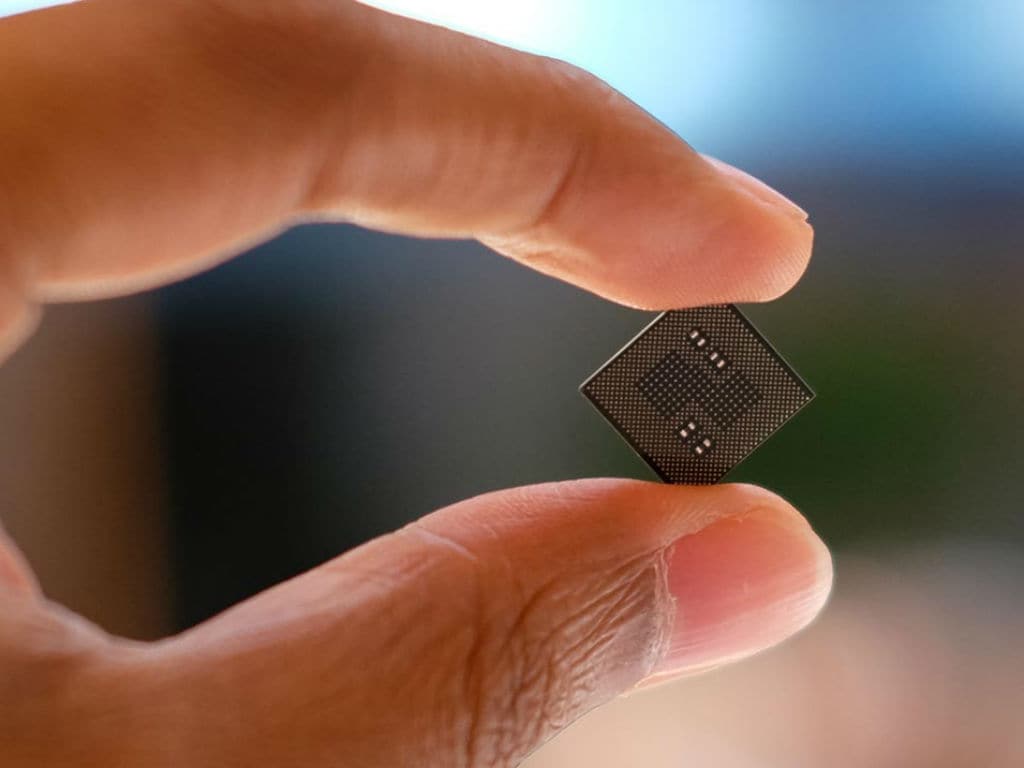 Qualcomm Snapdragon 845. Tech2.[/caption]The original ACPC platform was powered by the Snapdragon 835. While a powerful chip, it wasn’t, at the time, powerful enough to handle a Windows 10 PC. Our initial impressions of the ACPC was more one of surprise that the system actually worked rather than an appreciation of the performance on tap, which there wasn’t much of.The SD835-powered PCs were functional and offered incredible battery life — some have reported not needing to charge the laptop even after a week of use — but the Windows experience itself wasn’t exactly lag free. Basic tasks such as Word, PowerPoint and web browsing ran tolerably well.
First Published:Aug 17, 2018, 13:47:30 IST
Advertisement
Advertisement

Why AI notetakers are raising serious privacy and security concerns
AI notetakers promise effortless meeting summaries, but experts warn they could expose confidential conversations, corporate secrets and personal voiceprints. As businesses increasingly adopt AI-powered meeting assistants, questions over data storage, privacy, consent and legal risks are becoming impossible to ignore
5 min read
China's low-cost AI models are changing the global AI race. Here's why Silicon Valley is worried
As Chinese firms continue to improve performance while keeping prices low, the AI race is no longer just about building the smartest model—it is increasingly becoming a battle over who can deliver the best value
2 min read
China's Kimi K3 challenges US AI leaders with frontier-level performance at lower cost
Chinese artificial intelligence startup Moonshot AI has unveiled its latest open-weight AI model, Kimi K3, with early results suggesting it could compete with some of the world's most advanced AI systems developed by leading US companies
2 min read
How did Instagram run ads promoting child abuse in India?
India has issued a notice to Meta after an investigation alleged that Instagram displayed paid advertisements promoting child sexual abuse material. MeitY ordered Meta to remove such Instagram ads and explain within seven days how they were approved
8 min read
Why has India halted WhatsApp’s username feature before launch?
India has halted WhatsApp’s planned username feature, citing concerns about cybercrime, impersonation, and law enforcement challenges. As Meta races to address security concerns, here’s why MeitY has paused the rollout, what the feature does, and how it could influence privacy and online safety in India
3 min read
Advertisement
Advertisement