


It's raining asteroids through December —13 space rocks to make an appearance days from each other
A total of 13 asteroids will be travelling past Earth in the next coming weeks till 31 December.

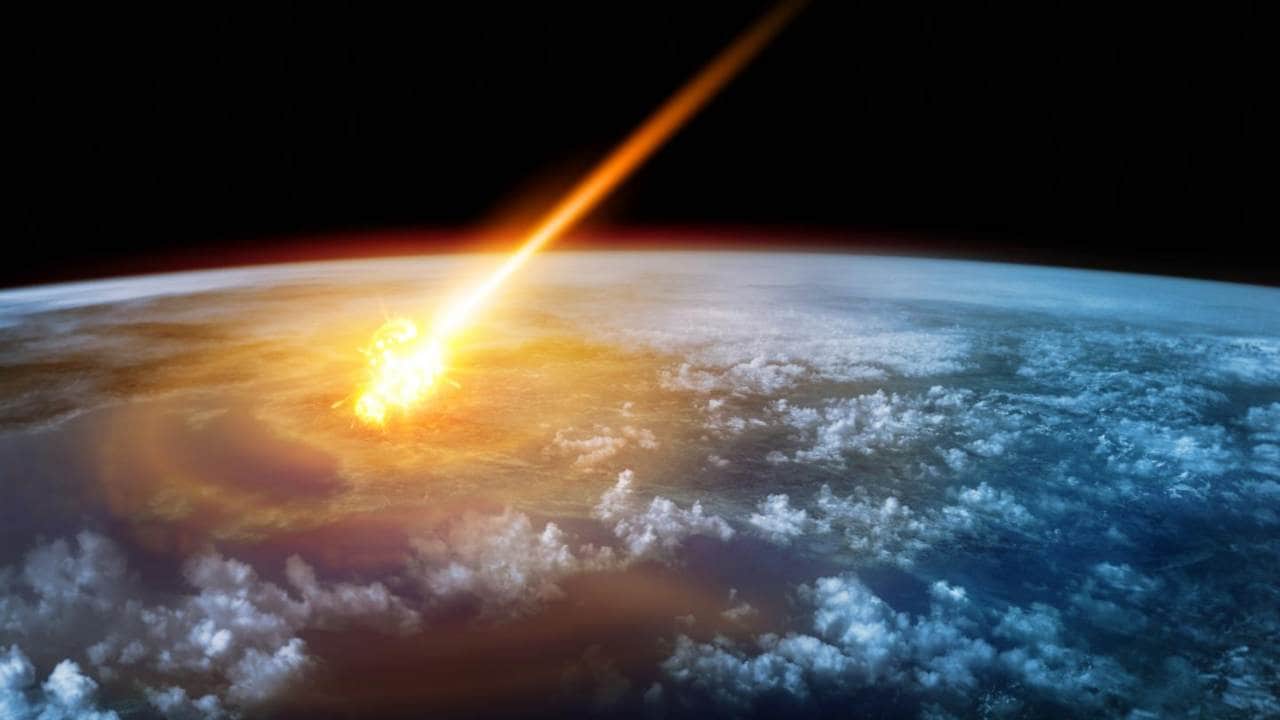
December will have around have 13 asteroids travelling in close proximity to Earth.[/caption]All thirteen asteroids flying-by Earth have been classified as near-Earth objects (NEOs) by the Jet Propulsion Lab at NASA, which manages the CNEOS database. Some of these asteroids could potentially come in contact with Earth’s atmosphere, but often, due to their negligible sizes, they cause no real harm. They end up burning into a stream of dust and gas as they enter the Earth's atmosphere at dizzying speeds, never really making contact with land or ocean.That said, a few lucky people will see them in the form of shooting stars, so they're definitely worth looking out for.On 9 December, asteroid 2019 XY will be the first of three asteroids brushing past Earth in close encounters. 2019 XY will also be the closest of the lot, passing the Earth at close range — little over three times the distance between the Earth and Moon — at 10.21 am IST.At 3.35 pm IST later the same day, asteroid 2019 XB will pass the Earth at 17.28 times the distance between the Earth and the moon (referred to as 'lunar distances').A few hours later, at 6.59 pm IST, 2019 WT3 will also approach the Earth.Asteroid 2019 WO2 will be the fourth asteroid to come in close quarters to Earth in a span of 24 hours within five lunar distances of Earth.On 18 December, at 9.50 am IST, asteroid 2019 XF will be the fastest asteroid this month travelling at a speed of 24.13 km/s relative to Earth's velocity.Asteroid 216258 (2006 WH1) will be the largest asteroid at 240 m-540 m to fly past us this month on 20 December at 8.47 pm IST.A NEO is a comet, asteroid or any small Solar System body whose orbit brings it in close proximity with Earth. If a NEO's orbit crosses the Earth's, and the object is larger than 140 meters across, it is considered a potentially hazardous object (PHO). NASA tracks these NEOs and maintains a database.To track all the asteroids and stay updated on new ones, head here.

Why AI notetakers are raising serious privacy and security concerns
China's low-cost AI models are changing the global AI race. Here's why Silicon Valley is worried
China's Kimi K3 challenges US AI leaders with frontier-level performance at lower cost
How did Instagram run ads promoting child abuse in India?
Why has India halted WhatsApp’s username feature before launch?