
Advertisement


Sections
Internet shutdowns: The legality of Section 144 of the Code of Criminal Procedure
A technology lawyer explains how and when internet shutdowns are enforced by state governments.

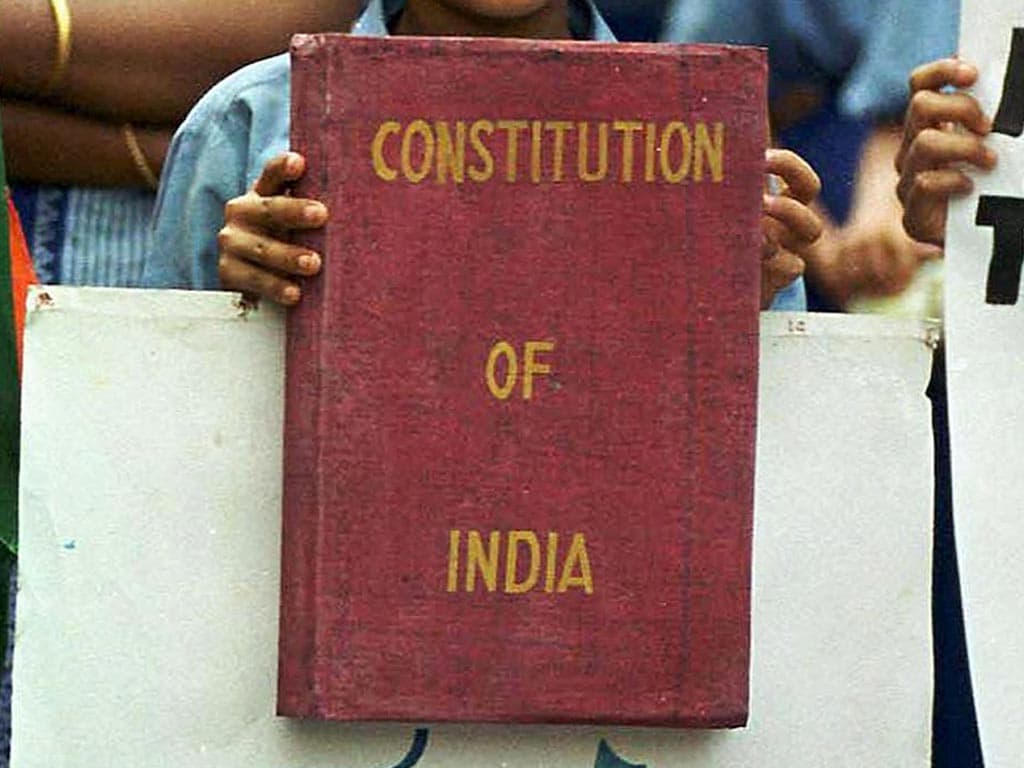
According to internet advocacy group Access Now, India is on top for having enforced the most number of internet shutdowns as of 2018. The group found that 67 percent of the total recorded shutdowns were in India.[caption id="attachment_7811341" align="alignnone" width="1024"]![The Constitution of India. Image: AFP]() The Constitution of India. Image: AFP[/caption]Reuters reported that the Software Freedom and Law Center (SLFC) tracked around 373 shutdowns since 2012 in the country. For countries that practice a more gated internet like China and North Korea, there wasn’t enough public data available to put a number to it.When can an internet shutdown be sanctioned by the government? Who has the authority to declare a suspension of internet services in particular regions? Is an internet shutdown even allowed by the law? If you had similar questions, technology lawyer Mishi Choudhary has compiled a helpful thread on Twitter explaining the nitty-gritty of internet shutdowns in India. She also points out how freedom of speech and expression is related to such shutdowns.Starting off with who can declare an internet shutdown in India, the majority of them are sanctioned by state governments in the entire state or specific areas. The orders are issued by either a District Magistrate, a sub-divisional Magistrate or any Executive Magistrate instructed by a state government.An internet shutdown is issued under Section 144 of the Code of Criminal Procedure (CrPC), 1973. The primary purpose of this section is to enforce “temporary measures to maintain public tranquillity.” One of its most commonly used provisions, when enforced, prohibits the gathering of four or more people in a specified region or area. The order is issued whenever the state government expects cases of nuisance in public that could potentially be dangerous. Hence, the most common cases have happened during or before protests to prevent violent riots.However, Choudhary argues that this goes against the fundamental right of freedom of speech and expression under Article 19(1)(a) of the Constitution of India. She said that the internet is not only a “medium to exercise the right of free speech and expression” but it also works as a means to impart, receive and send information. When issued, internet services are suspended temporarily including mobile internet services. Telecom companies are required to turn off cellular networks from the transmitting towers in specified areas.Although the ultimate motive of cutting off access to internet services is to maintain peace and order in society, Choudhary explained it directly conflicts with one of the fundamental rights of freedom of speech and expression allowed by the Constitution of India.
The Constitution of India. Image: AFP[/caption]Reuters reported that the Software Freedom and Law Center (SLFC) tracked around 373 shutdowns since 2012 in the country. For countries that practice a more gated internet like China and North Korea, there wasn’t enough public data available to put a number to it.When can an internet shutdown be sanctioned by the government? Who has the authority to declare a suspension of internet services in particular regions? Is an internet shutdown even allowed by the law? If you had similar questions, technology lawyer Mishi Choudhary has compiled a helpful thread on Twitter explaining the nitty-gritty of internet shutdowns in India. She also points out how freedom of speech and expression is related to such shutdowns.Starting off with who can declare an internet shutdown in India, the majority of them are sanctioned by state governments in the entire state or specific areas. The orders are issued by either a District Magistrate, a sub-divisional Magistrate or any Executive Magistrate instructed by a state government.An internet shutdown is issued under Section 144 of the Code of Criminal Procedure (CrPC), 1973. The primary purpose of this section is to enforce “temporary measures to maintain public tranquillity.” One of its most commonly used provisions, when enforced, prohibits the gathering of four or more people in a specified region or area. The order is issued whenever the state government expects cases of nuisance in public that could potentially be dangerous. Hence, the most common cases have happened during or before protests to prevent violent riots.However, Choudhary argues that this goes against the fundamental right of freedom of speech and expression under Article 19(1)(a) of the Constitution of India. She said that the internet is not only a “medium to exercise the right of free speech and expression” but it also works as a means to impart, receive and send information. When issued, internet services are suspended temporarily including mobile internet services. Telecom companies are required to turn off cellular networks from the transmitting towers in specified areas.Although the ultimate motive of cutting off access to internet services is to maintain peace and order in society, Choudhary explained it directly conflicts with one of the fundamental rights of freedom of speech and expression allowed by the Constitution of India.
 The Constitution of India. Image: AFP[/caption]Reuters reported that the Software Freedom and Law Center (SLFC) tracked around 373 shutdowns since 2012 in the country. For countries that practice a more gated internet like China and North Korea, there wasn’t enough public data available to put a number to it.When can an internet shutdown be sanctioned by the government? Who has the authority to declare a suspension of internet services in particular regions? Is an internet shutdown even allowed by the law? If you had similar questions, technology lawyer Mishi Choudhary has compiled a helpful thread on Twitter explaining the nitty-gritty of internet shutdowns in India. She also points out how freedom of speech and expression is related to such shutdowns.Starting off with who can declare an internet shutdown in India, the majority of them are sanctioned by state governments in the entire state or specific areas. The orders are issued by either a District Magistrate, a sub-divisional Magistrate or any Executive Magistrate instructed by a state government.An internet shutdown is issued under Section 144 of the Code of Criminal Procedure (CrPC), 1973. The primary purpose of this section is to enforce “temporary measures to maintain public tranquillity.” One of its most commonly used provisions, when enforced, prohibits the gathering of four or more people in a specified region or area. The order is issued whenever the state government expects cases of nuisance in public that could potentially be dangerous. Hence, the most common cases have happened during or before protests to prevent violent riots.However, Choudhary argues that this goes against the fundamental right of freedom of speech and expression under Article 19(1)(a) of the Constitution of India. She said that the internet is not only a “medium to exercise the right of free speech and expression” but it also works as a means to impart, receive and send information. When issued, internet services are suspended temporarily including mobile internet services. Telecom companies are required to turn off cellular networks from the transmitting towers in specified areas.Although the ultimate motive of cutting off access to internet services is to maintain peace and order in society, Choudhary explained it directly conflicts with one of the fundamental rights of freedom of speech and expression allowed by the Constitution of India.
First Published:Dec 21, 2019, 12:27:25 IST
Advertisement
Advertisement

Why AI notetakers are raising serious privacy and security concerns
AI notetakers promise effortless meeting summaries, but experts warn they could expose confidential conversations, corporate secrets and personal voiceprints. As businesses increasingly adopt AI-powered meeting assistants, questions over data storage, privacy, consent and legal risks are becoming impossible to ignore
5 min read
China's low-cost AI models are changing the global AI race. Here's why Silicon Valley is worried
As Chinese firms continue to improve performance while keeping prices low, the AI race is no longer just about building the smartest model—it is increasingly becoming a battle over who can deliver the best value
2 min read
China's Kimi K3 challenges US AI leaders with frontier-level performance at lower cost
Chinese artificial intelligence startup Moonshot AI has unveiled its latest open-weight AI model, Kimi K3, with early results suggesting it could compete with some of the world's most advanced AI systems developed by leading US companies
2 min read
How did Instagram run ads promoting child abuse in India?
India has issued a notice to Meta after an investigation alleged that Instagram displayed paid advertisements promoting child sexual abuse material. MeitY ordered Meta to remove such Instagram ads and explain within seven days how they were approved
8 min read
Why has India halted WhatsApp’s username feature before launch?
India has halted WhatsApp’s planned username feature, citing concerns about cybercrime, impersonation, and law enforcement challenges. As Meta races to address security concerns, here’s why MeitY has paused the rollout, what the feature does, and how it could influence privacy and online safety in India
3 min read
Advertisement
Advertisement