
Advertisement


Sections
Instagram reportedly asking users to submit video selfie for account verification in a bid to weed out bots
According to XDADevelopers, several users have said they were asked to take a video selfie to verify their current accounts on Instagram.

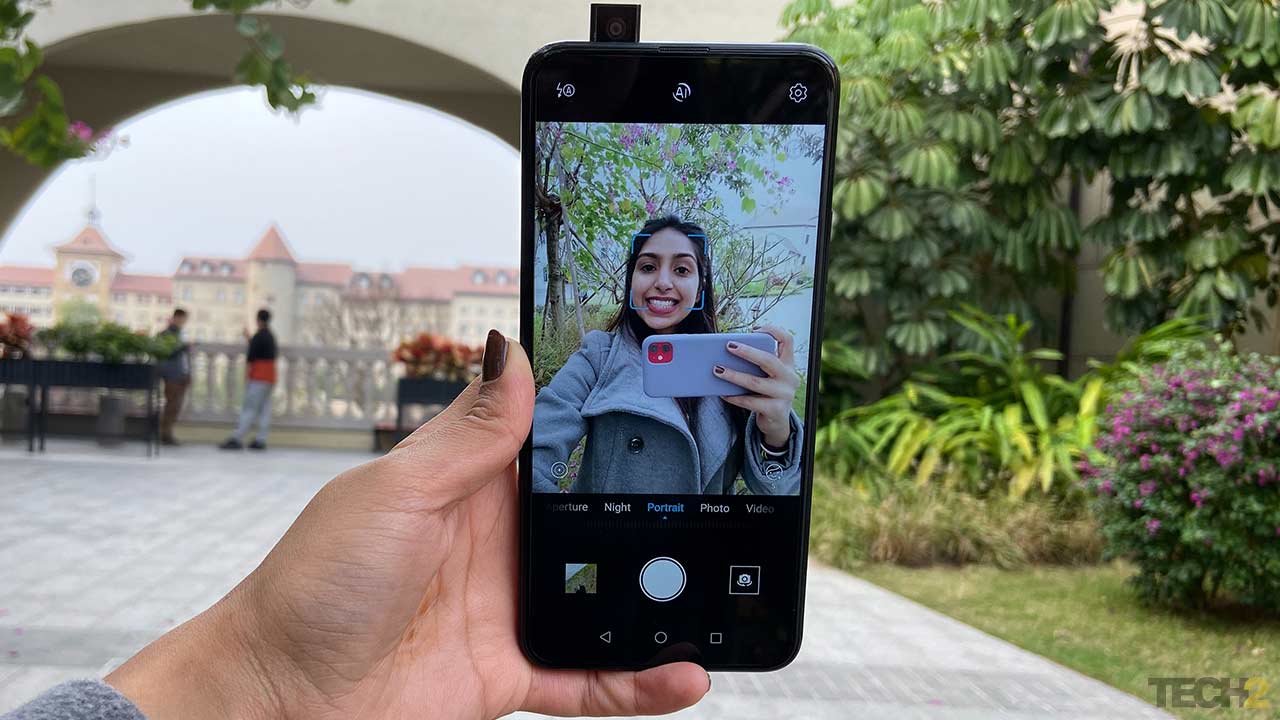
Some users have reportedly been asked by Instagram to provide a video selfie taken from multiple angles to verify their account. According to XDADevelopers, several users have said they were asked to take a video selfie to verify their current accounts.For the uninitiated, the social platform began testing the feature last year, but stopped midway because of technical issues. Instagram has struggled with the issue of bot accounts for a long time, and such accounts usually send spam messages, harass other users and artificially inflate followers. This is the reason why the app is looking to curb the prevalence of bots on the platform.[caption id="attachment_7823331" align="alignnone" width="1280"]![Instagram hopes to establish the identity of the user behind the account to eliminate bot accounts. Image: Nandini Yadav/tech2]() Instagram hopes to establish the identity of the user behind the account to eliminate bot accounts. Image: Nandini Yadav/tech2[/caption]Instagram's public relations team on Twitter stated that accounts with suspicious behaviour could be asked to submit a video selfie. The company reiterated the feature doesn’t use facial recognition, adding that its teams review the videos to establish if "there's a real person behind the account".Meanwhile, as per a screenshot posted by a social media consultant Matt Navarra on Twitter, he informed that the photo sharing app is confirming the identity of users by video selfies while “Meta promises not to collect biometric data.”Another user shared a screenshot of the help screen requesting the user to submit a video selfie. The image showed that on opening the feature, the app asks for a video showing all angles of one's face to prove that they are a real person. Furthermore, it also shows the verification screen for multiple people.Account users will have to submit the video, after it has been recorded, to the platform for confirmation of identity. Additionally, Instagram promises the video will not be visible on the platform and will be deleted within 30 days from the company's servers.So far, it is unclear whether this feature is still being tested or being gradually rolled out. But it's clear that through this process, Meta is looking to reduce the number of fake or spam accounts on the platform. However, Meta has not commented on whether everyone would eventually have to submit a video selfie.The company is also testing its 'Take A Break' feature, which will remind users to close the app after they have been on it for a specified duration.
Instagram hopes to establish the identity of the user behind the account to eliminate bot accounts. Image: Nandini Yadav/tech2[/caption]Instagram's public relations team on Twitter stated that accounts with suspicious behaviour could be asked to submit a video selfie. The company reiterated the feature doesn’t use facial recognition, adding that its teams review the videos to establish if "there's a real person behind the account".Meanwhile, as per a screenshot posted by a social media consultant Matt Navarra on Twitter, he informed that the photo sharing app is confirming the identity of users by video selfies while “Meta promises not to collect biometric data.”Another user shared a screenshot of the help screen requesting the user to submit a video selfie. The image showed that on opening the feature, the app asks for a video showing all angles of one's face to prove that they are a real person. Furthermore, it also shows the verification screen for multiple people.Account users will have to submit the video, after it has been recorded, to the platform for confirmation of identity. Additionally, Instagram promises the video will not be visible on the platform and will be deleted within 30 days from the company's servers.So far, it is unclear whether this feature is still being tested or being gradually rolled out. But it's clear that through this process, Meta is looking to reduce the number of fake or spam accounts on the platform. However, Meta has not commented on whether everyone would eventually have to submit a video selfie.The company is also testing its 'Take A Break' feature, which will remind users to close the app after they have been on it for a specified duration.
 Instagram hopes to establish the identity of the user behind the account to eliminate bot accounts. Image: Nandini Yadav/tech2[/caption]Instagram's public relations team on Twitter stated that accounts with suspicious behaviour could be asked to submit a video selfie. The company reiterated the feature doesn’t use facial recognition, adding that its teams review the videos to establish if "there's a real person behind the account".Meanwhile, as per a screenshot posted by a social media consultant Matt Navarra on Twitter, he informed that the photo sharing app is confirming the identity of users by video selfies while “Meta promises not to collect biometric data.”Another user shared a screenshot of the help screen requesting the user to submit a video selfie. The image showed that on opening the feature, the app asks for a video showing all angles of one's face to prove that they are a real person. Furthermore, it also shows the verification screen for multiple people.Account users will have to submit the video, after it has been recorded, to the platform for confirmation of identity. Additionally, Instagram promises the video will not be visible on the platform and will be deleted within 30 days from the company's servers.So far, it is unclear whether this feature is still being tested or being gradually rolled out. But it's clear that through this process, Meta is looking to reduce the number of fake or spam accounts on the platform. However, Meta has not commented on whether everyone would eventually have to submit a video selfie.The company is also testing its 'Take A Break' feature, which will remind users to close the app after they have been on it for a specified duration.
First Published:Nov 17, 2021, 14:23:05 IST
Advertisement
Advertisement

Why AI notetakers are raising serious privacy and security concerns
AI notetakers promise effortless meeting summaries, but experts warn they could expose confidential conversations, corporate secrets and personal voiceprints. As businesses increasingly adopt AI-powered meeting assistants, questions over data storage, privacy, consent and legal risks are becoming impossible to ignore
5 min read
China's low-cost AI models are changing the global AI race. Here's why Silicon Valley is worried
As Chinese firms continue to improve performance while keeping prices low, the AI race is no longer just about building the smartest model—it is increasingly becoming a battle over who can deliver the best value
2 min read
China's Kimi K3 challenges US AI leaders with frontier-level performance at lower cost
Chinese artificial intelligence startup Moonshot AI has unveiled its latest open-weight AI model, Kimi K3, with early results suggesting it could compete with some of the world's most advanced AI systems developed by leading US companies
2 min read
How did Instagram run ads promoting child abuse in India?
India has issued a notice to Meta after an investigation alleged that Instagram displayed paid advertisements promoting child sexual abuse material. MeitY ordered Meta to remove such Instagram ads and explain within seven days how they were approved
8 min read
Why has India halted WhatsApp’s username feature before launch?
India has halted WhatsApp’s planned username feature, citing concerns about cybercrime, impersonation, and law enforcement challenges. As Meta races to address security concerns, here’s why MeitY has paused the rollout, what the feature does, and how it could influence privacy and online safety in India
3 min read
Advertisement
Advertisement