


India's first 3D printed house could be a reality within a year say researchers
A prototype structure that has been printed at IIT Madras will serve as a base model for research.

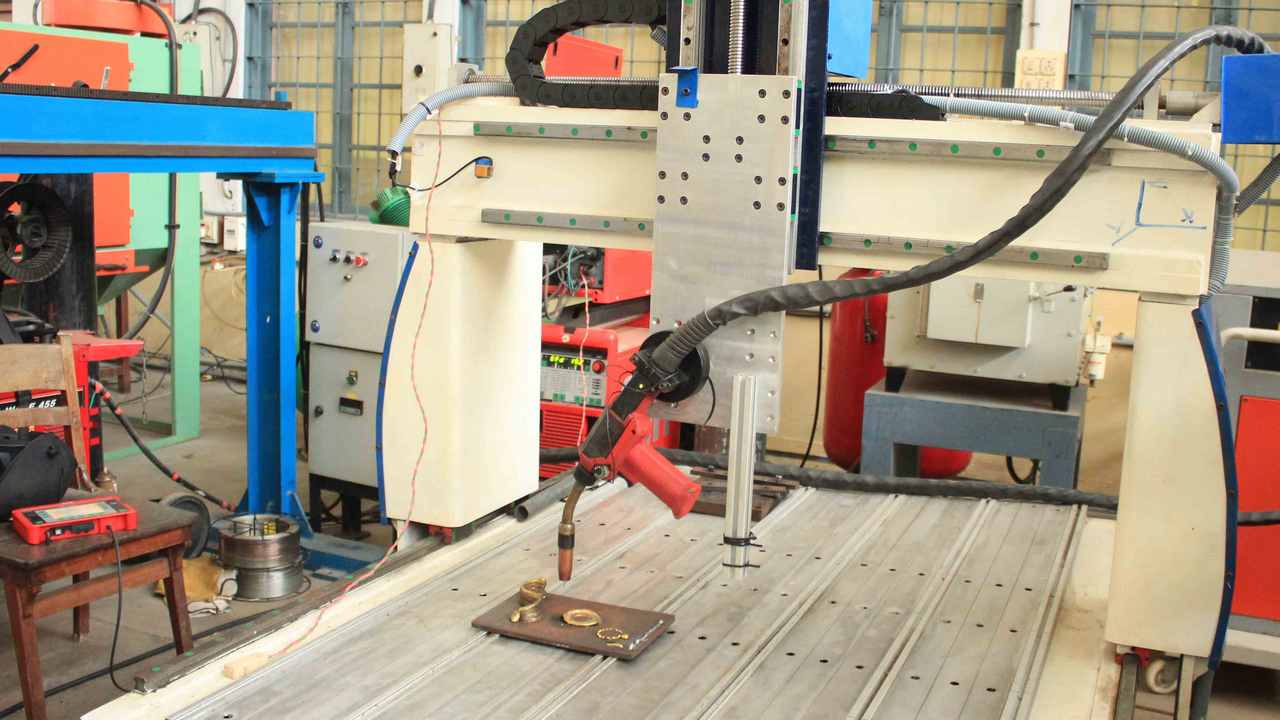
A metal and aluminium 3D printer manufactured by Tvasta. Image: Tvasta[/caption]A prototype structure that has been printed at IIT Madras will serve as a base foundational model for accelerating research and development and testing in Tvasta's road to making affordable sanitation and housing a reality in the country.According to the researchers, India's massive infrastructure deficit in the area of housing, toilets and transportation inspired them to turn to 3D printing technology, which completely re-envisions the construction industry.They said that they are keenly looking forward to bringing the advantages of this technology to the Indian market.Koshy Varghese, a professor in the Department of Civil Engineering at IIT Madras, said that the institute is collaborating with several government agencies and industry to disseminate knowledge and establish standards, policies and processes to bring the new technology to the field.Adithya VS, Co-founder of Tvasta said, that they will be building India's first 3D printed house within the next one year."The impact of 3D printing in construction will be primarily focussed towards the 'Housing for All' scheme under the Pradhan Mantri Awas Yojana and construction of toilets for the 'Swachh Bharat Abhiyan'," said Adithya."Tvasta is working with multiple stakeholders in the construction Industry to make 3D Printing technology suitable and viable for the Indian construction industry," he said.The other three founders of the startup are Parivarthan Reddy, Vidyashankar C and Santhosh Kumar.Currently, the material that is being used is a specially designed concrete, the team said.This concrete has been designed keeping in mind the need for easy extrusion through the 3D printer and also shape retention after placement of the concrete."We will also be working on natural materials — such as stabilised soil — or alternative cementing materials — such as geopolymers — in the future," the team said.The total printing time that was required for completing the prototype structure was around two days.However, the team plans to have the capability to print the elements of a complete house of about 320 square feet in about 3 days and complete the entire assembly, including finishing, within a week.

Why AI notetakers are raising serious privacy and security concerns
China's low-cost AI models are changing the global AI race. Here's why Silicon Valley is worried
China's Kimi K3 challenges US AI leaders with frontier-level performance at lower cost
How did Instagram run ads promoting child abuse in India?
Why has India halted WhatsApp’s username feature before launch?