
Advertisement


Sections
India gets its first drone policy: All you need to know about Drone Regulations 1.0
The regulations are intended to enable visual line-of-sight, daytime-only drone flight operations.

Government of India's Ministry of Civil Aviation announced guidelines on Monday for remotely piloted aircraft — or drones as they are more commonly known — which will come into effect from 1 December, aiming to open up an array of opportunities in the Indian civil aviation sector.Unveiling the "Drone Regulations 1.0" in New Delhi, Civil Aviation Minister Suresh Prabhu said that the guidelines would help foster technology and innovation in the development of drones — devices which have an extensive range of applications ranging from disaster relief to agriculture."The drone market in India holds the potential of hitting over $1 trillion. We plan to develop drone manufacturing not only for the domestic market but abroad as well," Prabhu said, adding that India's expertise in technology is characterised by its capacity to devise low-cost solutions. The minister said that these drone regulations had taken so long to be formed because of various safety and security issues that needed to be sorted out.His ministry, however, stated three specific reasons for these regulations to have taken so long to be formulated:![Representational image. Reuters]() Representational image. Reuters[/caption]"For every flight, users will be required to ask for permission to fly on a mobile app and an automated process permits or denies the request instantly. To prevent unauthorised flights and to ensure public safety, any drone without a digital permit to fly will simply not be able to takeoff," the ministry said.The UTM platform operates as a traffic regulator in the drone airspace and coordinates closely with the defence and civilian air traffic controllers (ATCs) to ensure that drones remain on approved flight paths."The regulations are intended to enable visual line-of-sight, daytime-only and a maximum of 400-feet altitude flight operations," Sinha said. These limitations are not likely to last very long, as a committee called the Drone Task Force will work to expand the Indian regulations to meet global standards.The Drone Task ForceA Drone Task Force, under the chairmanship of Sinha, will provide draft recommendations for the next series of regulations — the Drone Regulations 2.0. According to the ministry, these upcoming regulations will deal with, among other things, the following issues:
Representational image. Reuters[/caption]"For every flight, users will be required to ask for permission to fly on a mobile app and an automated process permits or denies the request instantly. To prevent unauthorised flights and to ensure public safety, any drone without a digital permit to fly will simply not be able to takeoff," the ministry said.The UTM platform operates as a traffic regulator in the drone airspace and coordinates closely with the defence and civilian air traffic controllers (ATCs) to ensure that drones remain on approved flight paths."The regulations are intended to enable visual line-of-sight, daytime-only and a maximum of 400-feet altitude flight operations," Sinha said. These limitations are not likely to last very long, as a committee called the Drone Task Force will work to expand the Indian regulations to meet global standards.The Drone Task ForceA Drone Task Force, under the chairmanship of Sinha, will provide draft recommendations for the next series of regulations — the Drone Regulations 2.0. According to the ministry, these upcoming regulations will deal with, among other things, the following issues:![Representational image. Pixabay]() Representational image. Pixabay[/caption]As of now, drones are allowed to operate within visual line of sight, during daytime only, and up to a maximum altitude of 400 feet.The FAQs released by the ministry also specify that delivery of items using drones is "not allowed as of now". Government agencies, however, can use drones for making deliveries, Sinha said.Necessary equipment on boardThe mandatory equipment required for operation of drones — except those which fall into the nano category — are:
Representational image. Pixabay[/caption]As of now, drones are allowed to operate within visual line of sight, during daytime only, and up to a maximum altitude of 400 feet.The FAQs released by the ministry also specify that delivery of items using drones is "not allowed as of now". Government agencies, however, can use drones for making deliveries, Sinha said.Necessary equipment on boardThe mandatory equipment required for operation of drones — except those which fall into the nano category — are:
- Drone technologies have been evolving very rapidly.
- Many countries are still experimenting with their drone regulations and no ICAO (International Civil Aviation Organisation) stands have been developed.
- India's security environment necessitates extra precautions.
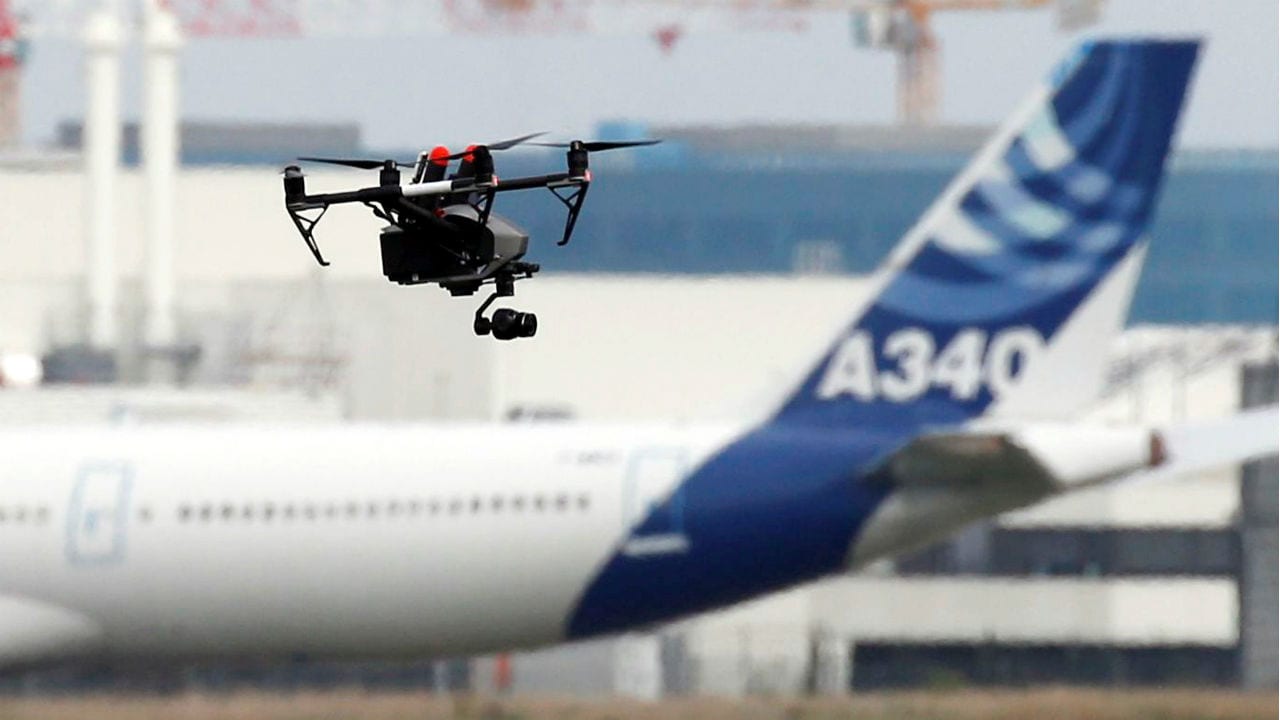 Representational image. Reuters[/caption]"For every flight, users will be required to ask for permission to fly on a mobile app and an automated process permits or denies the request instantly. To prevent unauthorised flights and to ensure public safety, any drone without a digital permit to fly will simply not be able to takeoff," the ministry said.The UTM platform operates as a traffic regulator in the drone airspace and coordinates closely with the defence and civilian air traffic controllers (ATCs) to ensure that drones remain on approved flight paths."The regulations are intended to enable visual line-of-sight, daytime-only and a maximum of 400-feet altitude flight operations," Sinha said. These limitations are not likely to last very long, as a committee called the Drone Task Force will work to expand the Indian regulations to meet global standards.The Drone Task ForceA Drone Task Force, under the chairmanship of Sinha, will provide draft recommendations for the next series of regulations — the Drone Regulations 2.0. According to the ministry, these upcoming regulations will deal with, among other things, the following issues:
- Certification of safe and controlled operation of drone hardware and software
- Airspace management through automated operations linked into overall airspace management framework
- Beyond visual-line-of-sight operations
- Contribution to establishing global standards.
- Suggestions for modifications of existing CARs (civil aviation requirements) and/or new CARs.
- Red Zone: Flying not permitted
- Yellow Zone: Controlled airspace — permission required before flying
- Green Zone: Uncontrolled airspace — automatic permission
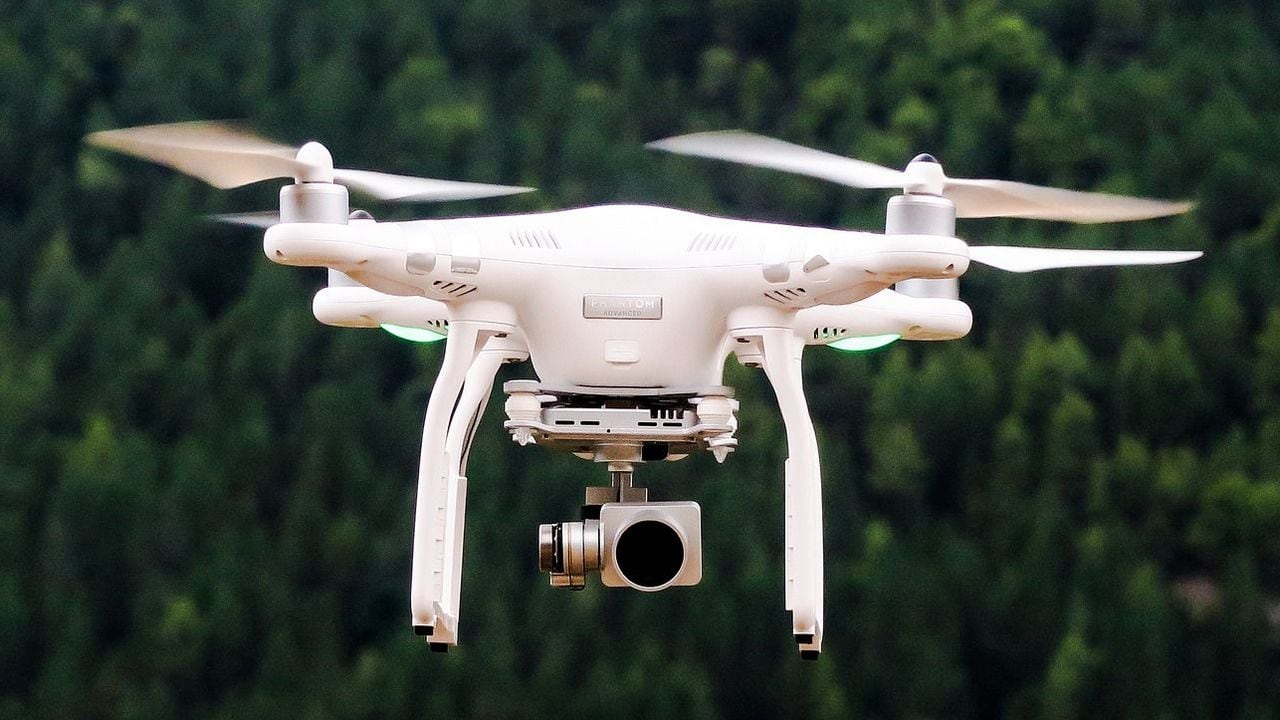 Representational image. Pixabay[/caption]As of now, drones are allowed to operate within visual line of sight, during daytime only, and up to a maximum altitude of 400 feet.The FAQs released by the ministry also specify that delivery of items using drones is "not allowed as of now". Government agencies, however, can use drones for making deliveries, Sinha said.Necessary equipment on boardThe mandatory equipment required for operation of drones — except those which fall into the nano category — are:
- GNSS — Global Navigation Satellite System
- Return-To-Home (RTH) feature
- Anti-collision light
- ID-Plate
- Flight controller with flight data logging capability
- Radio Frequency ID and SIM/ No-Permission No Take off (NPNT)
- The following enforcement actions have been stated by the civil aviation ministry
- Suspension or cancellation of UIN/ UAOP in case of violation of regulatory provisions
- Actions as per relevant Sections of the Aircraft Act 1934, or Aircraft Rules, or any statutory provisions
- Penalties as per applicable sections in the Indian Penal Code (such as 287, 336, 337, 338, or other relevant sections in the IPC)
First Published:Aug 28, 2018, 15:23:05 IST
Advertisement
Advertisement

Why AI notetakers are raising serious privacy and security concerns
AI notetakers promise effortless meeting summaries, but experts warn they could expose confidential conversations, corporate secrets and personal voiceprints. As businesses increasingly adopt AI-powered meeting assistants, questions over data storage, privacy, consent and legal risks are becoming impossible to ignore
5 min read
China's low-cost AI models are changing the global AI race. Here's why Silicon Valley is worried
As Chinese firms continue to improve performance while keeping prices low, the AI race is no longer just about building the smartest model—it is increasingly becoming a battle over who can deliver the best value
2 min read
China's Kimi K3 challenges US AI leaders with frontier-level performance at lower cost
Chinese artificial intelligence startup Moonshot AI has unveiled its latest open-weight AI model, Kimi K3, with early results suggesting it could compete with some of the world's most advanced AI systems developed by leading US companies
2 min read
How did Instagram run ads promoting child abuse in India?
India has issued a notice to Meta after an investigation alleged that Instagram displayed paid advertisements promoting child sexual abuse material. MeitY ordered Meta to remove such Instagram ads and explain within seven days how they were approved
8 min read
Why has India halted WhatsApp’s username feature before launch?
India has halted WhatsApp’s planned username feature, citing concerns about cybercrime, impersonation, and law enforcement challenges. As Meta races to address security concerns, here’s why MeitY has paused the rollout, what the feature does, and how it could influence privacy and online safety in India
3 min read
Advertisement
Advertisement