
Advertisement


Sections
India bans Chinese apps: Centre blocks 59 apps including TikTok, UC Browser; decision aimed at protecting Indians' data, says Ravi Shankar Prasad
The ban on Chinese apps comes in the backdrop of current stand-off along the Line of Actual control in Ladakh with PLA troops.

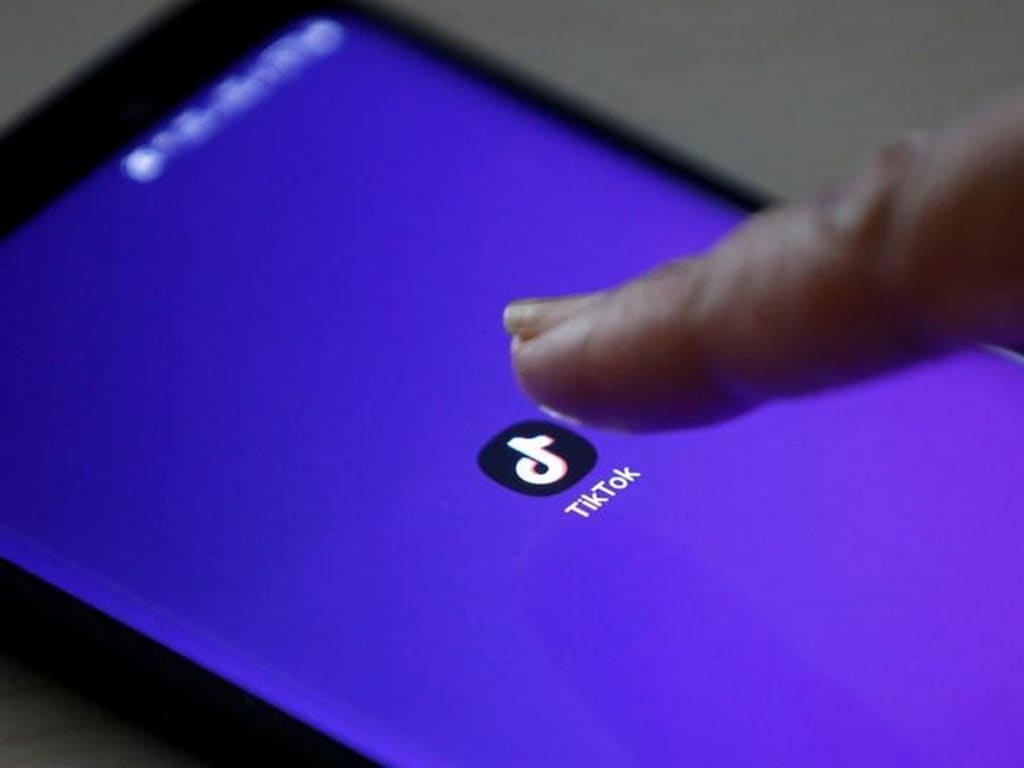
India on Monday banned 59 apps with Chinese links, including the hugely-popular TikTok and UC Browser, saying they were prejudicial to the sovereignty, integrity, and security of the country.The ban, which comes in the backdrop of the current stand-off with Chinese troops along the Line of Actual control in Ladakh, is also applicable for WeChat and Bigo Live.The list of apps that have been banned also include Helo, Likee, CamScanner, Vigo Video, Clash of Kings as well as e-commerce platforms Club Factory and Shein.[caption id="attachment_7449641" align="alignnone" width="1024"]![TikTok has become the most downloaded social media app in India.Image: Reuters]() TikTok has become the most downloaded social media app in India.Image: Reuters[/caption]This marks the most significant move India has made against Chinese technology companies.Here is the full list of apps which have been banned —In a statement, the Information Technology Ministry said it has received many complaints from various sources, including several reports about misuse of some mobile apps available on Android and iOS platforms for "stealing and surreptitiously transmitting users data in an unauthorised manner to servers which have locations outside India"."The compilation of these data, its mining and profiling by elements hostile to national security and defence of India, which ultimately impinges upon the sovereignty and integrity of India, is a matter of very deep and immediate concern which requires emergency measures," the statement said.A formal order asking phone companies to block the applications is being issued.TikTok (which has over 200 million users in India), Likee, and Vigo Video are popular short video creation platforms, while Club Factory and Shein are e-commerce platforms that were looking at expanding their presence to compete with larger rivals like Myntra.WeChat is a Chinese multi-purpose messaging and social media app that rivals WhatsApp.CamScanner is a popular app that allows users to scan images and share them.The SHAREit app allows users to share files between devices, while Helo -- a social media platform -- is owned by ByteDance, the parent firm of TikTok.Alibaba's UC Browser is a mobile Internet browser that has been available in India since 2009. It claimed to have registered 1.1 billion user downloads worldwide (excluding China) in September 2019, with half of its global installs from India. It also claimed to have 130 million monthly active users in the country at that time.
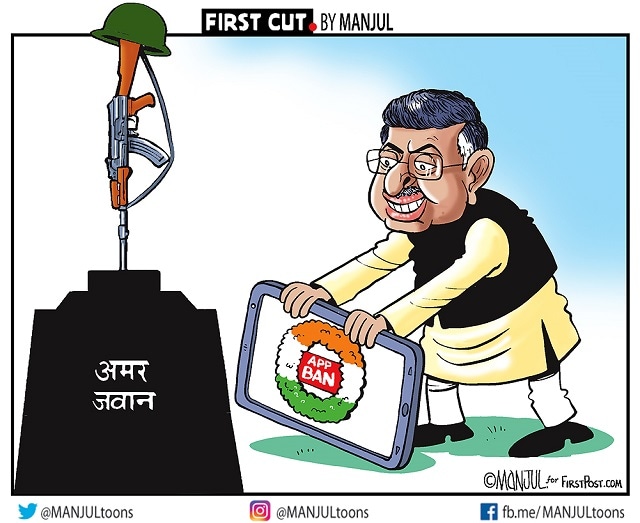
TikTok has become the most downloaded social media app in India.Image: Reuters[/caption]This marks the most significant move India has made against Chinese technology companies.Here is the full list of apps which have been banned —In a statement, the Information Technology Ministry said it has received many complaints from various sources, including several reports about misuse of some mobile apps available on Android and iOS platforms for "stealing and surreptitiously transmitting users data in an unauthorised manner to servers which have locations outside India"."The compilation of these data, its mining and profiling by elements hostile to national security and defence of India, which ultimately impinges upon the sovereignty and integrity of India, is a matter of very deep and immediate concern which requires emergency measures," the statement said.A formal order asking phone companies to block the applications is being issued.TikTok (which has over 200 million users in India), Likee, and Vigo Video are popular short video creation platforms, while Club Factory and Shein are e-commerce platforms that were looking at expanding their presence to compete with larger rivals like Myntra.WeChat is a Chinese multi-purpose messaging and social media app that rivals WhatsApp.CamScanner is a popular app that allows users to scan images and share them.The SHAREit app allows users to share files between devices, while Helo -- a social media platform -- is owned by ByteDance, the parent firm of TikTok.Alibaba's UC Browser is a mobile Internet browser that has been available in India since 2009. It claimed to have registered 1.1 billion user downloads worldwide (excluding China) in September 2019, with half of its global installs from India. It also claimed to have 130 million monthly active users in the country at that time.![manjul]() The government has also banned a clutch of apps of Chinese handset maker Xiaomi, including Mi Community and Mi Video Call. Xiaomi is India's largest handset brand.The IT Ministry said it has invoked its power under section 69A of the IT Act and rules, and has decided to block 59 apps in view of information available that they are "engaged in activities which are prejudicial to sovereignty and integrity of India, defence of India, security of state and public order"."The move will "safeguard the interests of crores of Indian mobile and internet users. This decision is a targeted move to ensure safety and sovereignty of Indian cyberspace", it added.Ravi Shankar Prasad, Union minister for Electronics and Information Technology said —The Indian Cyber Crime Coordination Centre, Ministry of Home Affairs, has also sent an exhaustive recommendation for blocking these malicious apps, the statement said, adding that there has been a strong chorus in the public space to take strict action against apps that harm India's sovereignty as well as the privacy of citizens.Likewise, there have been similar bipartisan concerns, flagged by various public representatives, both outside and inside Parliament, according to the Ministry's press release."On the basis of these and upon receiving recent credible inputs that such apps pose threat to sovereignty and integrity of India, the Government of India has decided to disallow the usage of certain apps, used in both mobile and non-mobile Internet enabled devices," it added."There have been raging concerns on aspects relating to data security and safeguarding the privacy of 130 crore Indians. It has been noted recently that such concerns also pose a threat to sovereignty and security of our country," the statement said.Comments from the companies affected by the ban could not be immediately obtained.Over 2015-19, Chinese investors including Alibaba, Tencent, TR Capital, and Hillhouse Capital, have invested over USD 5.5 billion in Indian start-ups, according to Venture Intelligence that tracks private equity, venture capital, M&A transactions and valuations, in India.
The government has also banned a clutch of apps of Chinese handset maker Xiaomi, including Mi Community and Mi Video Call. Xiaomi is India's largest handset brand.The IT Ministry said it has invoked its power under section 69A of the IT Act and rules, and has decided to block 59 apps in view of information available that they are "engaged in activities which are prejudicial to sovereignty and integrity of India, defence of India, security of state and public order"."The move will "safeguard the interests of crores of Indian mobile and internet users. This decision is a targeted move to ensure safety and sovereignty of Indian cyberspace", it added.Ravi Shankar Prasad, Union minister for Electronics and Information Technology said —The Indian Cyber Crime Coordination Centre, Ministry of Home Affairs, has also sent an exhaustive recommendation for blocking these malicious apps, the statement said, adding that there has been a strong chorus in the public space to take strict action against apps that harm India's sovereignty as well as the privacy of citizens.Likewise, there have been similar bipartisan concerns, flagged by various public representatives, both outside and inside Parliament, according to the Ministry's press release."On the basis of these and upon receiving recent credible inputs that such apps pose threat to sovereignty and integrity of India, the Government of India has decided to disallow the usage of certain apps, used in both mobile and non-mobile Internet enabled devices," it added."There have been raging concerns on aspects relating to data security and safeguarding the privacy of 130 crore Indians. It has been noted recently that such concerns also pose a threat to sovereignty and security of our country," the statement said.Comments from the companies affected by the ban could not be immediately obtained.Over 2015-19, Chinese investors including Alibaba, Tencent, TR Capital, and Hillhouse Capital, have invested over USD 5.5 billion in Indian start-ups, according to Venture Intelligence that tracks private equity, venture capital, M&A transactions and valuations, in India.
 TikTok has become the most downloaded social media app in India.Image: Reuters[/caption]This marks the most significant move India has made against Chinese technology companies.Here is the full list of apps which have been banned —In a statement, the Information Technology Ministry said it has received many complaints from various sources, including several reports about misuse of some mobile apps available on Android and iOS platforms for "stealing and surreptitiously transmitting users data in an unauthorised manner to servers which have locations outside India"."The compilation of these data, its mining and profiling by elements hostile to national security and defence of India, which ultimately impinges upon the sovereignty and integrity of India, is a matter of very deep and immediate concern which requires emergency measures," the statement said.A formal order asking phone companies to block the applications is being issued.TikTok (which has over 200 million users in India), Likee, and Vigo Video are popular short video creation platforms, while Club Factory and Shein are e-commerce platforms that were looking at expanding their presence to compete with larger rivals like Myntra.WeChat is a Chinese multi-purpose messaging and social media app that rivals WhatsApp.CamScanner is a popular app that allows users to scan images and share them.The SHAREit app allows users to share files between devices, while Helo -- a social media platform -- is owned by ByteDance, the parent firm of TikTok.Alibaba's UC Browser is a mobile Internet browser that has been available in India since 2009. It claimed to have registered 1.1 billion user downloads worldwide (excluding China) in September 2019, with half of its global installs from India. It also claimed to have 130 million monthly active users in the country at that time.
 The government has also banned a clutch of apps of Chinese handset maker Xiaomi, including Mi Community and Mi Video Call. Xiaomi is India's largest handset brand.The IT Ministry said it has invoked its power under section 69A of the IT Act and rules, and has decided to block 59 apps in view of information available that they are "engaged in activities which are prejudicial to sovereignty and integrity of India, defence of India, security of state and public order"."The move will "safeguard the interests of crores of Indian mobile and internet users. This decision is a targeted move to ensure safety and sovereignty of Indian cyberspace", it added.Ravi Shankar Prasad, Union minister for Electronics and Information Technology said —The Indian Cyber Crime Coordination Centre, Ministry of Home Affairs, has also sent an exhaustive recommendation for blocking these malicious apps, the statement said, adding that there has been a strong chorus in the public space to take strict action against apps that harm India's sovereignty as well as the privacy of citizens.Likewise, there have been similar bipartisan concerns, flagged by various public representatives, both outside and inside Parliament, according to the Ministry's press release."On the basis of these and upon receiving recent credible inputs that such apps pose threat to sovereignty and integrity of India, the Government of India has decided to disallow the usage of certain apps, used in both mobile and non-mobile Internet enabled devices," it added."There have been raging concerns on aspects relating to data security and safeguarding the privacy of 130 crore Indians. It has been noted recently that such concerns also pose a threat to sovereignty and security of our country," the statement said.Comments from the companies affected by the ban could not be immediately obtained.Over 2015-19, Chinese investors including Alibaba, Tencent, TR Capital, and Hillhouse Capital, have invested over USD 5.5 billion in Indian start-ups, according to Venture Intelligence that tracks private equity, venture capital, M&A transactions and valuations, in India.
Political reactions
Opposition party leaders welcomed the government's move to ban the Chinese apps, but stressed that more needed to be done.Congress leader Ahmed Patel tweeted —In a similar vein, Shiv Sena leader Priyanka Chaturvedi said —Jharkhand chief minister Hemant Soren was quoted as saying by ANI, "I think the Central government is late to take this step. These mobile applications have already spread the 'infection'."With inputs from PTI
First Published:Jun 30, 2020, 00:31:40 IST
Advertisement
Advertisement

Why AI notetakers are raising serious privacy and security concerns
AI notetakers promise effortless meeting summaries, but experts warn they could expose confidential conversations, corporate secrets and personal voiceprints. As businesses increasingly adopt AI-powered meeting assistants, questions over data storage, privacy, consent and legal risks are becoming impossible to ignore
5 min read
China's low-cost AI models are changing the global AI race. Here's why Silicon Valley is worried
As Chinese firms continue to improve performance while keeping prices low, the AI race is no longer just about building the smartest model—it is increasingly becoming a battle over who can deliver the best value
2 min read
China's Kimi K3 challenges US AI leaders with frontier-level performance at lower cost
Chinese artificial intelligence startup Moonshot AI has unveiled its latest open-weight AI model, Kimi K3, with early results suggesting it could compete with some of the world's most advanced AI systems developed by leading US companies
2 min read
How did Instagram run ads promoting child abuse in India?
India has issued a notice to Meta after an investigation alleged that Instagram displayed paid advertisements promoting child sexual abuse material. MeitY ordered Meta to remove such Instagram ads and explain within seven days how they were approved
8 min read
Why has India halted WhatsApp’s username feature before launch?
India has halted WhatsApp’s planned username feature, citing concerns about cybercrime, impersonation, and law enforcement challenges. As Meta races to address security concerns, here’s why MeitY has paused the rollout, what the feature does, and how it could influence privacy and online safety in India
3 min read
Advertisement
Advertisement