


How Xiaomi went from being an unknown Chinese phone maker to a household name in India
By pairing affordable pricing with premium materials, Xiaomi managed to breathe fresh life into new categories


Xiaomi founder, Chairman and CEO Lei Jun (2nd R) attends the listing of the company at the Hong Kong Exchanges in Hong Kong, China July 9, 2018.[/caption]Since those humble beginnings, Xiaomi’s empire has spiralled out of the underdog status and into a gargantuan household name with products spanning across a vast gamut of lifestyle as well as electronics categories. It rose to the top of the smartphone market, a position held by Samsung for ages.But other than making India its second home, Xiaomi’s expansion in the country has proved instrumental for several stodgy sectors as a whole. Sectors such as televisions, soundbars, fitness accessories, air purifiers which were either nearly non-existent before Xiaomi’s arrival or were dominated by companies that had grown way too comfortable (with the dearth of any sort of resistance or friction), have suddenly become exciting.
(Truly) disrupting industries
By pairing an affordable pricing model and premium materials, Xiaomi managed to breathe fresh life into these categories and planted the seeds for new ones. In the past year, companies such as Samsung have been forced to revamp their strategy in a hope to retaliate.[caption id="attachment_5520851" align="alignnone" width="960"]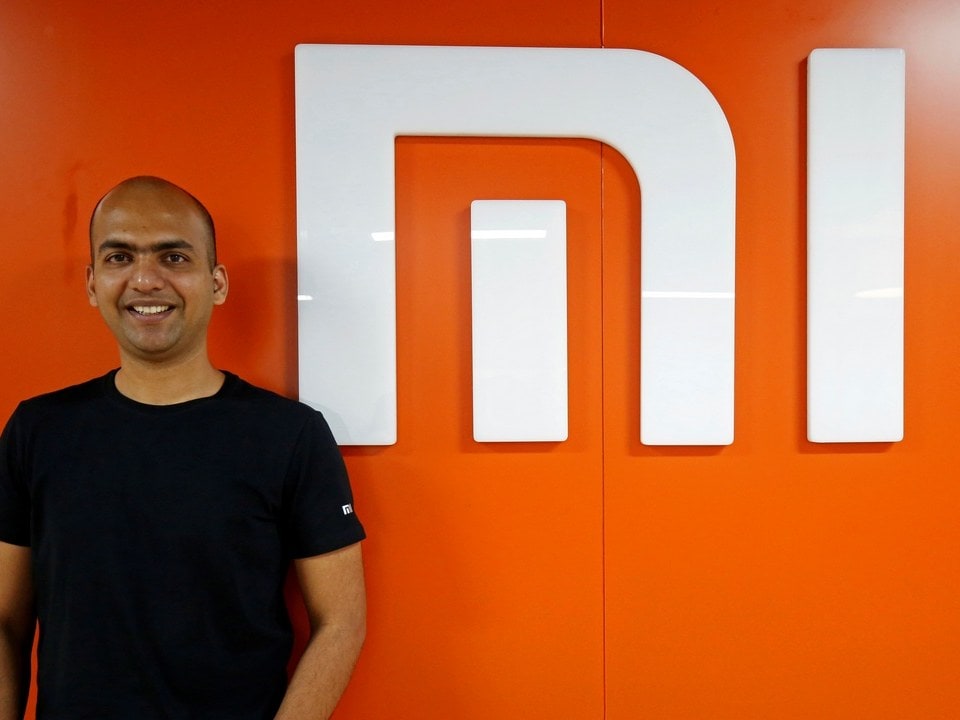 Manu Kumar Jain, Managing Director of Xiaomi India, poses next to the logo of Xiaomi in his office in Bengaluru. Image: Reuters[/caption]Smart bands, for instance, were barely active in early 2015. However, later when Xiaomi brought its entry-level Mi Band to India, the market witnessed a sharp uptick. Both in terms of sales and the number of challengers craving for a share in this newly discovered segment. Mi Band and its successors have been the undisputed leaders in the fitness band category.“Wearables category (specifically smart bands) exploded in 2016, with several brands coming in,” commented Navkendar Singh, research director at IDC. With a head start and a better insight into what users want, Xiaomi has been also able to retain its lead in spite of the influx of new, cheaper options.“As per Counterpoint Research estimates, Xiaomi had 44 percent of the smart band shipment volume share in 2018, grew from 27 percent shipment share over the last year,” said Pavel Naiya, senior analyst, Devices and Ecosystem, Counterpoint Research.Similarly, Xiaomi introduced India to air purifiers in September 2016. Sure, there have been a few players in this segment before, but the idea of these devices was still largely absent in Indians’ minds. This was too followed by a deluge of new competition with brands such as Dyson and Samsung entering the space.But the one that had the most impact and was desperately crucial for the Indian electronics market was Xiaomi’s Mi TV launch. In the past, smart televisions in India were both overpriced and plagued with an underwhelming experience. Xiaomi mended both with a series of models at various price points. Today, Xiaomi’s televisions have grown so much in popularity that mobile-only Xiaomi Preferred Partner stores are now (profitably) selling them as well.(Also Read: Xiaomi Mi LED TV 4X Pro 55 review: Arguably the best TV under Rs 40,000)Plus, Xiaomi’s Mi TV lineup severely affected players like Samsung who are selling mostly identical products at about double the price. To strike back, the Korean manufacturer recently announced a new range of Flipkart-exclusive smart, 4K televisions in the same price segment as Xiaomi’s Mi TV. Whether that will put a pause on Xiaomi’s televisions’ growth, which has reached the magic figure of one million TVs sold in merely nine months, remains to be seen.“In smart TVs, Xiaomi entered in 2018. As a result, the smart TV category grew by almost 80 percent, in which Xiaomi contributed to about 60 percent of this growth. Xiaomi is now the largest brand in the category with more than a quarter of the share,” said IDC’s Singh. “Even in air purifiers, Xiaomi is one of the largest players (although the market is seasonal, geographically concentrated), but it definitely helped democratise the concept of air purifiers because of affordability and marketing by Xiaomi. The launch timing also helped for this category actually,” he added.[caption id="attachment_5250741" align="alignnone" width="1280"]
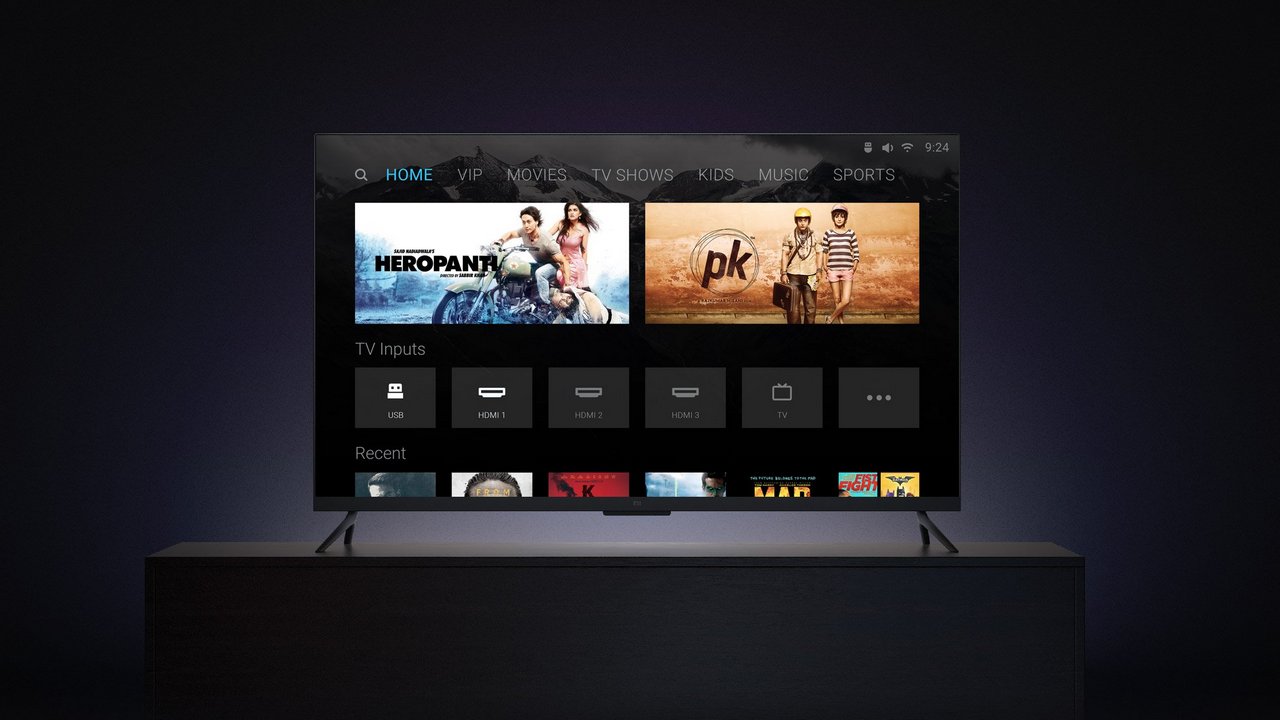 Mi LED Tv 4[/caption]Counterpoint’s Naiya agrees as well and stated, “With increasing competition, product prices have curved by the market dynamic. As a result, we are seeing other top OEMs are launching budget products, be it air purifiers, smart TVs and other smart appliances, etc.”Incidentally, research firms like IDC didn’t even actively track smart televisions before 2018.So how did Xiaomi, a company which started with one device, predict these trends and built a sweeping ecosystem in just a couple of years?
Feedback, feedback, feedback
Competitive pricing is just one part of the puzzle
Xiaomi didn’t call it a day after releasing cheaper alternatives loaded with high-end features on the products it sells. Others like Vu (in the television industry) have tried that trick before and in some ways, thrived as well. But it’s easy to forget that price is a fragile advantage to live on and can be undercut by anyone if it comes to that. The disappearance of Indian smartphone brands such as Karbonn, Micromax and others from the top five in quarterly results is an example of that.(Also Read: The Xiaomi smartphone buying guide: From Poco F1, Redmi Note 7 Pro to Mi A2)Therefore, to ensure their rise cannot be mimicked and countered by sheer brute force, Xiaomi reengineers its products so that they are fit for the Indian market. The software Mi TV runs on — Patchwall is the epitome of this. It offers a custom interface which marries the best of both worlds ie. the smart chops of Android TV such as the ability to play your favourite movies or shows with your voice command and the large catalog of cable on which most Indians still heavily rely on, using a single extra connector, so that you don’t have to switch between the TV remote and your DTH provider’s remote“We at Xiaomi take major efforts to localise our product development efforts and operations before we introduce any new product or category in India. For instance, when we decided to launch the Mi Air Purifier 2S (Review) in India — we had to integrate technology in the Air Purifier which would enable it to switch on automatically once the power is re-connected. Since power outage isn't an issue in China, the product originally did not have that capability but was built in especially for India,” said Reddy.
Putting the pieces together
Services — the next growth segment
The author is a freelance technology journalist from Ahmedabad. He tweets from @phonesoldier

Why AI notetakers are raising serious privacy and security concerns
China's low-cost AI models are changing the global AI race. Here's why Silicon Valley is worried
China's Kimi K3 challenges US AI leaders with frontier-level performance at lower cost
How did Instagram run ads promoting child abuse in India?
Why has India halted WhatsApp’s username feature before launch?