


How China is developing its own parallel generative AI universe by copying Stable Diffusion and DALL-E2
China, like the US, has been developing its own version of AI bots like ChatGPT and DALL-E2, despite the US imposing sanctions on China, which bars tech companies to work with them.

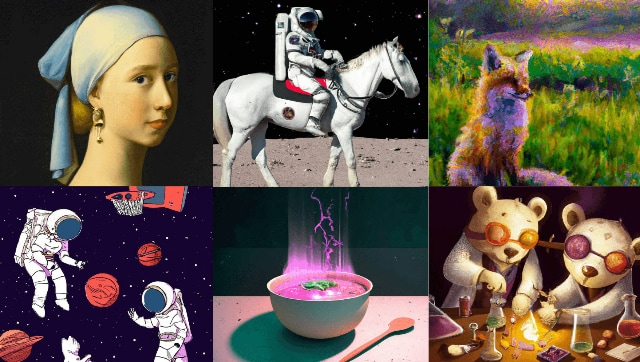
China, like the US, has been developing its own version of AI bots like ChatGPT and DALL-E2, despite the US imposing sanctions on China, which bars tech companies to work with them. Image Credit: Dall-E2[/caption]Entrepreneurs, researchers, investors and the tech community, in general, are looking for ways to carve out a niche for themselves in China’s isolation. As a result, Tech firms are devising tools built on open-source models to attract consumer and enterprise customers. Individuals are cashing in on AI-generated content. Regulators have responded quickly to define how text, image, and video synthesis should be used. However, all this is coming amid US tech sanctions on China which is hampering their ability to keep up with AI advancement.Creating for China, with a local twist.Chinese tech giants have also showcased a few AI bots to the public which work with a twist that suits the country’s tastes and political climate. Apparently, most Chinese AI startups have based their generative models, especially text-to-image generative AI models, on the same principles and training mechanisms as DALL-E2. Beyond that though, Baidu, one of the biggest tech giants in China, has in recent years been stepping up its game in autonomous driving. Another Chinese tool that has made noise is Tencent’s Different Dimension Me, which can turn photos of people into anime characters. The AI generator exhibits its own bias. Intended for Chinese users, it took off unexpectedly in other anime-loving regions like South America. But users soon realized the platform failed to identify black and plus-size individuals, groups that are noticeably missing in Japanese animeBut unlike in the west, China’s effort to develop its own AI universe has government backing. Local Chinese governments are also investing in several projects on their own through IDEA, a research lab owned and backed by the Chinese Communist Party. Censoring AIWhile no AI generative model is without its own inherent bias that crops up because of model training, in China, AI generative bots have their own filters. For example, Baidu’s text-to-image model filters out politically sensitive keywords.While applying filters on generative AI is actually useful, any sort of a censorship is a double-edged sword. AI generative models have often been accused of churning out sexually explicit and sexist content. Furthermore, users are asked to verify their names before using generative AI apps, just like all other aspects of the internet. The Chinese regulation, also explicitly bans people from generating and spreading AI-created fake news. How that will be implemented, though, remains to be seen.Challenges aheadThe biggest challenge for China’s AI startups and tech firms has to be training their bots in neural networks since they don’t have the tools to do so, thanks to the US government imposing sanctions on China that prevent them from importing high-end AI chips.As a result, many Chinese AI startups are focused on the application front that doesn’t need high-performance semiconductors that handle seas of data. As for those doing more advanced research using less powerful chips means computing will take longer and cost more. Such sanctions are pushing China to invest in advanced technologies over the long run.

Why AI notetakers are raising serious privacy and security concerns
China's low-cost AI models are changing the global AI race. Here's why Silicon Valley is worried
China's Kimi K3 challenges US AI leaders with frontier-level performance at lower cost
How did Instagram run ads promoting child abuse in India?
Why has India halted WhatsApp’s username feature before launch?