
Advertisement


Sections
Google’s Nest Hub Max smart display launch delayed, rescheduled from 9 September
Priced at $229, Google's Nest Hub Max comes with a larger 10-inch display and a camera.

As a response to Amazon's Echo lineup of devices, Google announced its Nest Hub Max this year at the Google I/O 2019 held back in May. Nest Hub Max was scheduled to be launched on 9 September and it was confirmed by the company's Support Page. The bad news is recently, the company has changed the launch date of the device from "9th September" to "Coming Soon". It was expected to be launched in the US, the United Kingdom, and Australia.The change in the launch date of the product on the Google Support Page was spotted by Droid- Life earlier. Looks like Google wasn't prepared enough to step into this market yet. We have contacted Google to inquire about the delay but haven't heard back yet. We will keep you updated as soon as we know anything.[caption id="attachment_7048771" align="alignnone" width="1024"]![Nest Hub Max.]()
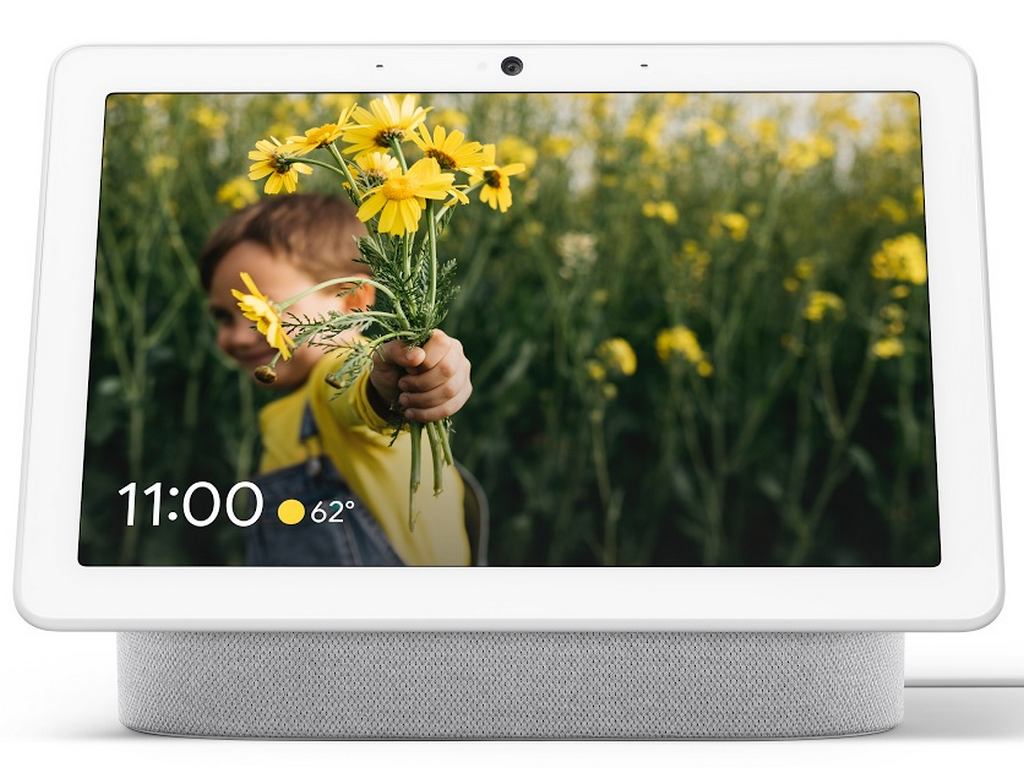
Nest Hub Max.[/caption]
Nest Hub Max specs and features
Priced at $229, Nest Hub Max comes with a larger 10-inch display, and a camera — something that was notably missing from the 7-inch Home. Further, just like the Nest Hub, Nest Hub Max too acts as a Google Home speaker and has an in-built Google Assistant that can converse with users.If you compare it with the competitors, the Nest Hub Max is what Amazon Echo Show is to the Echo series. Hub Max will also compete with Facebook's Portal devices.Google says that the Hub will recognise a user through face recognition — Face Match — and use it to offer a personalised experience.Also, in order to deal with the privacy concerns, Google says that it has placed a green LED light in the Hub Max, which will light up when the device is recording a video or streaming it. The device also has a switch that users will be able to toggle to physically disable the camera and microphone. Amazon Echo devices also offer similar functionality.Read our complete coverage of Google I/O 2019:Google I/O 2019: All you need to know about the new features coming to Android QGoogle I/O 2019: Live Caption lets you overlay text on any audio or video contentGoogle's next-gen voice assistant is kinda epic, and it's coming to the Pixel 4 this yearPixel 3a vs Pixel 3a XL vs OnePlus 6T vs Honor View 20: 'Mid range' phones face budget flagshipsGoogle Pixel 3a XL review: A practical smartphone that’s out to challenge OnePlusGoogle Pixel 3a and 3a XL announced at Rs 39,999 and Rs 44,999 respectively, 15 May availability
First Published:Jul 24, 2019, 15:17:19 IST
Advertisement
Advertisement

Why AI notetakers are raising serious privacy and security concerns
AI notetakers promise effortless meeting summaries, but experts warn they could expose confidential conversations, corporate secrets and personal voiceprints. As businesses increasingly adopt AI-powered meeting assistants, questions over data storage, privacy, consent and legal risks are becoming impossible to ignore
5 min read
China's low-cost AI models are changing the global AI race. Here's why Silicon Valley is worried
As Chinese firms continue to improve performance while keeping prices low, the AI race is no longer just about building the smartest model—it is increasingly becoming a battle over who can deliver the best value
2 min read
China's Kimi K3 challenges US AI leaders with frontier-level performance at lower cost
Chinese artificial intelligence startup Moonshot AI has unveiled its latest open-weight AI model, Kimi K3, with early results suggesting it could compete with some of the world's most advanced AI systems developed by leading US companies
2 min read
How did Instagram run ads promoting child abuse in India?
India has issued a notice to Meta after an investigation alleged that Instagram displayed paid advertisements promoting child sexual abuse material. MeitY ordered Meta to remove such Instagram ads and explain within seven days how they were approved
8 min read
Why has India halted WhatsApp’s username feature before launch?
India has halted WhatsApp’s planned username feature, citing concerns about cybercrime, impersonation, and law enforcement challenges. As Meta races to address security concerns, here’s why MeitY has paused the rollout, what the feature does, and how it could influence privacy and online safety in India
3 min read
Advertisement
Advertisement