
Advertisement


Sections
Google develops an augmented reality powered microscope for real-time cancer detection which can save millions of lives
Google described a prototype Augmented Reality Microscope (ARM) platform that can help accelerate and democratise the adoption of deep learning tools for pathologists around the world.

A team of Google researchers has developed a Machine Learning (ML) and Augmented Reality (AR)-powered microscope that can help in real-time detection of cancer and save millions of lives.[caption id="attachment_4435065" align="alignleft" width="380"]![A picture of a Google prototype which has been retrofitted into a typical clinical-grade light microscope. Image: Google]() A picture of a Google prototype which has been retrofitted into a typical clinical-grade light microscope. Image: Google[/caption]In the annual meeting of the American Association for Cancer Research (AACR) in Chicago, Illinois on Monday, Google described a prototype Augmented Reality Microscope (ARM) platform that can help accelerate and democratise the adoption of deep learning tools for pathologists around the world.The platform consists of a modified light microscope that enables real-time image analysis and presentation of the results of ML algorithms directly into the field of view.The ARM can be retrofitted into existing light microscopes around the world, using low-cost, readily-available components, and without the need for whole slide digital versions of the tissue being analysed."In principle, the ARM can provide a wide variety of visual feedback, including text, arrows, contours, heatmaps or animations, and is capable of running many types of machine learning algorithms aimed at solving different problems such as object detection, quantification or classification," Martin Stumpe, Technical Lead and Craig Mermel, Product Manager, Google Brain Team, wrote in a blog post.Applications of deep learning to medical disciplines including ophthalmology, dermatology, radiology and pathology have shown great promise."At Google, we have also published results showing that a convolutional neural network is able to detect breast cancer metastases in lymph nodes at a level of accuracy comparable to a trained pathologist," the post said.However, because direct tissue visualisation using a compound light microscope remains the predominant means by which a pathologist diagnoses illness, a critical barrier to the widespread adoption of deep learning in pathology is the dependence on having a digital representation of the microscopic tissue.Modern computational components and deep learning models, such as those built upon open source software "TensorFlow", will allow a wide range of pre-trained models to run on this platform.The Google team configured ARM to run two different cancer detection algorithms — one that detects breast cancer metastases in lymph node specimens and another that detects prostate cancer in prostatectomy specimens.[caption id="attachment_4435103" align="alignnone" width="1280"]
A picture of a Google prototype which has been retrofitted into a typical clinical-grade light microscope. Image: Google[/caption]In the annual meeting of the American Association for Cancer Research (AACR) in Chicago, Illinois on Monday, Google described a prototype Augmented Reality Microscope (ARM) platform that can help accelerate and democratise the adoption of deep learning tools for pathologists around the world.The platform consists of a modified light microscope that enables real-time image analysis and presentation of the results of ML algorithms directly into the field of view.The ARM can be retrofitted into existing light microscopes around the world, using low-cost, readily-available components, and without the need for whole slide digital versions of the tissue being analysed."In principle, the ARM can provide a wide variety of visual feedback, including text, arrows, contours, heatmaps or animations, and is capable of running many types of machine learning algorithms aimed at solving different problems such as object detection, quantification or classification," Martin Stumpe, Technical Lead and Craig Mermel, Product Manager, Google Brain Team, wrote in a blog post.Applications of deep learning to medical disciplines including ophthalmology, dermatology, radiology and pathology have shown great promise."At Google, we have also published results showing that a convolutional neural network is able to detect breast cancer metastases in lymph nodes at a level of accuracy comparable to a trained pathologist," the post said.However, because direct tissue visualisation using a compound light microscope remains the predominant means by which a pathologist diagnoses illness, a critical barrier to the widespread adoption of deep learning in pathology is the dependence on having a digital representation of the microscopic tissue.Modern computational components and deep learning models, such as those built upon open source software "TensorFlow", will allow a wide range of pre-trained models to run on this platform.The Google team configured ARM to run two different cancer detection algorithms — one that detects breast cancer metastases in lymph node specimens and another that detects prostate cancer in prostatectomy specimens.[caption id="attachment_4435103" align="alignnone" width="1280"]![These images show examples of the lymph node metastasis model with 4x, 10x, 20x, and 40x microscope objectives. Image: Google]() These images show examples of the lymph node metastasis model with 4x, 10x, 20x, and 40x microscope objectives. Image: Google[/caption]While both cancer models were originally trained on images from a whole slide scanner with a significantly different optical configuration, the models performed remarkably well on the ARM with no additional re-training, the Google Brain Team noted."We believe that the ARM has the potential for a large impact on global health, particularly for the diagnosis of infectious diseases, including tuberculosis and malaria, in the developing countries," Google noted.
These images show examples of the lymph node metastasis model with 4x, 10x, 20x, and 40x microscope objectives. Image: Google[/caption]While both cancer models were originally trained on images from a whole slide scanner with a significantly different optical configuration, the models performed remarkably well on the ARM with no additional re-training, the Google Brain Team noted."We believe that the ARM has the potential for a large impact on global health, particularly for the diagnosis of infectious diseases, including tuberculosis and malaria, in the developing countries," Google noted.
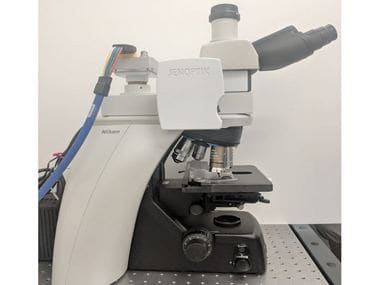 A picture of a Google prototype which has been retrofitted into a typical clinical-grade light microscope. Image: Google[/caption]In the annual meeting of the American Association for Cancer Research (AACR) in Chicago, Illinois on Monday, Google described a prototype Augmented Reality Microscope (ARM) platform that can help accelerate and democratise the adoption of deep learning tools for pathologists around the world.The platform consists of a modified light microscope that enables real-time image analysis and presentation of the results of ML algorithms directly into the field of view.The ARM can be retrofitted into existing light microscopes around the world, using low-cost, readily-available components, and without the need for whole slide digital versions of the tissue being analysed."In principle, the ARM can provide a wide variety of visual feedback, including text, arrows, contours, heatmaps or animations, and is capable of running many types of machine learning algorithms aimed at solving different problems such as object detection, quantification or classification," Martin Stumpe, Technical Lead and Craig Mermel, Product Manager, Google Brain Team, wrote in a blog post.Applications of deep learning to medical disciplines including ophthalmology, dermatology, radiology and pathology have shown great promise.
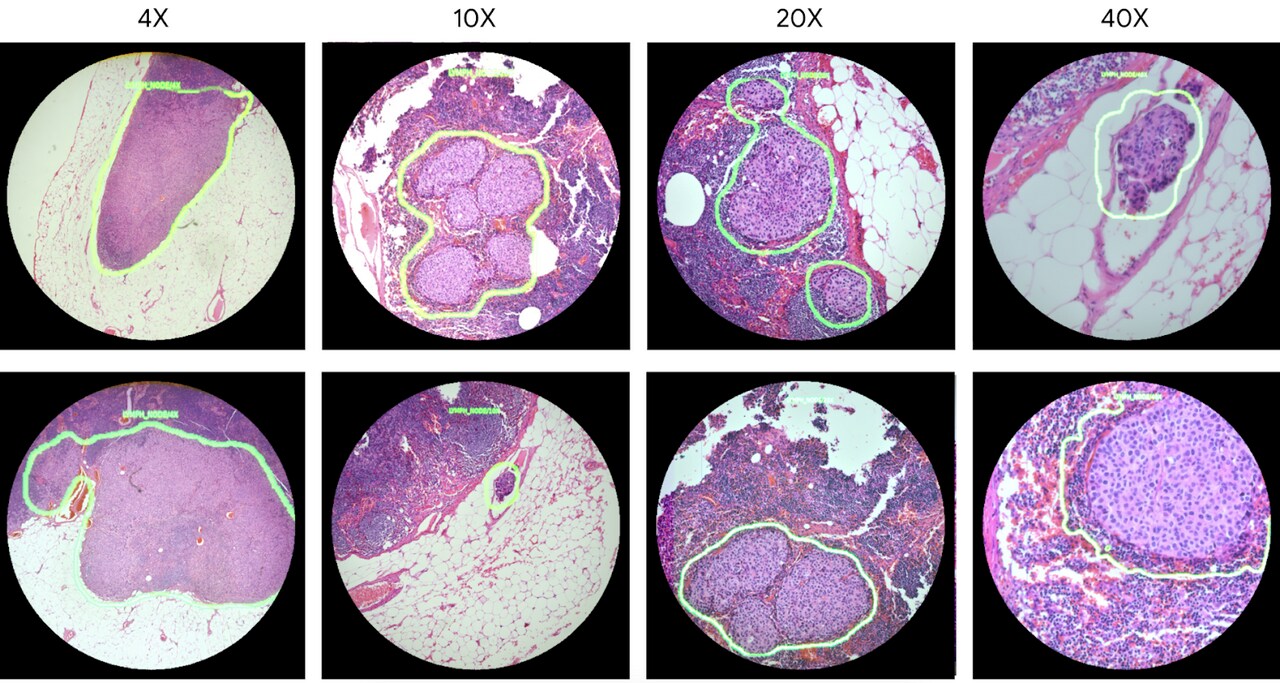 These images show examples of the lymph node metastasis model with 4x, 10x, 20x, and 40x microscope objectives. Image: Google[/caption]While both cancer models were originally trained on images from a whole slide scanner with a significantly different optical configuration, the models performed remarkably well on the ARM with no additional re-training, the Google Brain Team noted."We believe that the ARM has the potential for a large impact on global health, particularly for the diagnosis of infectious diseases, including tuberculosis and malaria, in the developing countries," Google noted.
First Published:Apr 17, 2018, 14:20:02 IST
Advertisement
Advertisement

Why AI notetakers are raising serious privacy and security concerns
AI notetakers promise effortless meeting summaries, but experts warn they could expose confidential conversations, corporate secrets and personal voiceprints. As businesses increasingly adopt AI-powered meeting assistants, questions over data storage, privacy, consent and legal risks are becoming impossible to ignore
5 min read
China's low-cost AI models are changing the global AI race. Here's why Silicon Valley is worried
As Chinese firms continue to improve performance while keeping prices low, the AI race is no longer just about building the smartest model—it is increasingly becoming a battle over who can deliver the best value
2 min read
China's Kimi K3 challenges US AI leaders with frontier-level performance at lower cost
Chinese artificial intelligence startup Moonshot AI has unveiled its latest open-weight AI model, Kimi K3, with early results suggesting it could compete with some of the world's most advanced AI systems developed by leading US companies
2 min read
How did Instagram run ads promoting child abuse in India?
India has issued a notice to Meta after an investigation alleged that Instagram displayed paid advertisements promoting child sexual abuse material. MeitY ordered Meta to remove such Instagram ads and explain within seven days how they were approved
8 min read
Why has India halted WhatsApp’s username feature before launch?
India has halted WhatsApp’s planned username feature, citing concerns about cybercrime, impersonation, and law enforcement challenges. As Meta races to address security concerns, here’s why MeitY has paused the rollout, what the feature does, and how it could influence privacy and online safety in India
3 min read
Advertisement
Advertisement