


Google and NASA announce the discovery of two new planets around distant stars using advanced computer analysis
The data came from the Kepler telescope which NASA had launched as part of a planet-finding mission that is expected to end next year.

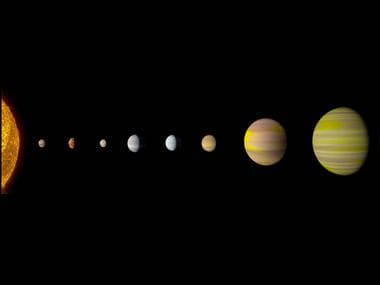
With the discovery of an eighth planet, the Kepler-90 system is the first to tie with our solar system in number of planets. NASA[/caption]The research by Google and the University of Texas at Austin that used data from NASA raised the prospects of new insights into the universe by feeding data into computer programs that can churn through information faster and more in-depth than humanly possible, a technique known as machine learning.In this case, software learned differences between planets and other objects by analysing thousands of data points, achieving 96 percent accuracy, NASA said at a news conference. The data came from the Kepler telescope which NASA launched into space in 2009 as part of a planet-finding mission that is expected to end next year as the spacecraft runs out of fuel.The software’s artificial “neural network” combed through data about 670 stars, which led to the discovery of planets Kepler 80g and Kepler 90i. The latter, a scorching, rocky mass 30 percent larger than Earth, is the eighth planet found to be orbiting the same star.

Why AI notetakers are raising serious privacy and security concerns
China's low-cost AI models are changing the global AI race. Here's why Silicon Valley is worried
China's Kimi K3 challenges US AI leaders with frontier-level performance at lower cost
How did Instagram run ads promoting child abuse in India?
Why has India halted WhatsApp’s username feature before launch?