


Facebook's growth to continue but private messaging ambitions will lead to its downfall: Report
Facebook’s growth will continue in the short term, but its long term plan of becoming a one-app solution like WeChat will be its undoing.


The logo of Facebook is pictured during the Viva Tech start-up and technology summit in Paris. Reuters[/caption]
Facebook’s user and revenue growth to continue unabated
If we talk pure numbers, around 2.7 billion people around the world used at least one Facebook app in December 2018. This means either Facebook, Messenger, Instagram or WhatsApp. Around 1.5 billion daily active users were seen using just Facebook and Messenger. These are huge numbers. Add in the fact that Facebook achieved these numbers at a time when user trust was supposed to be at an all-time low. Facebook is dealing with things such as Cambridge Analytica data scandal, Russian involvement and manipulations during US Presidential elections, the spread of misinformation, perpetuating hatred and playing an instrumental role in the Rohingya genocide in Myanmar, letting preferred partners play hard and fast with user data, among other things. Despite this, its quarterly results have been climbing the charts, with $14.9 bn revenue from all Facebook apps in Q1 2019. The reason for Facebook’s continued monetary success is the fact that its user base continues to engage and this attracts advertising dollars. In a survey conducted with 97,324 US online adults (aged 18 and over), it emerged that 71 percent of the respondents visited Facebook weekly and 40 percent visited Instagram weekly. The other names in the top five list were Google (86 percent), YouTube (53 percent) and Netflix (48 percent) — none of which are pure-play social media networks. When asked about which messaging apps they used, Messenger emerged as the winner among the US respondents with a 47 percent share with WhatsApp coming in at fourth spot with 13 percent — these numbers would most likely be inverted were this survey conducted in India, considering its the largest market for WhatsApp. Bottomline: Engagement on Facebook apps is high which attracts ad dollars which leads to record revenue numbers. And this pattern will continue in the short term.[caption id="attachment_6872251" align="alignnone" width="1280"]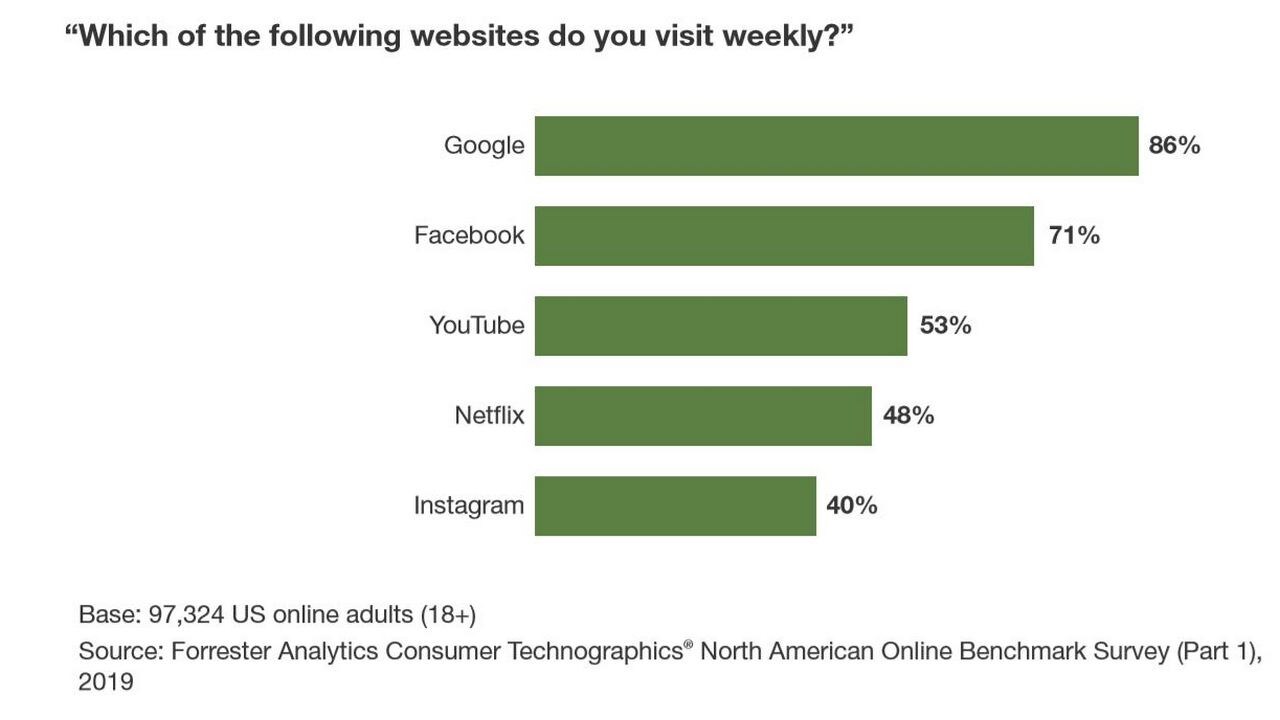
Forrester Report[/caption]This absolute dominance of Facebook in the messaging and user engagement space gives little incentive for advertisers to abandon the platform for ethical reasons. So long as engaged users are there in such huge numbers, advertisers will want to get in on their attention. And even after Cambridge Analytica, while there have been cases of users leaving Facebook, it hasn’t been a mass exodus because there aren’t any credible alternatives. Leaving Facebook to spend more time on Instagram doesn’t count as you are still within the Facebook universe.
Regulations take time, which works in Facebook’s favour
Facebook has been reprimanded by government entities and regulators, not just in the US by also in the EU and the UK. While regulations such as the General Data Protection Regulation (GDPR) do have a lot of promise, when it comes to the actual execution and penalising Facebook, that’s a slow process. This slow speed of implementing and following up on regulations gives Facebook enough time to course correct itself, says the Forrester report. For example, when the Cambridge Analytica scandal broke, data of close to 87 million users was compromised. Post the scandal, Facebook had to appear before Senate committees, had to issue apologies, but there hasn’t been any strict penalty that’s been applied to Facebook in this regard. In the meantime, it has since revamped its app-data sharing policies. Facebook has, so far, got away with its heads apologising and promising to do better, and then showing that they are fixing the very vulnerabilities they engineered into their products. [caption id="attachment_5926611" align="alignnone" width="1280"]
Facebook CEO Mark Zuckerberg. Image: Reuters[/caption]The fact that Facebook is the de-facto internet, in the form of Free Basics, in as many as 65 countries gives it a data edge as well. Here the citizens are using Facebook to go online, and it puts Facebook in a unique position to influence people and governments, according to Forrester.
Facebook’s WeChat-ification could be its downfall
Earlier this year, Facebook CEO Mark Zuckerberg announced a vision to pivot the social networking giant into a private messaging service. So while the existing Facebook and Instagram apps would remain, the messaging service will allow interoperability between Facebook, WhatsApp, Messenger and Instagram. This has been speculated for a while now, and in March, Zuckerberg himself confirmed it. “We plan to start by making it possible for you to send messages to your contacts using any of our services and then to extend that interoperability to SMS too. Of course, this would be opt-in and you will be able to keep your accounts separate if you'd like,” said Zuckerberg. He also tried to justify using Messenger for sending SMSes (which would mean you share your contact book with Facebook) would ensure SMSes are end-to-end encrypted as SMS protocol doesn’t allow for that. According to Forrester, this pivot could probably be Facebook’s undoing. The report states that emulating WeChat — which is a one-stop shop in China for social networking, photo sharing, ecommerce, managing finances, paying friends and businesses, booking flights, ordering food and so on — will be the downfall of Facebook as we know it. The reasons for that include that the social media user growth will stall. When Facebook will add more services to encourage more users, regulators will clamp down on those services. As it is antitrust regulators are thinking of ways to contain anti-competitive practices of Big Tech. If Facebook tries to become a Super App like WeChat (which operates as a Super App in China), it will be inviting antitrust trouble its way from regulators in different countries.The report states that 12-18-year olds aren’t as hooked on to social media as the 25-34 and 35-44 years-olds. “History has taught us that existing apps max out and then decline as users tire of the services or the company (see: AOL, MySpace, Friendster). The Facebook app is already experiencing this; Instagram and WhatsApp will follow in a natural peak and then eventually decelerate, too,” states the report.[caption id="attachment_6872261" align="alignnone" width="1280"]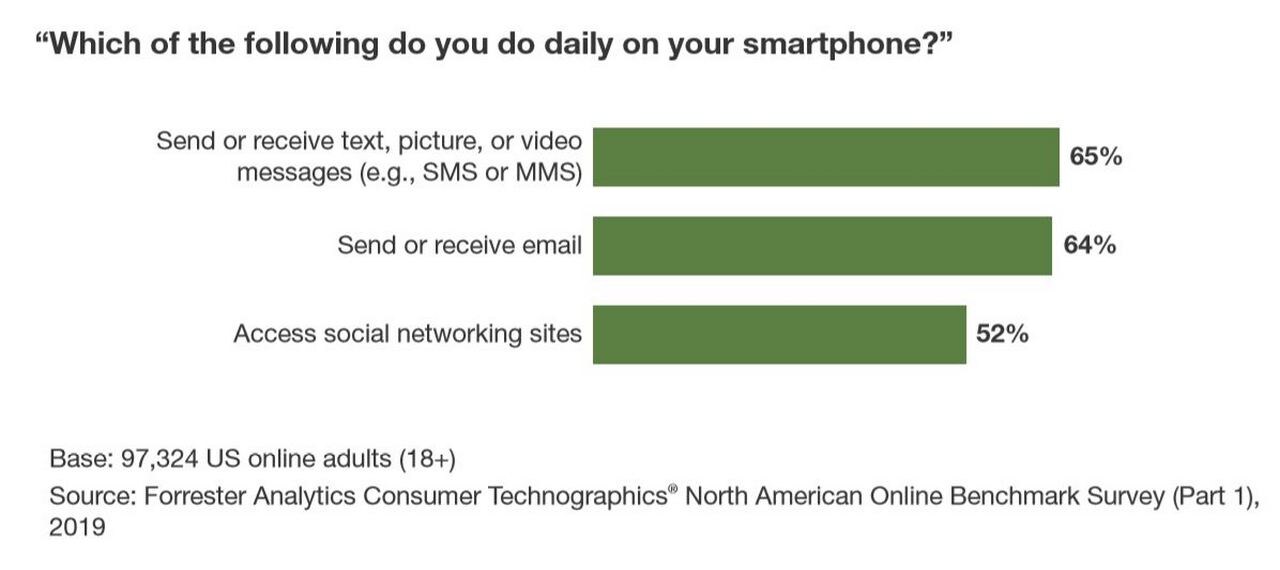
Forrester Report[/caption]As seen from the graphs above, accessing social media sites isn't the top priority for smartphone users.
Contradictory approach leading to a stalemate

Why AI notetakers are raising serious privacy and security concerns
China's low-cost AI models are changing the global AI race. Here's why Silicon Valley is worried
China's Kimi K3 challenges US AI leaders with frontier-level performance at lower cost
How did Instagram run ads promoting child abuse in India?
Why has India halted WhatsApp’s username feature before launch?