
Advertisement


Sections
Facebook will grant experts access to 1 petabyte of user data...for science
Research works will include topics like 'political advertising, civic engagement, and polarisation'

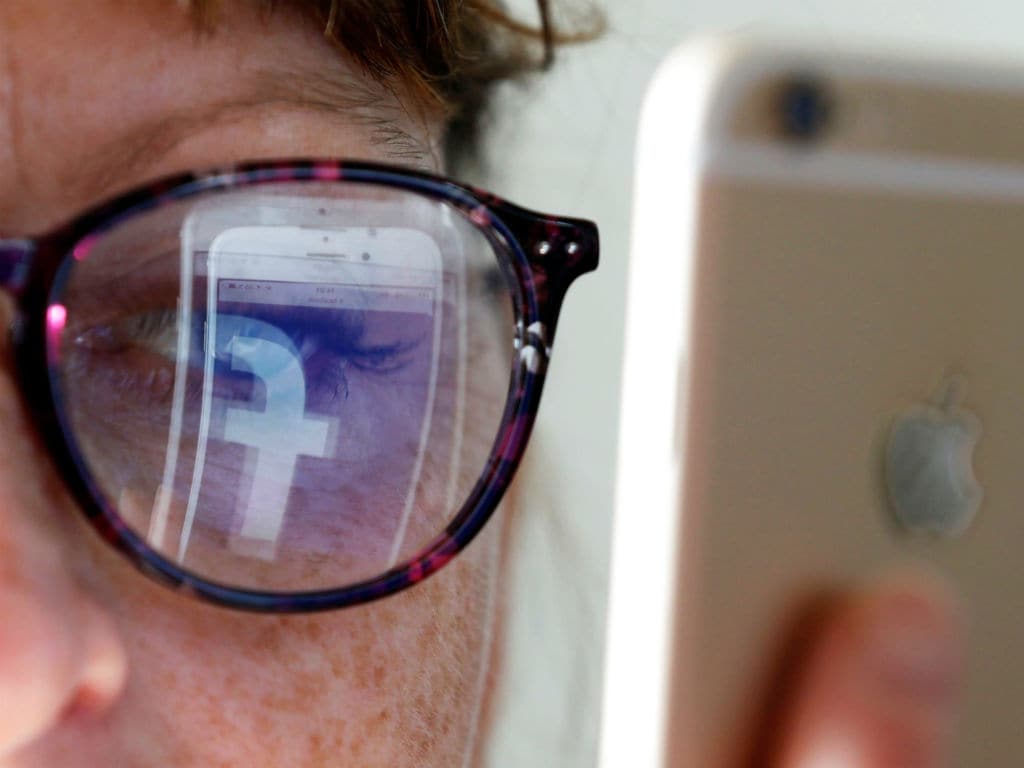
After the Cambridge Analytica data scandal, Facebook had announced that it would establish an independent research unit with academics where they would look into issues of social and political significance using Facebook user data and metadata. For this purpose, it partnered with academic researchers and rolled out its Social Science One initiative. The first project of this initiative is to study the "effects of social media on democracy and elections".[caption id="attachment_4723021" align="alignnone" width="1024"]![Facebook. Reuters.]() Facebook. Reuters.[/caption]According to a report by Social Science One, the first batch of data offered by Facebook includes one petabyte of data — that's a million gigabytes — that includes anonymised data from public posts and profiles. This data also includes public URLs you must have clicked on Facebook, age, gender, links that can tell about your ideologies, your behaviour on Facebook, etc. The data is reportedly so detailed that it also includes data such as whether you opened a post before sharing, it also includes links that could be misinformation. Social Science One in its blogpost claims that "Any Facebook data Social Science One determines is within the agreed upon scope and legally allowed may be used for research." Social Science One's blog post said that the access to data and funding for the research would be given only when a proposal is accepted. It also said that Facebook would not be funding any of the researchers. Instead, seven US foundations and other committees would be reviewing the proposal for it to be accepted. The initiative claims that the data would be protected by trusted third parties.In 2016, an academic associated with the Cambridge Analytica data leak had used Facebook user data for micro-targeting and possibly manipulating users into voting for Donald Trump. There is also evidence that Cambridge Analytica had a hand in swaying the Brexit vote in the UK.It is scary to think that Facebook is once again releasing data to researchers without explicit user consent. As usual, Facebook is simply redefining the scope of consent without prior permission, using a legal loophole to claim that it already has user consent.One can only hope that Facebook is stricter with its protocols this time around and that the end result, a better weapon for fighting fake news, will be worth it.Therefore, the obvious question is, will our data be safe? Now the initiative claims that before giving access to the data, privacy experts, commission members and Facebook's own team would be first going through the data to avoid a data breach fiasco.The research paper would also be peer-reviewed to allow it to be published in a shorter span of time.Some of the research work will include topics such as 'political advertising, civic engagement, and polarisation'.If Social Science One does what it has hoped to do, then one will see some very interesting research work related to social media and behavioural pattern of its users.
Facebook. Reuters.[/caption]According to a report by Social Science One, the first batch of data offered by Facebook includes one petabyte of data — that's a million gigabytes — that includes anonymised data from public posts and profiles. This data also includes public URLs you must have clicked on Facebook, age, gender, links that can tell about your ideologies, your behaviour on Facebook, etc. The data is reportedly so detailed that it also includes data such as whether you opened a post before sharing, it also includes links that could be misinformation. Social Science One in its blogpost claims that "Any Facebook data Social Science One determines is within the agreed upon scope and legally allowed may be used for research." Social Science One's blog post said that the access to data and funding for the research would be given only when a proposal is accepted. It also said that Facebook would not be funding any of the researchers. Instead, seven US foundations and other committees would be reviewing the proposal for it to be accepted. The initiative claims that the data would be protected by trusted third parties.In 2016, an academic associated with the Cambridge Analytica data leak had used Facebook user data for micro-targeting and possibly manipulating users into voting for Donald Trump. There is also evidence that Cambridge Analytica had a hand in swaying the Brexit vote in the UK.It is scary to think that Facebook is once again releasing data to researchers without explicit user consent. As usual, Facebook is simply redefining the scope of consent without prior permission, using a legal loophole to claim that it already has user consent.One can only hope that Facebook is stricter with its protocols this time around and that the end result, a better weapon for fighting fake news, will be worth it.Therefore, the obvious question is, will our data be safe? Now the initiative claims that before giving access to the data, privacy experts, commission members and Facebook's own team would be first going through the data to avoid a data breach fiasco.The research paper would also be peer-reviewed to allow it to be published in a shorter span of time.Some of the research work will include topics such as 'political advertising, civic engagement, and polarisation'.If Social Science One does what it has hoped to do, then one will see some very interesting research work related to social media and behavioural pattern of its users.
 Facebook. Reuters.[/caption]According to a report by Social Science One, the first batch of data offered by Facebook includes one petabyte of data — that's a million gigabytes — that includes anonymised data from public posts and profiles. This data also includes public URLs you must have clicked on Facebook, age, gender, links that can tell about your ideologies, your behaviour on Facebook, etc. The data is reportedly so detailed that it also includes data such as whether you opened a post before sharing, it also includes links that could be misinformation. Social Science One in its blogpost claims that "Any Facebook data Social Science One determines is within the agreed upon scope and legally allowed may be used for research." Social Science One's blog post said that the access to data and funding for the research would be given only when a proposal is accepted. It also said that Facebook would not be funding any of the researchers. Instead, seven US foundations and other committees would be reviewing the proposal for it to be accepted. The initiative claims that the data would be protected by trusted third parties.In 2016, an academic associated with the Cambridge Analytica data leak had used Facebook user data for micro-targeting and possibly manipulating users into voting for Donald Trump. There is also evidence that Cambridge Analytica had a hand in swaying the Brexit vote in the UK.It is scary to think that Facebook is once again releasing data to researchers without explicit user consent. As usual, Facebook is simply redefining the scope of consent without prior permission, using a legal loophole to claim that it already has user consent.One can only hope that Facebook is stricter with its protocols this time around and that the end result, a better weapon for fighting fake news, will be worth it.Therefore, the obvious question is, will our data be safe? Now the initiative claims that before giving access to the data, privacy experts, commission members and Facebook's own team would be first going through the data to avoid a data breach fiasco.The research paper would also be peer-reviewed to allow it to be published in a shorter span of time.Some of the research work will include topics such as 'political advertising, civic engagement, and polarisation'.If Social Science One does what it has hoped to do, then one will see some very interesting research work related to social media and behavioural pattern of its users.
First Published:Jul 12, 2018, 12:45:29 IST
Advertisement
Advertisement

Why AI notetakers are raising serious privacy and security concerns
AI notetakers promise effortless meeting summaries, but experts warn they could expose confidential conversations, corporate secrets and personal voiceprints. As businesses increasingly adopt AI-powered meeting assistants, questions over data storage, privacy, consent and legal risks are becoming impossible to ignore
5 min read
China's low-cost AI models are changing the global AI race. Here's why Silicon Valley is worried
As Chinese firms continue to improve performance while keeping prices low, the AI race is no longer just about building the smartest model—it is increasingly becoming a battle over who can deliver the best value
2 min read
China's Kimi K3 challenges US AI leaders with frontier-level performance at lower cost
Chinese artificial intelligence startup Moonshot AI has unveiled its latest open-weight AI model, Kimi K3, with early results suggesting it could compete with some of the world's most advanced AI systems developed by leading US companies
2 min read
How did Instagram run ads promoting child abuse in India?
India has issued a notice to Meta after an investigation alleged that Instagram displayed paid advertisements promoting child sexual abuse material. MeitY ordered Meta to remove such Instagram ads and explain within seven days how they were approved
8 min read
Why has India halted WhatsApp’s username feature before launch?
India has halted WhatsApp’s planned username feature, citing concerns about cybercrime, impersonation, and law enforcement challenges. As Meta races to address security concerns, here’s why MeitY has paused the rollout, what the feature does, and how it could influence privacy and online safety in India
3 min read
Advertisement
Advertisement