


Blockchains vs Traditional databases: Understanding the difference between the two
Blockchain technology uses decentralised data storage to sidestep this issue, thereby building security into its very structure.

To understand the difference between a blockchain and a traditional database, it is worth considering how each of these is designed and maintained.
Traditional Databases
Traditional databases use client-server network architecture. Here, a user (known as a client) can modify data, which is stored on a centralised server. Control of the database remains with a designated authority, which authenticates a client’s credentials before providing access to the database. Since this authority is responsible for administration of the database, if the security of the authority is compromised, the data can be altered, or even deleted.[caption id="attachment_7269371" align="alignnone" width="1024"]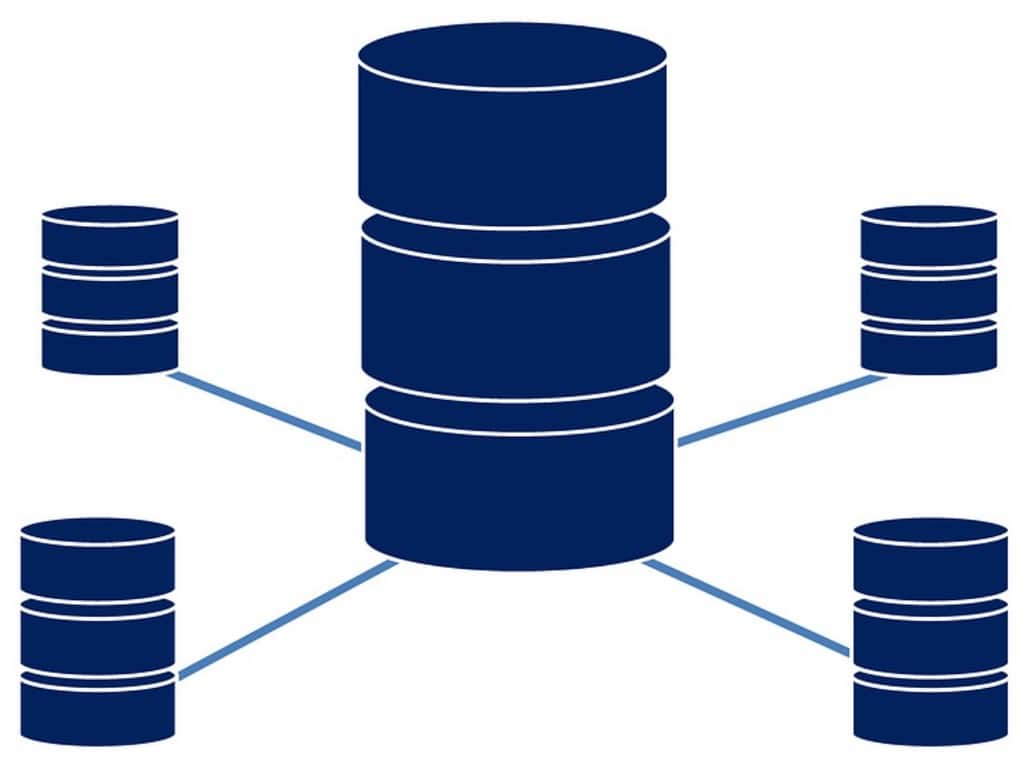
Traditional database.[/caption]
Blockchain Databases
Blockchain databases consist of several decentralised nodes. Each node participates in administration: all nodes verify new additions to the blockchain, and are capable of entering new data into the database. For an addition to be made to the blockchain, the majority of nodes must reach a consensus. This consensus mechanism guarantees the security of the network, making it difficult to tamper with.In Bitcoin, consensus is reached by mining (solving complex hashing puzzles), while Ethereum seeks to use proof of stake as its consensus mechanism.
Integrity and Transparency
A key property of blockchain technology, which distinguishes it from traditional database technology, is public verifiability, which is enabled by integrity and transparency.- Integrity: Every user can be sure that the data they are retrieving is uncorrupted and unaltered since the moment it was recorded
- Transparency: Every user can verify how the blockchain has been appended over time
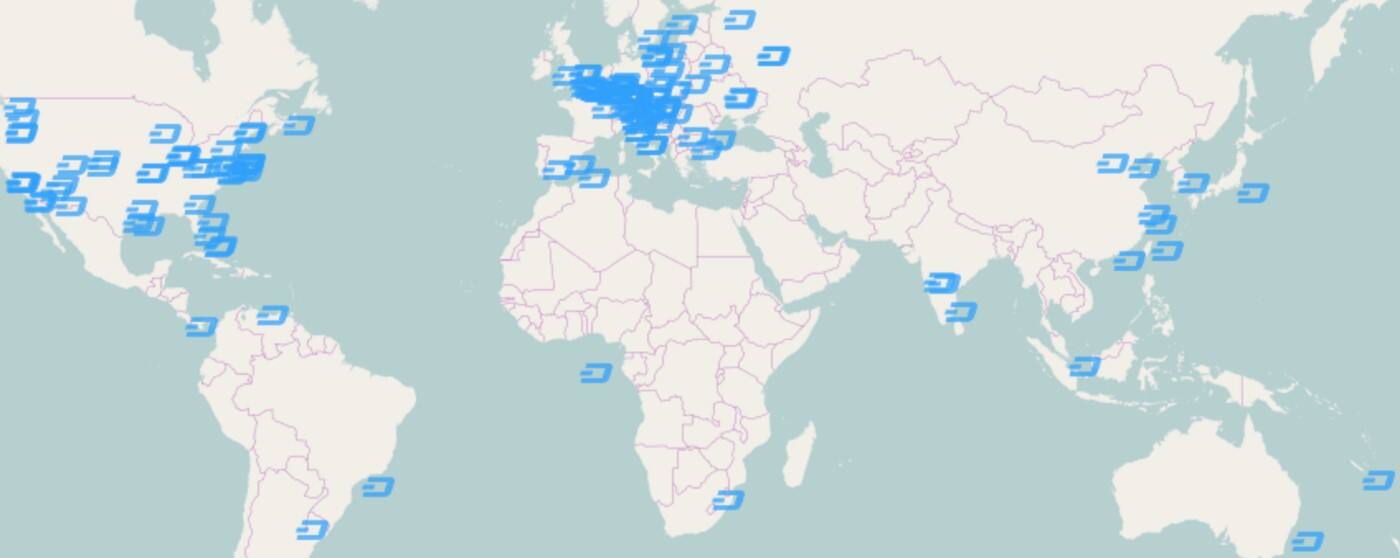
A map of Dash masternodes distributed across the world.[/caption]
CRUD vs Read and Write Operations
- Read Operations: These query and retrieve data from the blockchain
- Write Operations: These add more data onto the blockchain
Validating and Writing
The blockchain allows for two functions: validation of a transaction, and writing of a new transaction. A transaction is an operation that changes the state of data that lives on the blockchain. While past entries on the blockchain must always remain the same, a new entry can change the state of the data in the past entries.For example, if the blockchain has recorded that my Bitcoin wallet has 1 million BTC, that figure is permanently stored in the blockchain. When I spend 200,000 BTC, that transaction is recorded onto the blockchain, bringing my balance to 800,000 BTC. However, since the blockchain can only be appended, my pre-transaction balance of 1 million BTC also remains on the blockchain permanently, for those who care to look. This is why the blockchain is often referred to as an immutable and distributed ledger.(Also read: Understanding blockchain technology and its implications on the future of transactions)[caption id="attachment_7269431" align="alignnone" width="896"]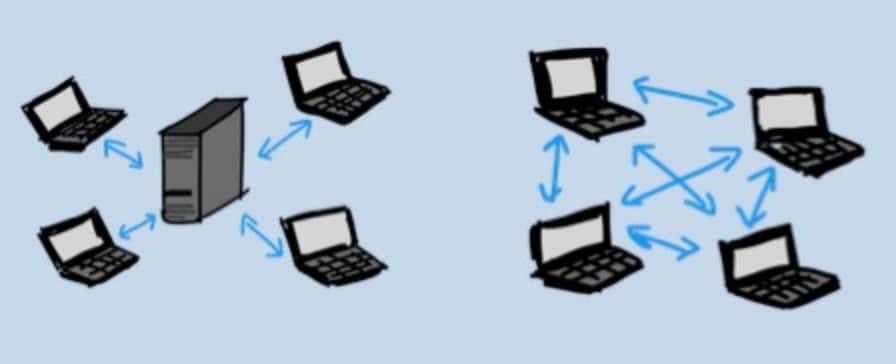
A map of Dash masternodes distributed across the world.[/caption]
In short, the difference is Decentralised Control
Decentralised control eliminates the risks of centralised control.Anybody with sufficient access to a centralised database can destroy or corrupt the data within it. Users are therefore reliant on the security infrastructure of the database administrator.Blockchain technology uses decentralised data storage to sidestep this issue, thereby building security into its very structure.Though blockchain technology is well-suited to record certain kinds of information, traditional databases are better suited for other kinds of information. It is crucial for every organisation to understand what it wants from a database, and gauge this against the strengths and vulnerabilities of each kind of database, before selecting one.The author is the head of Denver Hill, a group that uses emerging technologies like blockchain, artificial intelligence, additive manufacturing and the industrial internet to create new products and processes.
 More from News Analysis
Why AI notetakers are raising serious privacy and security concerns
China's low-cost AI models are changing the global AI race. Here's why Silicon Valley is worried
China's Kimi K3 challenges US AI leaders with frontier-level performance at lower cost
How did Instagram run ads promoting child abuse in India?
Why has India halted WhatsApp’s username feature before launch?