
Advertisement


Sections
Bitcoin turning 10: From an abstract thought to being worth $6,400 per unit today
On 31 October, 2008 the idea of Bitcoin was introduced to the world by Satoshi Nakamoto.

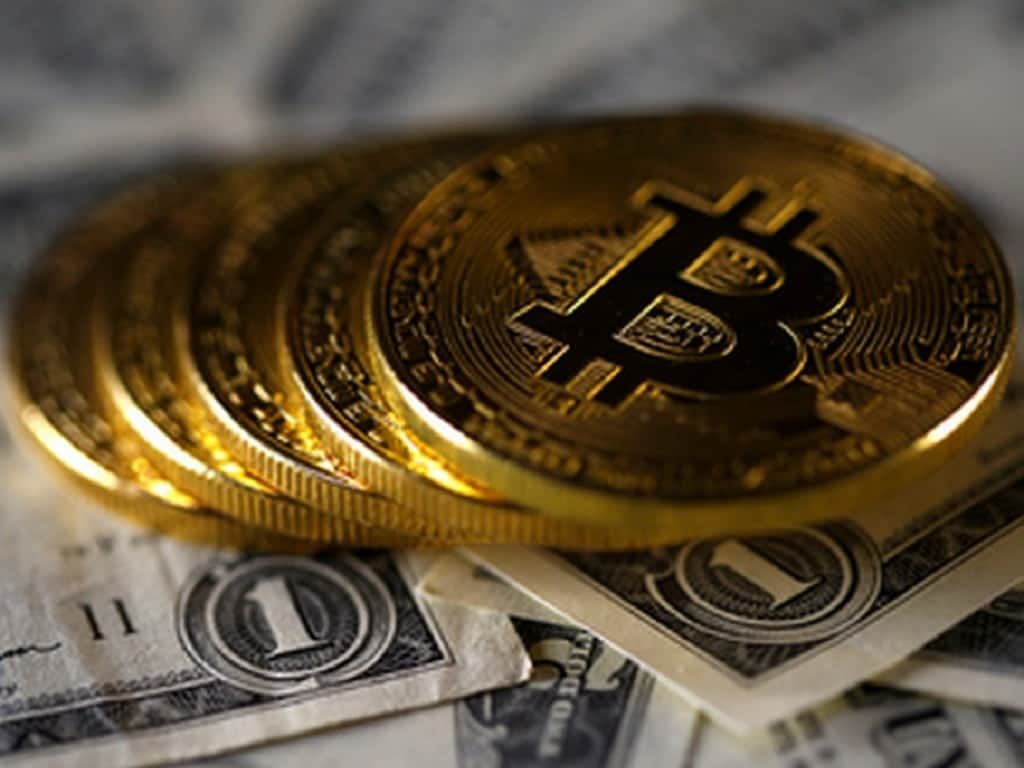
October 31, 2008 marked the birth of bitcoin. Ten years on, the world's first cryptocurrency is at the forefront of a complex financial system viewed warily by markets and investors.From its first evocation amid a global financial crisis, in a white paper written by Satoshi Nakamoto, an unknown pseudonym, bitcoin conveyed a political vision.The "abstract" set out in the paper for bitcoin, currently worth about $6,400 per unit from a starting point of virtually zero, was for "a purely peer-to-peer version of electronic cash (that) would allow online payments to be sent directly from one party to another without going through a financial institution."[caption id="attachment_5436981" align="alignnone" width="1024"]![Bitcoin.]() Bitcoin.[/caption]A decade on, this continues to be carried out via a decentralised registry system known as a blockchain.Such ambition for a cryptocurrency was fuelled by the bankruptcy of US investment bank Lehman Brothers in September 2008, an event that discredited the traditional system of "a small elite of bankers... (that) establishes monetary rules imposed on everybody", according to Pierre Noizat, founder of the first French bitcoin exchange in 2011.Following its creation, bitcoin evolved for several years away from the public eye, grabbing the attention for the most part of geeks and criminals -- the latter seeing it as a way to launder money.After bitcoin surpassed $1,000 for the first time in 2013, it began to attract the attention of financial institutions.The European Central Bank compared it to a Ponzi scheme, but Ben Bernanke, then head of the US Federal Reserve, hailed its potential.A turbulent childhoodIn early 2014, the cryptocurrency faced its biggest crisis to date, with the hacking of the Mt. Gox platform, where about 80 percent of all bitcoins were traded.The result was a collapse in their value, leading to predictions of the virtual currency's death.It took until early 2017 for bitcoin's price to fully recover.That marked the start of a "turning point" according to Noizat, as the controversial cryptocurrency then rocketed to more than $19,500 by the end of the year according to Bloomberg data.That meant bitcoin had a total capitalisation of more than $300 billion, according to the specialised website Coinmarketcap.By January 2018 the value of all cryptocurrencies exceeded $800 billion, before the bubble burst.The concept of a digital currency has progressed substantially thanks to bitcoin, cryptocurrency analyst Bob McDowall told AFP, pointing to the creation of 2,000 rivals."It becomes more than a technological, economic innovation. It almost becomes a religion for some people," he noted.According to Anthony Lesoismier, co-founder of investment fund Swissborg which offers portfolios based on blockchain, "the real revolution has been on a philosophical level".But for economist Nouriel Roubini, decentralisation in crypto is a myth."It is a system more centralised than North Korea. Miners are centralised, exchanges are centralised, developers are centralised dictators," Roubini tweeted.If the initial idea was for bitcoin to facilitate payments, a majority of observers recognise that it is used above all as a store of value or as a speculative instrument owing to volatility in its value."You need 20 years for this kind of... technology to take hold completely," said Noizat, who is banking on faster transaction speeds for bitcoin.As it stands, about five to ten bitcoin transactions can be processed per second compared with several thousand for Visa cards.Looking ahead, US market regulators are considering applications for bitcoin-based exchange-traded funds, which if approved by the Securities and Exchange Commission would see the virtual currency become part of a financial system it set out to bypass."We must cross some bridges in the short term" to generate the general public's interest and trust, said Lesoismier, who described himself as both an "idealist" and "realist".
Bitcoin.[/caption]A decade on, this continues to be carried out via a decentralised registry system known as a blockchain.Such ambition for a cryptocurrency was fuelled by the bankruptcy of US investment bank Lehman Brothers in September 2008, an event that discredited the traditional system of "a small elite of bankers... (that) establishes monetary rules imposed on everybody", according to Pierre Noizat, founder of the first French bitcoin exchange in 2011.Following its creation, bitcoin evolved for several years away from the public eye, grabbing the attention for the most part of geeks and criminals -- the latter seeing it as a way to launder money.After bitcoin surpassed $1,000 for the first time in 2013, it began to attract the attention of financial institutions.The European Central Bank compared it to a Ponzi scheme, but Ben Bernanke, then head of the US Federal Reserve, hailed its potential.A turbulent childhoodIn early 2014, the cryptocurrency faced its biggest crisis to date, with the hacking of the Mt. Gox platform, where about 80 percent of all bitcoins were traded.The result was a collapse in their value, leading to predictions of the virtual currency's death.It took until early 2017 for bitcoin's price to fully recover.That marked the start of a "turning point" according to Noizat, as the controversial cryptocurrency then rocketed to more than $19,500 by the end of the year according to Bloomberg data.That meant bitcoin had a total capitalisation of more than $300 billion, according to the specialised website Coinmarketcap.By January 2018 the value of all cryptocurrencies exceeded $800 billion, before the bubble burst.The concept of a digital currency has progressed substantially thanks to bitcoin, cryptocurrency analyst Bob McDowall told AFP, pointing to the creation of 2,000 rivals."It becomes more than a technological, economic innovation. It almost becomes a religion for some people," he noted.According to Anthony Lesoismier, co-founder of investment fund Swissborg which offers portfolios based on blockchain, "the real revolution has been on a philosophical level".But for economist Nouriel Roubini, decentralisation in crypto is a myth."It is a system more centralised than North Korea. Miners are centralised, exchanges are centralised, developers are centralised dictators," Roubini tweeted.If the initial idea was for bitcoin to facilitate payments, a majority of observers recognise that it is used above all as a store of value or as a speculative instrument owing to volatility in its value."You need 20 years for this kind of... technology to take hold completely," said Noizat, who is banking on faster transaction speeds for bitcoin.As it stands, about five to ten bitcoin transactions can be processed per second compared with several thousand for Visa cards.Looking ahead, US market regulators are considering applications for bitcoin-based exchange-traded funds, which if approved by the Securities and Exchange Commission would see the virtual currency become part of a financial system it set out to bypass."We must cross some bridges in the short term" to generate the general public's interest and trust, said Lesoismier, who described himself as both an "idealist" and "realist".
 Bitcoin.[/caption]A decade on, this continues to be carried out via a decentralised registry system known as a blockchain.Such ambition for a cryptocurrency was fuelled by the bankruptcy of US investment bank Lehman Brothers in September 2008, an event that discredited the traditional system of "a small elite of bankers... (that) establishes monetary rules imposed on everybody", according to Pierre Noizat, founder of the first French bitcoin exchange in 2011.Following its creation, bitcoin evolved for several years away from the public eye, grabbing the attention for the most part of geeks and criminals -- the latter seeing it as a way to launder money.After bitcoin surpassed $1,000 for the first time in 2013, it began to attract the attention of financial institutions.The European Central Bank compared it to a Ponzi scheme, but Ben Bernanke, then head of the US Federal Reserve, hailed its potential.A turbulent childhoodIn early 2014, the cryptocurrency faced its biggest crisis to date, with the hacking of the Mt. Gox platform, where about 80 percent of all bitcoins were traded.The result was a collapse in their value, leading to predictions of the virtual currency's death.It took until early 2017 for bitcoin's price to fully recover.
First Published:Oct 24, 2018, 12:45:39 IST
Advertisement
Advertisement

Why AI notetakers are raising serious privacy and security concerns
AI notetakers promise effortless meeting summaries, but experts warn they could expose confidential conversations, corporate secrets and personal voiceprints. As businesses increasingly adopt AI-powered meeting assistants, questions over data storage, privacy, consent and legal risks are becoming impossible to ignore
5 min read
China's low-cost AI models are changing the global AI race. Here's why Silicon Valley is worried
As Chinese firms continue to improve performance while keeping prices low, the AI race is no longer just about building the smartest model—it is increasingly becoming a battle over who can deliver the best value
2 min read
China's Kimi K3 challenges US AI leaders with frontier-level performance at lower cost
Chinese artificial intelligence startup Moonshot AI has unveiled its latest open-weight AI model, Kimi K3, with early results suggesting it could compete with some of the world's most advanced AI systems developed by leading US companies
2 min read
How did Instagram run ads promoting child abuse in India?
India has issued a notice to Meta after an investigation alleged that Instagram displayed paid advertisements promoting child sexual abuse material. MeitY ordered Meta to remove such Instagram ads and explain within seven days how they were approved
8 min read
Why has India halted WhatsApp’s username feature before launch?
India has halted WhatsApp’s planned username feature, citing concerns about cybercrime, impersonation, and law enforcement challenges. As Meta races to address security concerns, here’s why MeitY has paused the rollout, what the feature does, and how it could influence privacy and online safety in India
3 min read
Advertisement
Advertisement