


Apple to start making its own displays for iPhones and Apple Watch, will ditch partners like Samsung
After cutting ties with Qualcomm and Broadcom, Apple has now decided to ditch Samsung and LG, and start making their own custom displays for iPhones and Apple Watches.

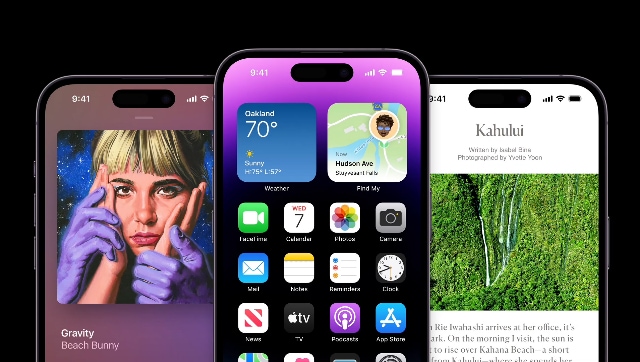
After cutting ties with Qualcomm and Broadcom. Apple has now decided to ditch Samsung and LG, and start making their own custom displays for iPhones and Apple Watches. Image Credit: Apple[/caption]Usually, Apple sources display panels for the iPhone and Apple Watch, primarily from Samsung and LG. Apple also has a couple of other suppliers Japan Display, BOE Technology, and Sharp.Apple will start the transition with the top tier of Apple Watches, starting in 2024. As part of this, the Apple Watch will also switch from OLED displays to micro-LED displays. Apple “plans to eventually bring the displays to other devices, including the iPhone.”This means that compared to the current generation of Apple Watches, the next-gen watches will offer much brighter displays and more vibrant colours, with better viewing angles. The effort is being spearheaded inside Apple by Wei Chen, the head of Apple’s display technology group. This group operates within John Srouji’s Hardware Technologies division.Apple had stepped up its efforts to switch over to micro-LED from LED in 2018 and had planned to release its first micro-LED product by early 2020. However, the project had a number of issues, mainly because of high costs and a few other technical challenges. Because of this, it’s possible that the 2024 target outlined today could be pushed until 2025.Apple has been planning to drop most of its technology partners and has already dropped Qualcomm and Broadcom as partners for wireless connectivity like WiFi, 5G and Bluetooth. Earlier, Apple had also ditched Intel and their CPUs, and went on to design and create their own Apple Silicon processors for the Mac starting in 2020.Apple will still rely on external suppliers and other manufacturing partners to handle the mass production of their displays, but it has “designed the new displays and devised their manufacturing process” entirely in-house.

Why AI notetakers are raising serious privacy and security concerns
China's low-cost AI models are changing the global AI race. Here's why Silicon Valley is worried
China's Kimi K3 challenges US AI leaders with frontier-level performance at lower cost
How did Instagram run ads promoting child abuse in India?
Why has India halted WhatsApp’s username feature before launch?