


Apple buys majority of Intel modem business in a deal valued at $1 billion
Apple has always relied on outside suppliers for modem chips that connect devices to a wireless network.

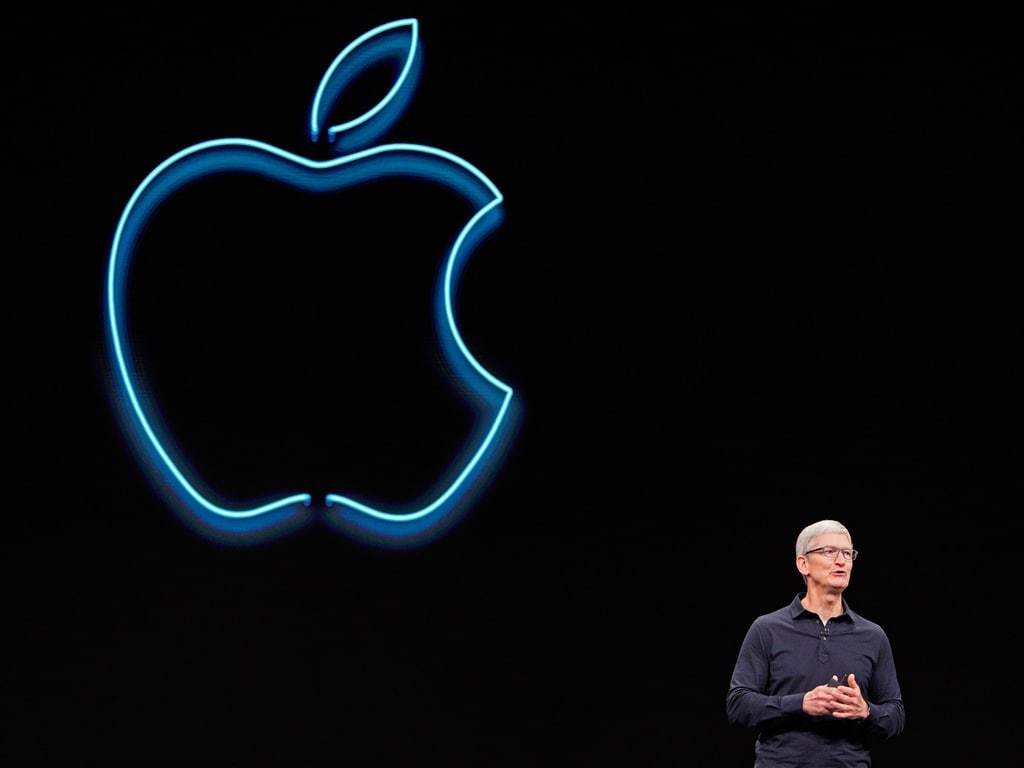
Apple CEO Tim Cook speaks during Apple's annual Worldwide Developers Conference in San Jose, California. Reuters[/caption]Apple Chief Executive Tim Cook has also long said the company wants to control its own technological fate, what analysts have called the "Cook Doctrine.""We believe that we need to own and control the primary technologies behind the products that we make," Tim Cook told investors back in 2009.
Speeding up development
The purchase of Intel's assets could help Apple meet its aggressive timeline for producing a modem.A person familiar with the matter said Apple plans to use Qualcomm's modem technology for a 5G iPhone in 2020 but wants to have an internally developed 5G modem technology ready for use in some of its products by 2021.But any replacement of Qualcomm is likely to happen in phases, this person said, as Apple builds up its ability to ensure that its modems work on all the networks and countries where Apple sells phones. Ensuring worldwide compatibility is Qualcomm's historical strength, and Apple might still have to rely on Qualcomm for some modems during a transition period to its own devices."There's a fierce desire (at Apple) to have Independence, but they also realise it has to be done responsibly," this person said.Apple's license deal with Qualcomm lasts six years and its accompanying chip supply agreement could also last that long, said one chip industry veteran who requested anonymity to discuss confidential matters. Apple is likely to continue to use the San Diego firm's chips in its flagship models even if it phases in its own silicon for lower-end and older models, this person said.Apple has engaged with Taiwan's Global Unichip Corp, a chip design house in which Apple supplier Taiwan Semiconductor Manufacturing Co is an investor, to explore a modem design, but the work is in early stages."Clearly Apple saw the handwriting on the wall, because they came around and did a deal with Qualcomm," this person said.Apple declined to comment on its plans, and Qualcomm and Global Unichip did not immediately respond to a request for comment.
Patents as leverage
The most valuable aspect of the Intel deal for Apple could turn out to be patented. To sell a 5G iPhone, Apple will need to strike deals with the major holders of 5G patents, including Nokia, Ericsson, Huawei, and Qualcomm. Apple executed a licensing deal with Qualcomm, but it has not disclosed whether it has deals in place with the others.Erick Robinson, a patent attorney who had worked in Qualcomm's licensing division in Asia, said the patents could give Apple better leverage in licensing talks."I don't think Intel has quite the portfolio that Qualcomm has, but they certainly have a large enough one to impact the valuations when it comes to a cross-licensing deal," he said. "It'll save (Apple) a huge chunk of change in cross-license deals."
 More from News Analysis
Why AI notetakers are raising serious privacy and security concerns
China's low-cost AI models are changing the global AI race. Here's why Silicon Valley is worried
China's Kimi K3 challenges US AI leaders with frontier-level performance at lower cost
How did Instagram run ads promoting child abuse in India?
Why has India halted WhatsApp’s username feature before launch?