


Anti-virus firms like Symantec, Malwarebytes now flag China's surveillance malware
Multiple cybersecurity companies have updated their products after the malware file was shared on Github.

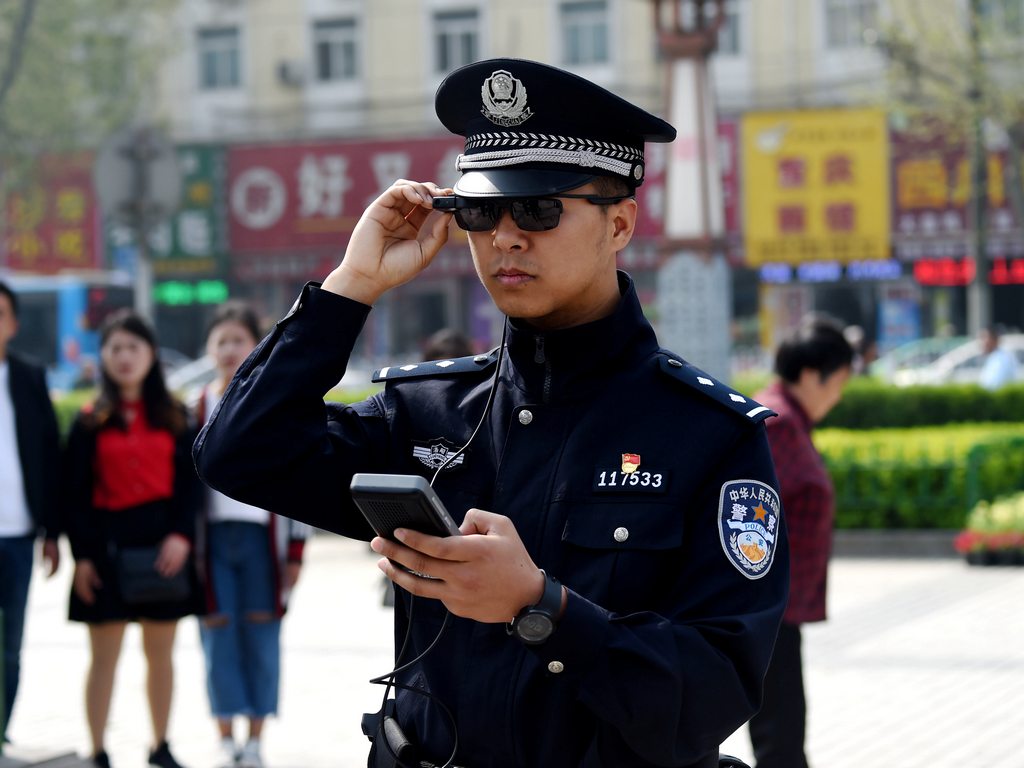
A police officer displays his AI-powered smart glasses in Luoyang, Henan province, China. Reuters[/caption]The collaborative scoop reported by Vice's Motherboard, The New York Times, The Guardian, Sueddeutsche Zeitung, and German public broadcaster NDR, revealed that the Chinese border police were forcing tourists travelling to the Xinjiang region to install a piece of malware on their phones.(Also Read: Chinese border police installing malware on tourists' phones to surveil them)This malware copies all the data including contact details, messages, images, and other data from the tourist's phone and uploads it on the border police servers. This data is then compared against around 73,000 pieces of objectionable content enumerated by the Chinese authorities — which mostly included Islamic extremist content as well as harmless Islamic material, academic books on Islam, photos of Tibetan leader Dalai Lama, the literature on Tibet and even a song by a Japanese metal band Unholy Grave.According to experts, once the app is installed on a device, it collects the phone's calendar entries, phone contacts, call records and text messages, and uploads them to a remote server. In addition to this, the app also notes the apps installed on the device and extracts usernames for some of the apps.

Why AI notetakers are raising serious privacy and security concerns
China's low-cost AI models are changing the global AI race. Here's why Silicon Valley is worried
China's Kimi K3 challenges US AI leaders with frontier-level performance at lower cost
How did Instagram run ads promoting child abuse in India?
Why has India halted WhatsApp’s username feature before launch?