
Advertisement


Sections
New volcanic ash detection system could make air traffic delays a thing of the past
After the expensive shutdown of European air space during the eruption of Eyjafjallajökull last year, airline easyJet has been funding research into a new system to detect volcanic ash and air travel safer.

Budget airline easyJet has been testing a new volcanic ash detection system in the air around Mount Etna in Italy. Known as AVOID (airborne volcanic object imaging detector), the system allows pilots to see atmospheric ash at altitudes between 5,000 and 50,000 feet between 100 to 200 km away. After successful trials, the airline is planning to install the device on its fleet next year.Designed by Dr Fred Prata, a senior member of the Norwegian Institute for Air Research, the system uses “two far-sampling thermal infrared cameras” which have been “tuned to see the signature of silicates”, a major component of volcanic ash. This gives the pilot information about how much ash is in the air and how far away it is, providing five to ten minutes warning and allowing the pilot to change course.[caption id="attachment_151421" align="alignleft" width="380" caption="Budget airline easyJet has been testing a new volcanic ash detection system in the air around Mount Etna in Italy. Reuters"] [/caption]Although successfully tested on a light aircraft in the skies around the frequently active Mount Etna, AVOID has yet to be tested on an airliner. That should happen next year as easyJet collaborates with Airbus to put the system through its paces. However, it will need to be certified by the European Aviation Safety Agency before it can be used commercially.FlightGlobal says AVOID is part of a larger ash detection system:
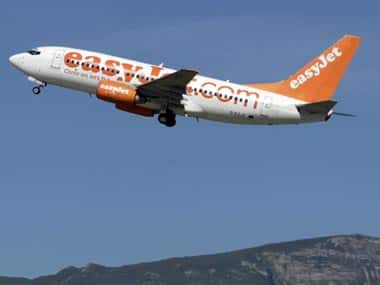 [/caption]Although successfully tested on a light aircraft in the skies around the frequently active Mount Etna, AVOID has yet to be tested on an airliner. That should happen next year as easyJet collaborates with Airbus to put the system through its paces. However, it will need to be certified by the European Aviation Safety Agency before it can be used commercially.FlightGlobal says AVOID is part of a larger ash detection system:
Prata makes clear that AVOID is just one part of a multi-layered, comprehensive system which the world uses to predict, detect and measure the location of ash following a volcanic eruption anywhere in the world. At NILU he has been researching ways of refining techniques for the accurate satellite tracking of ash clouds. These, he said, are being improved, as are the predictive algorithms for working out how much ash has been ejected into the atmosphere, how much has fallen out of it, and where wind patterns will take it.Last year there was air travel chaos when Icelandic volcano Ejyafjallajökull erupted. Its particularly fine-grained ash was swept down over Europe causing days of airport closures and costing the air industry alone $3.3 bn.Aircraft must fly around volcanic ash clouds to avoid the engines ingesting the fine particles of rock which melt, causing the engines to shut down. But it’s very difficult to know where the ash is, so large exclusions zones are thrown around areas where ash is likely to be.A reliable detection system could help aircraft avoid ash, even in areas where there is no ground-based monitoring, and help to create an ash density map useful to scientists and airlines alike.There are around 30 volcanic eruptions worldwide every year, although not all of them produce ash clouds that affect flights. Over the last two years, air travel disruption has been caused by Iceland’s Eyjafjallajökull and Grímsvötn volcanos, Sciliy’s Etna, Chile's Puyehue-Cordón Caulle and Indonesia’s Merapi.Puyehue-Cordón Caulle, in particular, caused problems in the southern hemisphere as the ash circled the globe several times, shutting airports as far away as Australia. The eruption began in June, and is ongoing and still affecting air traffic.The AVOID system still has questions to answer about its precision, accuracy and resolution before it can become a standard part of aviation equipment. Ash clouds tend to be clumpy rather than uniform, so the system will have to be able to reliably map ash densities before it can be used for navigation through a cloud.But even a system that can warn a pilot to turn back or go around an eruption, has the potential to save lives. In 1982, the crew and passengers of BA Flight 9 discovered what it was like to fly through an ash cloud when Mount Galunggung in Indonesia erupted. All four engines failed, but the pilot, Captain Eric Moody, was able to glide the the plain through the ash and, when the plane reached clear air, restart the engines. Because the ash was dry, it hadn’t shown up on the weather radar and was essentially invisible to the crew.The aviation industry was furious with the extended closure of European airspace last year. EasyJet alone lost £50 mn and is making this investment at least partially in fear of a repeated performance from Iceland’s Katla volcano. Despite showing no signs of an imminent eruption, Katla has a fearsome reputation and has become the focus of many news stories after it experienced a recent spate of earthquakes. But if Katla can keep its head for another year or two, perhaps the industry will be ready for whatever it can throw at them.
First Published:Dec 08, 2011, 22:03:48 IST
Advertisement
Advertisement

Meta cracks down on smart glasses harassment with new Instagram ban
Meta will ban Instagram users who post harassing videos recorded with smart glasses as it steps up efforts to address privacy concerns.
1 min read
Satya Nadella outlines Microsoft's MAI strategy as Excel model matches GPT-5.6 at lower cost
Microsoft says its in-house MAI models match GPT-5.6 on common Excel tasks while cutting deployment costs through task-specific AI.
2 min read
Yelp to bring reviews and ratings to ChatGPT under OpenAI partnership: Report
OpenAI partners with Yelp to bring trusted reviews, ratings, and local business information directly into ChatGPT.
1 min read
Did Samsung leave its most intriguing Galaxy Z Fold 8 prototype behind? Here's how it differed: Report
Samsung reportedly explored hundreds of foldable prototypes before choosing the Galaxy Z Fold 8 Ultra's design, as rivals continue to experiment with new form factors.
2 min read
Apple's iOS 27 beta code hints at Restricted Mode for financed iPhones with missed payments
Apple's iOS 27 beta hints at a Klarna-backed device financing programme with lender-controlled restrictions for users who miss monthly payments.
1 min read
Advertisement
Advertisement