
Advertisement


Sections
Should PUBG and other online video games be banned or regulated in India?
A PIL was recently filed in the Bombay HC calling for a ban on the popular video game, PUBG.

A Public Interest litigation (PIL) was recently filed in the Bombay HC calling for a ban on the popular video game, PlayerUnknown’s Battlegrounds (PUBG). The PIL has been filed on grounds that the game promotes violence, aggression and cyber-bullying. The need for curbing cyber-bullying is being recognized worldwide which has led to debates on regulation of online content including video games that promote cyber-bullying.Cyber-bullying incidents in IndiaCyber-bullying refers to bullying which takes place online and covers a wide range of behaviour intended to harass or ridicule the victim online. For instance, online trolls, morphing of images, abusive messages and revenge porn are forms of cyber-bullying. Cyber-bullying differs from bullying which takes place in the offline context because perpetrators of cyber-bullying are often anonymous and can harass their victims without the risk of identification in many cases.In the context of video games, a gamer may be the victim of abusive communication by other gamers (typically when the game is played in teams); this is a form of cyber-bullying. Similarly, sexism in online video games is also a form of cyber-bullying.[caption id="attachment_5137531" align="alignnone" width="1024"]![Representational image.]() A public interest litigation (PIL) was recently filed in the Bombay HC calling for a ban on the popular video game, PlayerUnknown’s Battlegrounds (PUBG).[/caption]PUBG is not the only game to become notorious for cyber-bullying. In 2017, a PIL was filed in the Supreme Court to ban the video game, ‘Blue Whale Challenge’, on the basis that the game amounted to cyber-bullying and was aimed at abetting suicide of gamers. In Blue Whale Challenge, the game is played one on one where the administrator sets tasks for the player, which include watching horror movies and infliction of self-harm; the player is said to be forced to play the game on the threat of blackmail that non-participation will result in the administrator posting extremely personal information about the player publicly. The SC disposed of the PIL without banning the game because of the technological inability of social media companies and internet platforms to block the game.Relevant laws in IndiaA recent research paper indicates that the Young Persons (Harmful Publications) Act, 1956 may be used for addressing violence in action based games. Under the Act, it is an offence for any person to sell, distribute or circulate “harmful publications”. A ‘harmful publication’ is defined as “any book, magazine, pamphlet, leaflet, newspaper or other like publication which consists of stories” (either with or without pictures) which mainly portrays the commission of offences, acts of violence or cruelty etc.; the test for a harmful publication in such cases is that it would tend to “corrupt” a young person and incite them to commit offences, or acts of violence or cruelty. It can be argued that violent video games amount to harmful publication and therefore, their circulation can be punished under the Act.[caption id="attachment_5851781" align="alignnone" width="1280"]
A public interest litigation (PIL) was recently filed in the Bombay HC calling for a ban on the popular video game, PlayerUnknown’s Battlegrounds (PUBG).[/caption]PUBG is not the only game to become notorious for cyber-bullying. In 2017, a PIL was filed in the Supreme Court to ban the video game, ‘Blue Whale Challenge’, on the basis that the game amounted to cyber-bullying and was aimed at abetting suicide of gamers. In Blue Whale Challenge, the game is played one on one where the administrator sets tasks for the player, which include watching horror movies and infliction of self-harm; the player is said to be forced to play the game on the threat of blackmail that non-participation will result in the administrator posting extremely personal information about the player publicly. The SC disposed of the PIL without banning the game because of the technological inability of social media companies and internet platforms to block the game.Relevant laws in IndiaA recent research paper indicates that the Young Persons (Harmful Publications) Act, 1956 may be used for addressing violence in action based games. Under the Act, it is an offence for any person to sell, distribute or circulate “harmful publications”. A ‘harmful publication’ is defined as “any book, magazine, pamphlet, leaflet, newspaper or other like publication which consists of stories” (either with or without pictures) which mainly portrays the commission of offences, acts of violence or cruelty etc.; the test for a harmful publication in such cases is that it would tend to “corrupt” a young person and incite them to commit offences, or acts of violence or cruelty. It can be argued that violent video games amount to harmful publication and therefore, their circulation can be punished under the Act.[caption id="attachment_5851781" align="alignnone" width="1280"]![A gamer plays PlayerUnknown's Battlegrounds (PUBG) at the Paris Games Week (PGW), a trade fair for video games in Paris, France, October 25, 2018. REUTERS/Benoit Tessier - RC1D0558CDA0]() The need for curbing cyber-bullying is being recognized worldwide. Image: Reuters[/caption]It may be difficult to apply this Act in the instant case because most video games today including PUBG Mobile are downloaded directly (and generally for free) by the user on their mobile through an app store. This eliminates the retailer in the supply chain who sells/distributes/circulates the video game. As the Act does not criminalize the ‘making’ or ‘creation’ of a harmful publication, it may be impossible to hold a video game developer (‘Tencent’ in the case of PUBG Mobile) or manufacturer responsible for harmful publication under the Act. On the other hand, one could argue that a video game company or an independent developer ‘circulates’ the video game when they release it on the Android platform; in this case, it may be possible to hold video game developers accountable under the Act.There is no law in India which specifically regulates video games. The Information Technology Act, 2000 (IT Act) does not deal with cyber-bullying or online video game content. Earlier, one could resort to section 66A of the IT Act in cases of offensive electronic communication; however, this is no longer possible after the SC struck down section 66A in Shreya Singhal v Union of India.Laws in other jurisdictions to regulate online video gamesCountries worldwide have debated the regulation of online video games.In 2011, the United States Supreme Court ruled that video games are ‘art’ and refused to regulate the sale of violent video games on grounds that it is protected speech under the First Amendment to the United States Constitution (under the First Amendment, the US government cannot make any law to restrict freedom of speech).On the other side of the Atlantic, the UK has not shied away from regulating the video game industry. The Video Standards Council (VSC) is the authority in the UK which rates video games as per the Pan European Game Information (PEGI) system classification. The PEGI ratings classify games for different age groups based on the extent of violence, sexual activity etc. depicted in the games. Under the UK law, it is illegal to sell video games rated 12, 16 or 18 to any child below that age; however, the new ratings are inapplicable to games bought online.In 2010, it was reported that Switzerland’s National Council had passed two resolutions to ban violent video games; it is not clear whether the resolutions took effect as law eventually. In August 2018, the Chinese government hinted at reducing the number of approvals for online video games to address the problem of myopia among Chinese youth.In India, unlike the Central Board of Film Certification (which rates film content in India), there is nobody for rating video game content. Further, there is no evidence to suggest that PEGI rating is legally enforced in India.Regulation of PUBG in IndiaThe precursor to the instant PIL was a letter by the petitioner, an 11-year-old boy, to the Maharashtra government to ban PUBG as the game allegedly promotes violence. The question of whether PUBG indeed incites violence is a factual one and needs to be decided separately by the Bombay HC on the basis of expert testimony and evidence. If the Bombay HC answers the question in the affirmative, the legal hurdle that the court may face is how to regulate the game in India in the absence of any legislative provision to regulate video game content. Further, the court will also have to look into the technological feasibility of a ban.[caption id="attachment_6039591" align="alignnone" width="1280"]
The need for curbing cyber-bullying is being recognized worldwide. Image: Reuters[/caption]It may be difficult to apply this Act in the instant case because most video games today including PUBG Mobile are downloaded directly (and generally for free) by the user on their mobile through an app store. This eliminates the retailer in the supply chain who sells/distributes/circulates the video game. As the Act does not criminalize the ‘making’ or ‘creation’ of a harmful publication, it may be impossible to hold a video game developer (‘Tencent’ in the case of PUBG Mobile) or manufacturer responsible for harmful publication under the Act. On the other hand, one could argue that a video game company or an independent developer ‘circulates’ the video game when they release it on the Android platform; in this case, it may be possible to hold video game developers accountable under the Act.There is no law in India which specifically regulates video games. The Information Technology Act, 2000 (IT Act) does not deal with cyber-bullying or online video game content. Earlier, one could resort to section 66A of the IT Act in cases of offensive electronic communication; however, this is no longer possible after the SC struck down section 66A in Shreya Singhal v Union of India.Laws in other jurisdictions to regulate online video gamesCountries worldwide have debated the regulation of online video games.In 2011, the United States Supreme Court ruled that video games are ‘art’ and refused to regulate the sale of violent video games on grounds that it is protected speech under the First Amendment to the United States Constitution (under the First Amendment, the US government cannot make any law to restrict freedom of speech).On the other side of the Atlantic, the UK has not shied away from regulating the video game industry. The Video Standards Council (VSC) is the authority in the UK which rates video games as per the Pan European Game Information (PEGI) system classification. The PEGI ratings classify games for different age groups based on the extent of violence, sexual activity etc. depicted in the games. Under the UK law, it is illegal to sell video games rated 12, 16 or 18 to any child below that age; however, the new ratings are inapplicable to games bought online.In 2010, it was reported that Switzerland’s National Council had passed two resolutions to ban violent video games; it is not clear whether the resolutions took effect as law eventually. In August 2018, the Chinese government hinted at reducing the number of approvals for online video games to address the problem of myopia among Chinese youth.In India, unlike the Central Board of Film Certification (which rates film content in India), there is nobody for rating video game content. Further, there is no evidence to suggest that PEGI rating is legally enforced in India.Regulation of PUBG in IndiaThe precursor to the instant PIL was a letter by the petitioner, an 11-year-old boy, to the Maharashtra government to ban PUBG as the game allegedly promotes violence. The question of whether PUBG indeed incites violence is a factual one and needs to be decided separately by the Bombay HC on the basis of expert testimony and evidence. If the Bombay HC answers the question in the affirmative, the legal hurdle that the court may face is how to regulate the game in India in the absence of any legislative provision to regulate video game content. Further, the court will also have to look into the technological feasibility of a ban.[caption id="attachment_6039591" align="alignnone" width="1280"]![Representational image. Tech2]() Representational image. Tech2[/caption]In the absence of any state regulation of video games, platforms which facilitate access to video games, such as app stores on smartphones, can consider self-regulation. In May 2015, it was reported that Google Play had put International Age Rating Coalition (a collaboration of different ratings authorities including PEGI) in charge of Android apps’ age ratings. Parents of under-age children can rely on the apps’ age ratings while using parental control options on Android phones.It may be worth considering broad guidelines for regulating video game content where the degree of violence in a video game is too much to be ignored. The government may consider amending the IT Act to specifically address graphic violence in a video game. The element of cyber-bullying may be difficult for the government to control through restrictions on video game developers; this is because any abusive communication constituting cyber-bullying is perpetrated by other gamers and not by the video game itself. Unless the essence of the game itself is cyber-bullying (like Blue Whale Challenge), abusive communication by players is not under the control of the game developers and therefore, should not be the subject of state regulation.A bigger question which the court may face is whether regulation of online video games such as PUBG is desirable. Given that PUBG Mobile is the most popular smartphone game in India, gamers may be up in arms against any attempt by the State to restrict access to the game. Undoubtedly, the court will have a hard time justifying the ban in the absence of direct evidence that the game promotes violence.Devika Agarwal is a Policy Analyst at NASSCOM. Views expressed are personal.
Representational image. Tech2[/caption]In the absence of any state regulation of video games, platforms which facilitate access to video games, such as app stores on smartphones, can consider self-regulation. In May 2015, it was reported that Google Play had put International Age Rating Coalition (a collaboration of different ratings authorities including PEGI) in charge of Android apps’ age ratings. Parents of under-age children can rely on the apps’ age ratings while using parental control options on Android phones.It may be worth considering broad guidelines for regulating video game content where the degree of violence in a video game is too much to be ignored. The government may consider amending the IT Act to specifically address graphic violence in a video game. The element of cyber-bullying may be difficult for the government to control through restrictions on video game developers; this is because any abusive communication constituting cyber-bullying is perpetrated by other gamers and not by the video game itself. Unless the essence of the game itself is cyber-bullying (like Blue Whale Challenge), abusive communication by players is not under the control of the game developers and therefore, should not be the subject of state regulation.A bigger question which the court may face is whether regulation of online video games such as PUBG is desirable. Given that PUBG Mobile is the most popular smartphone game in India, gamers may be up in arms against any attempt by the State to restrict access to the game. Undoubtedly, the court will have a hard time justifying the ban in the absence of direct evidence that the game promotes violence.Devika Agarwal is a Policy Analyst at NASSCOM. Views expressed are personal.
 A public interest litigation (PIL) was recently filed in the Bombay HC calling for a ban on the popular video game, PlayerUnknown’s Battlegrounds (PUBG).[/caption]PUBG is not the only game to become notorious for cyber-bullying. In 2017, a PIL was filed in the Supreme Court to ban the video game, ‘Blue Whale Challenge’, on the basis that the game amounted to cyber-bullying and was aimed at abetting suicide of gamers. In Blue Whale Challenge, the game is played one on one where the administrator sets tasks for the player, which include watching horror movies and infliction of self-harm; the player is said to be forced to play the game on the threat of blackmail that non-participation will result in the administrator posting extremely personal information about the player publicly. The SC disposed of the PIL without banning the game because of the technological inability of social media companies and internet platforms to block the game.Relevant laws in IndiaA recent research paper indicates that the Young Persons (Harmful Publications) Act, 1956 may be used for addressing violence in action based games. Under the Act, it is an offence for any person to sell, distribute or circulate “harmful publications”. A ‘harmful publication’ is defined as “any book, magazine, pamphlet, leaflet, newspaper or other like publication which consists of stories” (either with or without pictures) which mainly portrays the commission of offences, acts of violence or cruelty etc.; the test for a harmful publication in such cases is that it would tend to “corrupt” a young person and incite them to commit offences, or acts of violence or cruelty. It can be argued that violent video games amount to harmful publication and therefore, their circulation can be punished under the Act.[caption id="attachment_5851781" align="alignnone" width="1280"]
 The need for curbing cyber-bullying is being recognized worldwide. Image: Reuters[/caption]It may be difficult to apply this Act in the instant case because most video games today including PUBG Mobile are downloaded directly (and generally for free) by the user on their mobile through an app store. This eliminates the retailer in the supply chain who sells/distributes/circulates the video game. As the Act does not criminalize the ‘making’ or ‘creation’ of a harmful publication, it may be impossible to hold a video game developer (‘Tencent’ in the case of PUBG Mobile) or manufacturer responsible for harmful publication under the Act. On the other hand, one could argue that a video game company or an independent developer ‘circulates’ the video game when they release it on the Android platform; in this case, it may be possible to hold video game developers accountable under the Act.There is no law in India which specifically regulates video games. The Information Technology Act, 2000 (IT Act) does not deal with cyber-bullying or online video game content. Earlier, one could resort to section 66A of the IT Act in cases of offensive electronic communication; however, this is no longer possible after the SC struck down section 66A in Shreya Singhal v Union of India.Laws in other jurisdictions to regulate online video gamesCountries worldwide have debated the regulation of online video games.In 2011, the United States Supreme Court ruled that video games are ‘art’ and refused to regulate the sale of violent video games on grounds that it is protected speech under the First Amendment to the United States Constitution (under the First Amendment, the US government cannot make any law to restrict freedom of speech).
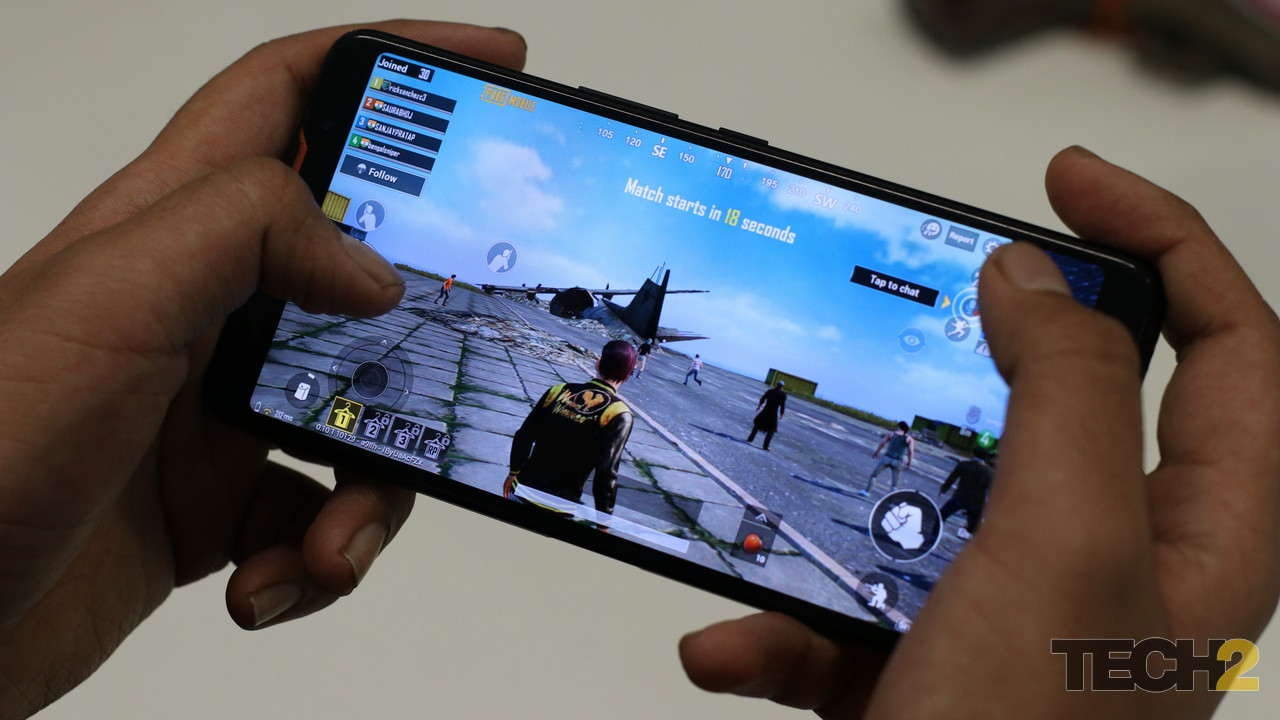 Representational image. Tech2[/caption]In the absence of any state regulation of video games, platforms which facilitate access to video games, such as app stores on smartphones, can consider self-regulation. In May 2015, it was reported that Google Play had put International Age Rating Coalition (a collaboration of different ratings authorities including PEGI) in charge of Android apps’ age ratings. Parents of under-age children can rely on the apps’ age ratings while using parental control options on Android phones.It may be worth considering broad guidelines for regulating video game content where the degree of violence in a video game is too much to be ignored. The government may consider amending the IT Act to specifically address graphic violence in a video game. The element of cyber-bullying may be difficult for the government to control through restrictions on video game developers; this is because any abusive communication constituting cyber-bullying is perpetrated by other gamers and not by the video game itself. Unless the essence of the game itself is cyber-bullying (like Blue Whale Challenge), abusive communication by players is not under the control of the game developers and therefore, should not be the subject of state regulation.A bigger question which the court may face is whether regulation of online video games such as PUBG is desirable. Given that PUBG Mobile is the most popular smartphone game in India, gamers may be up in arms against any attempt by the State to restrict access to the game. Undoubtedly, the court will have a hard time justifying the ban in the absence of direct evidence that the game promotes violence.Devika Agarwal is a Policy Analyst at NASSCOM. Views expressed are personal.
First Published:Feb 06, 2019, 19:48:18 IST
Advertisement
Advertisement

High Stakes Game: Steam’s Best of 2023 highlights which games had gamers all excited last year
Valve has revealed its 'Best of 2023' list on Steam, categorising top-selling PC games into tiers such as Platinum, Gold, Silver, and Bronze, offering insights into the gaming landscape throughout the year
Netflix subscribers can now finally play GTA trilogy on Android, iOS devices. Here’s how to download
The Grand Theft Auto: The Trilogy – The Definitive Edition for iOS and Android mobile platforms with greatly improved visual and gameplay enhancements, promising an elevated gaming experience.
Grand Theft Auto VI Trailer launch: Here’s all the major easter eggs you missed
Hours before Rockstar was supposed to launch the GTA VI trailer, someone already leaked it online. As a result, Rockstar couldn’t go for the big reveal as they had planned. Nevertheless, the trailer had some major easter eggs throughout, which revealed a ton of details about the upcoming game
GTA 6 may launch in Oct 2024, reveals leaked voice message from Take-Two Interactive CEO Strauss Zelnick
While the launch is scheduled for October 2024, the game may be announced officially as early as October 2023, a new leaked voice memo from Take-Two Interactive's CEO Strauss Zelnick has revealed. This should be taken with a pinch of salt though
Ready Player One: Esports is India’s sunrise sector, set to become a Rs 1,100 crore industry by 2025
According to an EY report, Esports, a subset of digital gaming is estimated to become a Rs 1,100 crore industry by 2025 at a CAGR of 46 per cent. Statista released a report, saying the number of users in Esports is expected to amount to 122.10m users by 2027
Advertisement
Advertisement