


Bike News: There’s a generational change in world’s biggest two-wheeler market
India is a price sensitive market and the income gap is widening. But that’s only half the story. The other half is that of a new generation of booming, aspirational middle class with different tastes. The aesthetics of a 20 year-old today is very different from what it was a couple of decades ago

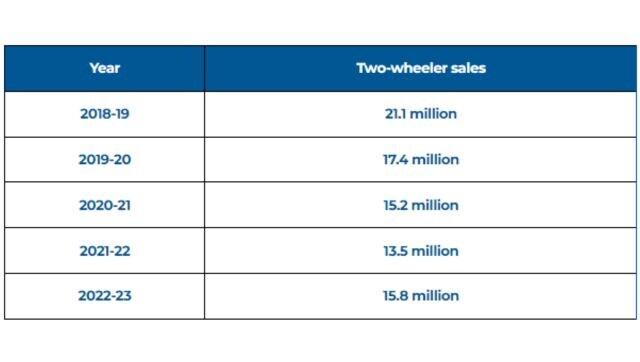
One way to explain this is that the poor aren’t able to afford new two-wheelers or aren’t feeling confident when inflation is pinching their pockets and a series of crises are capping their potential. The widening gap between the rich and the poor, a global phenomenon, may make it more lucrative for industrialists like the Bajajs and Munjals to focus on those who have money to splurge.Eicher Motors’ Siddhartha Lal rode this wave for an entire decade before his bigger peers decided to throw their hats into the ring.Royal Enfield HimalayanClearly, the bar has been raised for what the bikes on Indian roads will look like in the next decade. And, if past experience is proof, early birds don’t always rule the roost. Pulsar had a headstart of many years and continues to be a top-selling model, but there’s enough space in India for more players. The dominance of Honda Unicorn and Activa clearly demonstrates that if there’s value for money, there are enough buyers in India.Carmakers change direction before the bike makers doThe winds of change have been visible in cars a few years before the two-wheelers both in the 1990s as well as in the 2010s.Tata Sumo hit the roads in 1995 and ruled the roads for more than a decade. In 1998, Japanese giant Honda entered India with its swanky Honda City, which, at the time cost about Rs 7 lakh, 25 years before now. It went on to have a cult following that continues to this day.If the price was the only factor, we would see more Opel Astras and Daewoo Cielos on the roads, which were launched before Honda City and were relatively cheaper. Even the Mitsubishi Lancer had a longer ride on Indian roads than its cheaper alternatives. Tata Nano, the world’s cheapest car, did not sell like hotcakes.A similar wave of change has taken place in the Indian car market in recent years. Carmakers have moved from cost-efficient cars with high mileage to sports utility vehicles (SUVs) like Mahindra’s XUV series, Maruti’s Brezza, and Kia Seltos.Yes, India is a price-sensitive market and there are too many have-nots in the country. But that’s only half the story. The other half is that of a new generation of booming, aspirational middle class with different tastes. The aesthetics of a 20-year-old today is very different from what it was a couple of decades ago. To offer them something suited to their taste buds seems more rational. They might want to pay more for it, too.It was not unusual, even a few years ago, to spot a Kawasaki Ninja or KTM on Indian city roads and it won’t always be a movie star or business owner riding it.So, the success of the Scrambler 400 or the X440 will depend not only on the price and the features but also on how 'cool' they are. The success of Kia, a relatively new player in the market, bears witness to the fact that even late entrants can rake in the moolah.Yes, not everyone in the country may be able to afford the new motorbikes from Bajaj-Triumph and Hero-Harley Davidson right now. But history would tell them to keep their hopes up.

Mercedes-Benz India at Rising Bharat Summit: 'China market is very different...'
Tesla will no longer user the term ‘autopilot’ to market its EVs
Indians punishing Turkey over Operation Sindoor stance? Travel falls 25%
Tesla to retire its flagship models to make room for Optimus robot production
Europe buys more electric vehicles than petrol cars for first time — despite Trump’s ‘drill, baby, drill’ push