


Exclusive | A youngster’s guide to polo in India, with Akshai Malik
From riding schools to professional chukkers, Akshai Malik breaks down how youngsters can enter polo in India. Featuring insights from rising young players, this Firstpost exclusive explores training, career realities, and the evolving ecosystem shaping the future of Indian polo

The afternoon sun at the Jindal Polo Estate in Noida carries a specific weight during polo season. It is the heat of the spring season, a time when the rhythmic thud of hooves against the turf provides the soundtrack to India’s most storied sport.
Amidst the smell of fresh-cut grass and expensive leather, Akshai Malik — a top lawyer in the national capital who voila, is also an amateur polo player — sits down with Firstpost's Anmol Singla to provide what can only be described as a masterclass for the next generation.
Polo in India is undergoing a renaissance.
With India recently sweeping the HPRC World Arena Polo Championship in Hyderabad and the Delhi Spring Season reaching its crescendo, the "Sport of Kings" is increasingly being viewed through a new lens: accessibility.
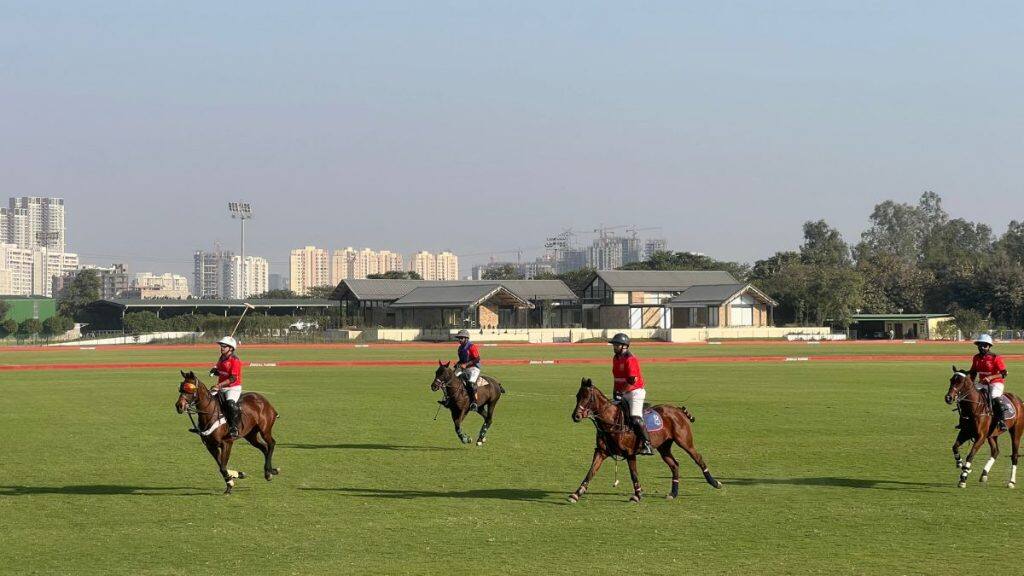
But for a teenager standing at the edge of a polo field for the first time, the path from the stables to a +6 handicap can seem like a labyrinth.
 More from Sports
To demystify this journey, we spoke to Malik (current handicap of 0) and a few of the circuit's many promising young talents.
Phase 1: The first gallop
"There is no one correct answer to how one enters the circuit," Malik begins, his eyes scanning the field where the next chukker is about to commence.
"Everyone has their own circumstances, place, where they are, what access they have. But I think for somebody who really wants to get into polo, the starting point is to get into riding."
Malik’s own journey began at age three. "My grandfather, my nana, used to have racehorses. I remember as a 3-year-old, I would go to the racecourse with him... carrying that racing booklet. I presume I got instantly attracted to the animal because I was only 3."
This early exposure matured through army cantonment riding setups and eventually led to a national medal in show jumping in Bangalore before he ever picked up a mallet.
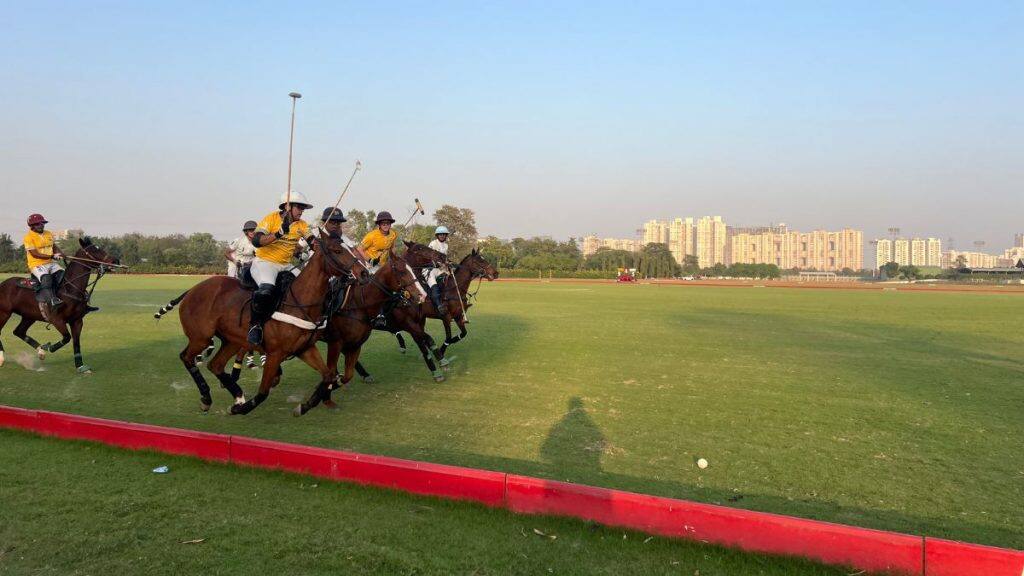
For the modern youngster, the barrier to entry is lower than it was a decade ago. "The number of riding schools that have come up since COVID has been exponential," Malik observes.
"People have got this realisation that life is not only about just working and paying your bills. Outside this facility alone, I probably know six or seven riding schools."
Savir Mehraj Godara, a 17-year-old, +1 handicap player based in Jaipur, echoes this sentiment. A third-generation player, Godara actually took his first serious steps during the pandemic.
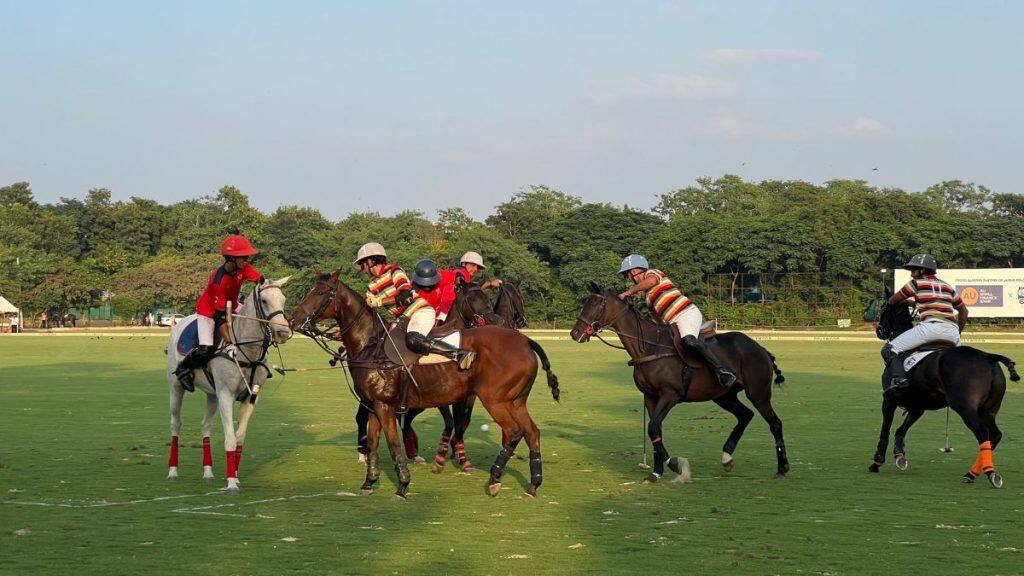
"I started riding in COVID, and then after one year of riding, I started to play chukkers," he tells me on the sidelines of the Gujarat Arena Polo Tournament. For Godara, the hierarchy of skills is clear. "The difficult part of polo is riding. Once you master that, it’s all about horses, nothing else. The stickwork and all, it comes naturally."
Phase 2: Breaking the "Argentine" myth
One of the biggest psychological hurdles for young players is the "Argentine Horse" obsession. In the high-goal world of 14-goal tournaments like the Jindal Steel Indian Open, the power of Argentine ponies is undeniable. But Malik is quick to ground the conversation in reality.
"No youngster who gets into polo at a minus-two level is actually playing Argentine horses," Malik says firmly.
"The Indian thoroughbreds for somebody who’s just starting off are good enough. In fact, to be very honest, a good Indian thoroughbred is as good as Argentine horses. The problem is you don't end up finding so many in the market."
The requirement for Argentine imports is typically a team requirement — setups that need to mount four players with 40 horses on the field.
For an individual starting out, the "green" horse is often the best teacher. "I would go pick up two every year, absolutely green or semi-made from someone, continue to do stick and ball, school it, and play it after two years," Malik shares.
This DIY approach makes the sport "doable," a word used by 13-year-old Aryaman Singh. As the son of a naval officer [Captain AP Singh of the Indian Navy is also an active polo player], Aryaman represents the "new" polo blood that relies on grit over vast family estates.
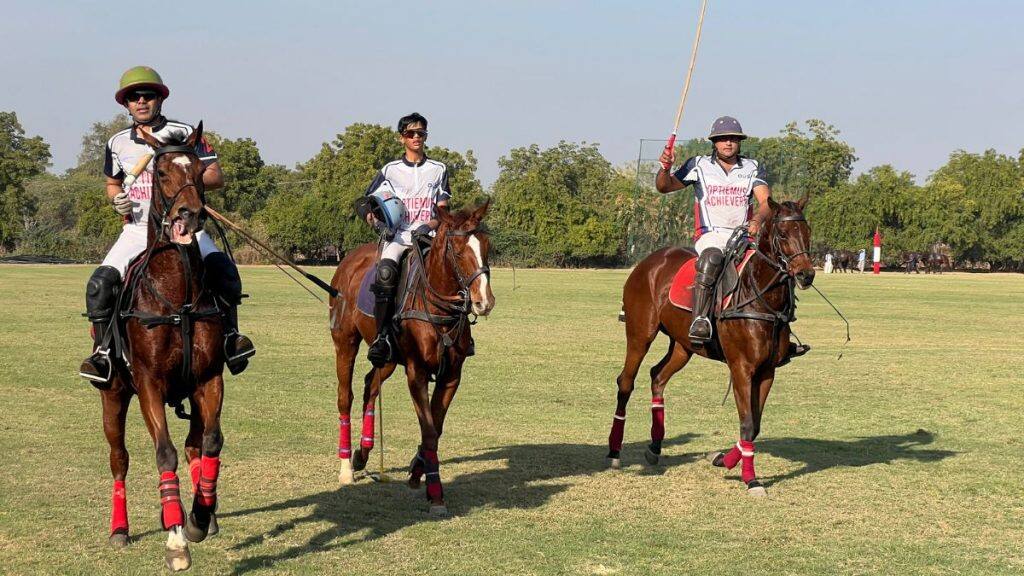
"Expensive, it might be, but it's very doable," Aryaman says. "As my father is a naval officer, we don't have those kind of massive resources, but it's the passion that does it. If you have passion for the sport, everything lines up."
Phase 3: The equipment – where you can (and can't) cut corners
When it comes to safety and technical gear, Malik’s "Polo 101" is uncompromising. In a sport where horses move at 60 km/h and a polo ball can fly at 110 km/h, quality gear is the difference between a minor tumble and a career-ending injury.
The Player’s Checklist:
- The helmet: "Can’t do without a good helmet," Malik insists. "If it gets hit by a ball or you have a fall, ideally you should be changing it. At this speed, any kind of injury can be almost close to fatal."
- Shatterproof glasses: Protecting your vision is paramount.
- Knee pads & elbow guards: "If somebody hits the ball from behind, this [the arm] is just a bone," Malik notes, gesturing to his forearm. "Getting a ball here would shatter it completely."
- Quality boots: For grip and protection.
The Horse’s Checklist:
- The mouthpiece: "This is paramount for control and communication."
- The saddle: It must sit perfectly without pinching the horse's back.
- Bandages: Critical to protect the horse's legs from stray mallets or balls.
Phase 4: The roadmap to the top
For a youngster starting at a minus-two handicap, the climb to the top requires more than just field time. Malik breaks it down into three pillars:
a) Elite Fitness:
"For a minus-two to quickly go up, your own fitness level is very important," says Malik.
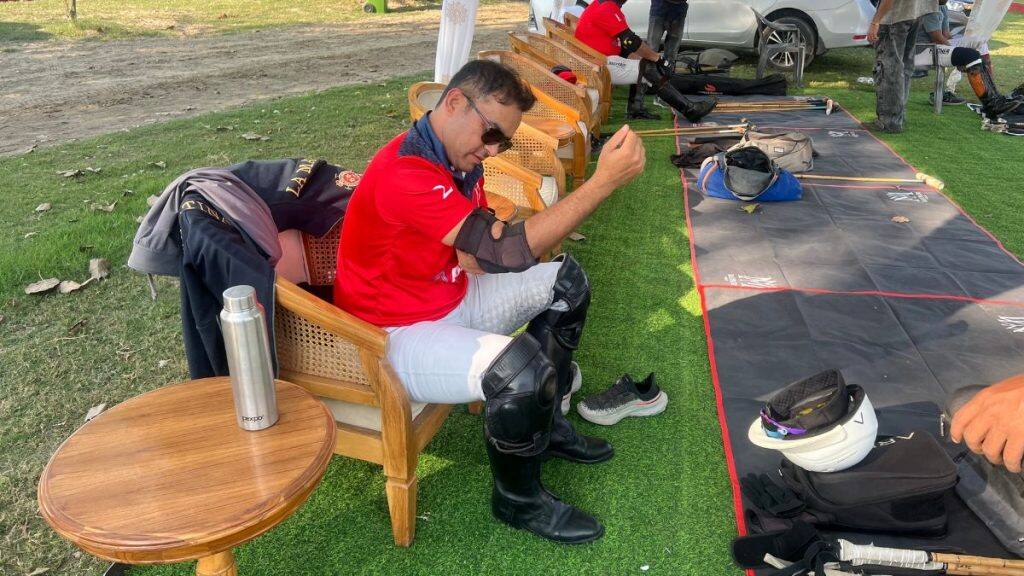
He points to top-tier players like Simran Singh Shergill and Siddhant Sharma. "They all work out every day. Their life apart from playing polo is constantly about keeping themselves fit — doing various other exercises, yoga, and therapies."
b) The Mecca of Polo (Argentina):
Malik believes the fastest way to evolve is to leave the Indian comfort zone.
"Go to Argentina for a month, almost every year, and every time you come back, you will be a different player." He also suggests looking at African circuits during the off-season.
c) Investing in the string:
"Eighty percent of the sport is dependent on horses," Malik reminds us.
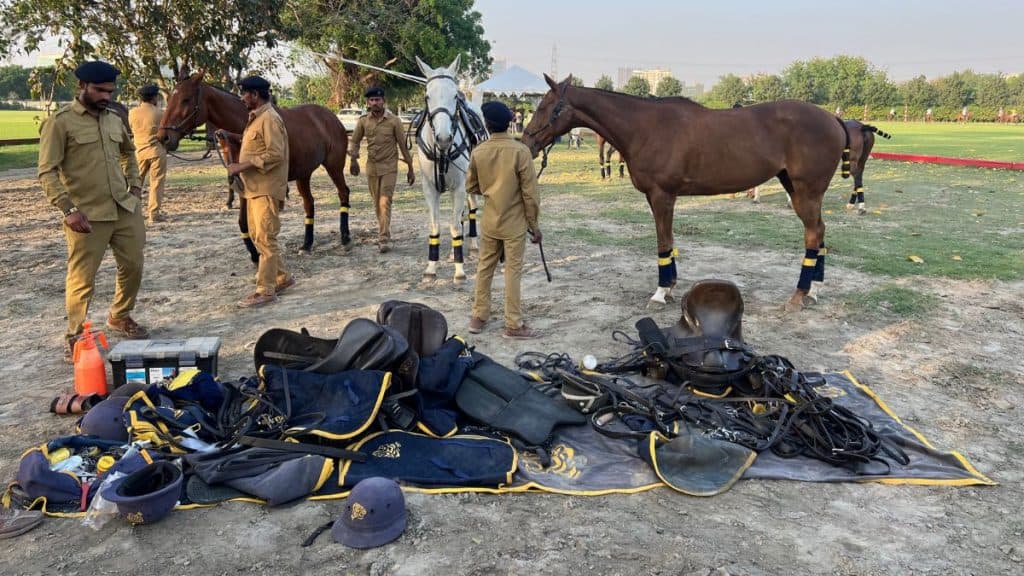
While Indian thoroughbreds are the starting point, as a player moves toward a zero or +1 handicap, the quality of the "string" (their group of horses) must keep pace with their skill.
Phase 5: Education vs the Arena
One of the most pressing questions for young players in 2026 is whether they can make a full-time living from the sport. In India, the current economic model of polo remains unique.
Atharv Singh Chauhan, a 16-year-old currently training in the UK, illustrates the balancing act. "The main reason for me to go to the UK was to pursue education there," says Chauhan, who trains once a week in the winter and more regularly in the summer.
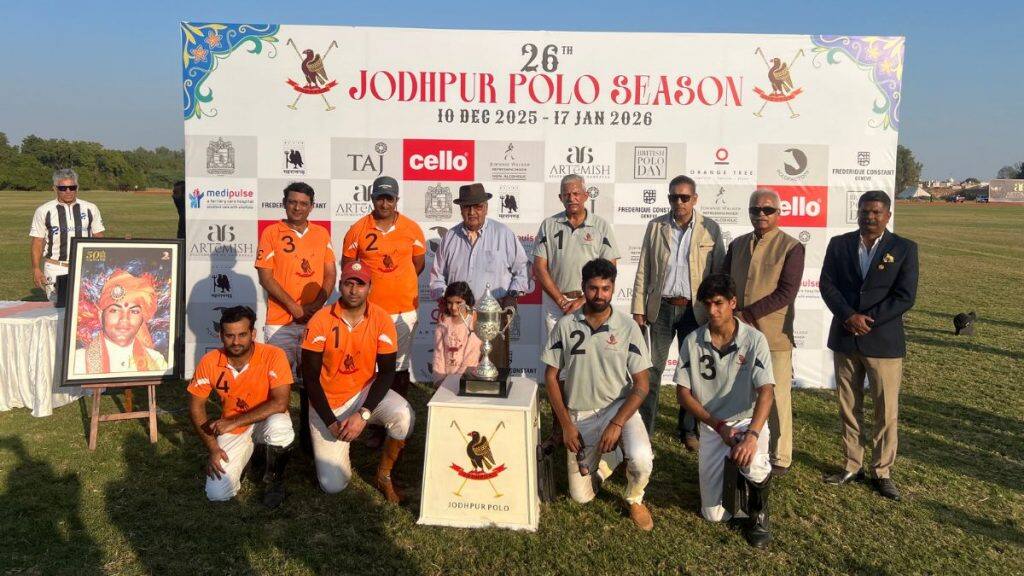
"I'm looking to just work on my handicap in the short term, get it up to zero or one. If I get to a level like two or three, then I can start thinking of playing professionally."
Aryaman Singh, despite his early professional success, also plans for a dual-track life. "I’ll probably not go fully professional. I’ll have a job and then I’ll continue playing... as soon as it happens that I become a better player, I get a job and I co-manage both."
Malik clarifies that while you can make a living, it’s not a path to overnight riches. "You have to consider polo as a way of life. Even if you are getting good pro fees, keeping a string of horses takes money. It’s not buying you — at least in India — it’s not buying you the Ferraris."
However, he is optimistic about the future of sponsorship. "As this sport gets on television, it will happen. The sponsorship side is still slightly in the future."
Phase 6: The "pipeline" and the future
There is often a debate about the "gap" in Indian polo — the space between the veteran Arjuna Awardees like Simran Shergill and the raw youngsters. Malik, however, dismisses the idea of a stagnant pipeline.
"That's not true," he says. "You have the next group of players like Siddhant, Pacho [Padmanabh Singh of Jaipur], Hurr [Ali], and then the next lot like Dino [Dhankar] and Savir. Indian polo is on its way up... especially with the amount of effort being put in by Mr. Naveen Jindal."
Infrastructure remains the final frontier. On the sidelines of the Jodhpur Polo Season, Atharv Chauhan suggests to me that for India to reach the next level, grassroots accessibility must improve.
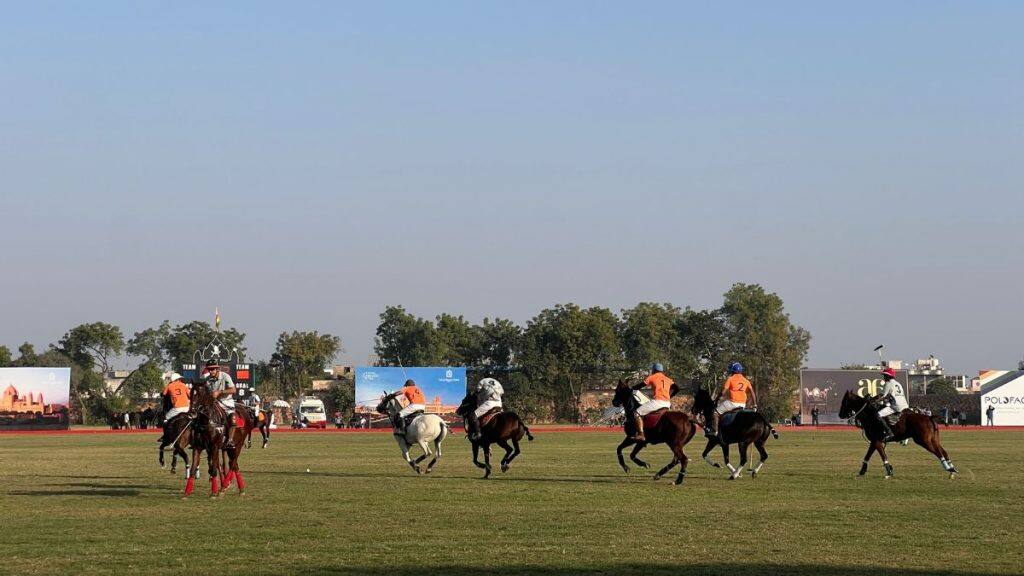
"A lot of people think it's a very elitist sport, you need a lot of money, but if centres open up where people can play just to get the gist of the game for little to no money... just to get that interest going," it would change the landscape.
The Malik philosophy: Polo as Formula 1
As our conversation concludes, Malik offers a final analogy that captures the complexity of the sport.
"Like how Formula 1 is for teams, polo is for individuals," he says. "You have a big team — set of grooms, everything — who are behind the scenes getting you on the field, just like how a Formula 1 car goes onto the track with so many people behind it."
For the youngsters of 2026, the message is clear: the glamour of the Sunday final is earned in the early morning sessions at the riding school, in the discipline of the gym, and in the quiet bond formed with an Indian thoroughbred in the stables.
The "Sport of Kings" is open; you just have to be willing to do the work.
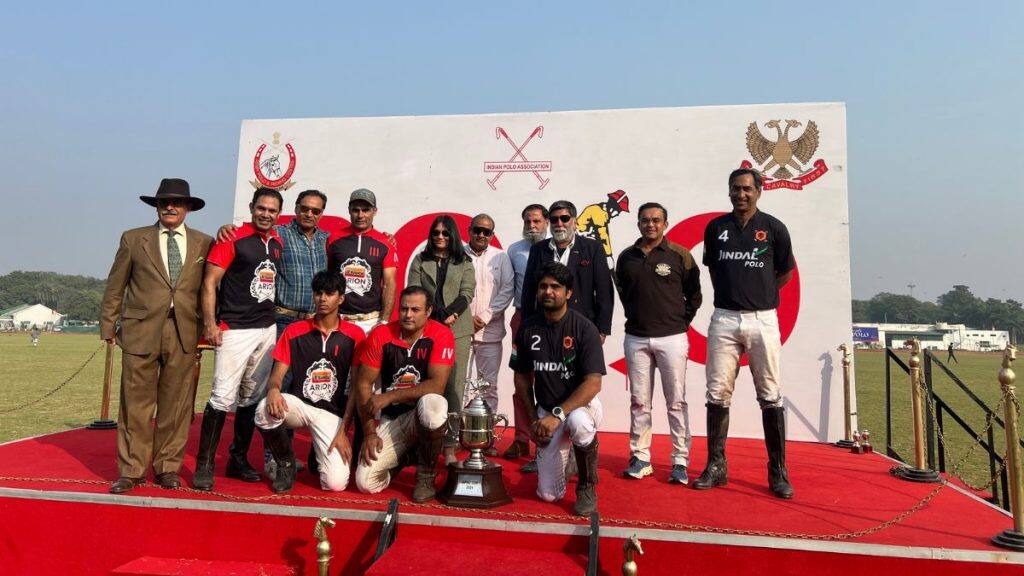
At Firstpost, we extensively covered Indian polo through the 2024-25 season, first focusing on the origins of the sport, and then diving deep into the role of the Indian Armed Forces in reviving polo as well as the challenges the sport faces in the subcontinent.
Now we are in the middle of a new series of features focusing on the 2025-26 Indian polo season.
Inhaling global affairs on a daily basis, Anmol likes to cover stories that intrigue him, especially around history, climate change and polo. He has far too many disparate interests with a constant itch for travel. You can follow him on X (_anmol_singla), and please feel free to reach out to him at anmol.singla@nw18.com for tips, feedback or travel recommendations

Lovlina Borgohain opens India’s medal tally ahead before Commonwealth Games 2026 could begin | Explained
Vozinha, Haaland lead fan-voted FIFA World Cup dream team
PV Sindhu's China Open hopes end after agonising second-round defeat to Chen Yufei
Commonwealth Games 2026: Check schedule, star athletes, medal favourites and everything you need to know
High-flying PV Sindhu defeats fellow Indian Unnati Hooda, advances into 2026 China Open round two