


'2022 Asian Games was a defining moment, my horse almost held my hand and said ‘don't worry, we'll do this': Divyakriti Singh Rathore
Divyakriti Singh Rathore has spoken exclusively about her journey as an equestrian rider, her gold medal in Asian Games 2022, and the rising popularity of the sport in India.

Equestrian sports have always carried the tag of being niche and far too expensive. And that has historically been true around the world. If you love horses and also want to get into sports then equestrian disciplines like polo, show-jumping, dressage, tent-pegging, eventing etc might seem like natural and logical choices. But the big hurdle, especially in a country like India, when it comes to trying to pursue equestrian sports, is the cost factor. Research shows that a good quality sport horse (warmblood or competition horse) has to be imported and could cost up to Rs 40 lakh. Add customs duty, IGST, transport costs etc and the final figure could very easily touch Rs 1 crore. Then there are regular training, maintenance and equipment costs. It’s therefore not a surprise that traditionally most competitive horse riders in India have either come from nobility or from other privileged backgrounds or the Army.
But riding academies are coming up at an unprecedented pace in the country and things are changing. The sport seems to be becoming both more popular and more accessible. And this comes from the horse’s mouth. Well, almost.
Anyone who follows equestrian sports closely in India will know Divyakriti Singh Rathore. The 26-year-old who hails from Jaipur was part of the Indian quartet that won a historic Team Dressage gold medal at the 2022 Asian Games in Hangzhou, which were held in 2023 due to a forced postponement caused by the Covid-19 outbreak. This was India’s first top tier podium finish in the Team dressage event at the Games in 41 years. The combined score of 209.205 points didn’t just give India the top prize, it also helped dressage, the riders and equestrian sports overall make headlines everywhere. What helped their cause further was Anush Agarwalla’s individual dressage bronze at those Games and the combined trickle-down effect seems to have been massive. Somewhat along the lines of what happened you might say when Neeraj Chopra won the javelin gold at the Olympics. Efforts to popularise equestrian sports were already on before the 2022 edition of the Asian Games and they got a real shot in the arm thanks to the success of Fouaad Mirza (who made history at the 2018 Asian Games by winning two silver medals in the individual and team eventing disciplines in Jakarta, becoming the first Indian to win an individual equestrian medal in 36 years) and then the triumph of Divyakriti and her teammates in Hangzhou. And as Divyakriti, who also became India’s first female equestrian athlete to be given the Arjuna award, says – “right now is the best time to get into equestrian sports in India and for the country to really make this a mass sport.”
 More from Sports
The numbers show the upward trajectory of the popularity of equestrian sports in India. Private riding academies seem to be mushrooming in major cities like Bengaluru, Mumbai, Delhi and Coimbatore. Karnataka reportedly has as many as 20 regional riding clubs. Riding leagues like the Equestrian Champions League - India's first-of-its-kind, premier show-jumping event organised by the Equine Sports India Federation (ESIF) in association with the Indigenous Horse Society (IHS), Tamil Nadu and the Polo Premier League have been launched to further popularise equestrian sports in the country. According to reports there has also been an "unprecedented growth" in the number of junior riders and national-level events. The government too has helped via import duty waivers on warmblood horses for eminent sportspersons. More and more people in the country are now becoming familiar with equestrian sports and athletes. The Asian Games gold medal winning quartet of Divyakriti, Anush Agarwalla, Sudipti Hajela and Hriday Chheda were featured in Vogue India and the Prime Minister hailed their achievement saying – "It is a matter of extreme pride that after several decades, our Equestrian Dressage Team has won Gold in Asian Games!".
According to the very confident, clear-headed and extremely articulate Divyakriti, while most competitive Indian riders are currently based abroad, it might not take too long before riders based in India can also compete at the highest levels.
In this exclusive interview with Firstpost, the 26-year-old Divyakriti, who in her own words went from a “shy, home-sick girl at boarding school” to one of the country’s most accomplished and decorated competitive horse-riders, talks about her journey so far – how it began and where she is headed, the rise of equestrian sports in India, her precious and emotional memories of the Asian Games outing in Hangzhou and how her beloved horse Adrenaline gave her the confidence she needed to stay calm and “held her hand” to ensure a golden finish, the years and years of hard work that go into making a rider and a horse one cohesive unit, how taking care of her horses and riding is what life is for her right now and much more.
This is Part One of the interview.
Let’s start at the beginning. How did the equestrian journey begin? You are from Jaipur and Rajasthan overall has a very old and well documented tradition of horse-riding. I read that you were 12 when you began this journey. What drew you to this sport?
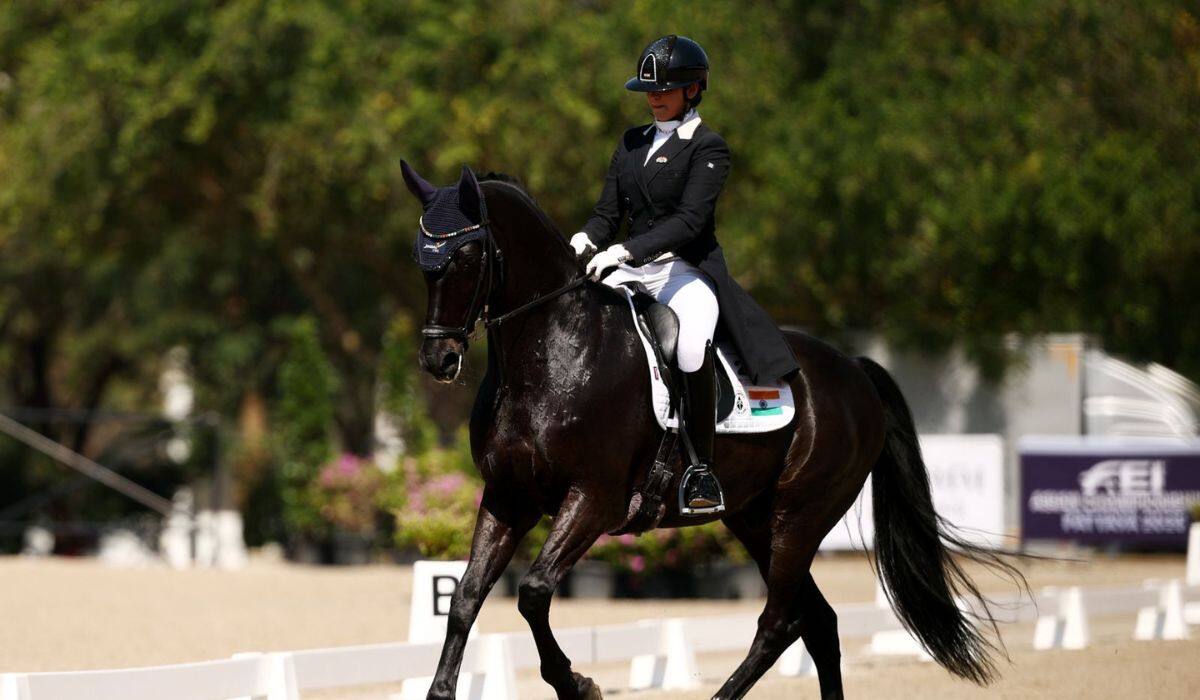
Thank you for having me. I am really happy to do this with you. It’s true that this sport is rooted in our tradition. Horses have been a part of our history since time immemorial. I went to a boarding school – Mayo Girls in Ajmer and every student had to play a sport – it was compulsory. I was a very home-sick child, I went to boarding school in the seventh grade and one of the sports being offered was horse-riding. My father was in the Indian Army and he had been into horses, but that never influenced me in any way. I didn’t ride at all before I went to (boarding) school and I really picked it up due to selfish reasons. The trainer told us – ‘when you become better at riding you go to competitions and you get to travel for those competitions and those competitions could be in Jaipur or Delhi’ and I thought it would be a good chance for me to see my parents again. But we were allowed to see them only during the summer and winter breaks. But that’s the reason I began horse riding and it was only three times a week. I was not a sporty child at all so I thought ‘perfect. I don’t have to do this every day. It’s only three times a week.’ That’s how I started and I hated it in the beginning because I was really bad at it. But a few months in I began to fall in love with horses, so I began to overcome my fear. The fear never really went away, but as I became more regular with it, I fell in love with horses, so that’s what kept me going and drew me towards the sport and I don’t know how it happened, but from one day to the next, this is all I wanted to do for the rest of my life. I think that decision that I made in seventh grade – to choose horse riding as my sport – became the best decision I have ever made.
I have interviewed a lot of athletes through the course of my career and this is something that I have heard many of them say – that they decided to try out a sport they had no association with as such before that and the sport called out to them…
I also wanted to add one more thing – a lot of people say that horse-riding is not a popular sport in India and ‘how do we do it?’. If you look at me – this is my life, but I started in school where it was offered as a sport. At that time, it was very different but today there are a number of schools and institutions that offer this. So, it is easier to pick up today. That’s how I picked it up. I never had my own horse. Five years ago, is when I got my first sport horse (horses specifically bred and trained for equestrian disciplines). So, it is possible and I think right now is the best time to do it and for the country to really make this a mass sport.
Well, there is a definite perception, and for good reason, that this is a niche sport and very expensive and difficult for athletes to maintain this as a career. The sustainability factor is talked about a lot. But you are saying that this is perhaps the best time to get into it, if one is an Indian budding equestrian athlete?
I think sports in general. India is in its sporting era at the moment and even for equestrian sport – we have been noticed, people do recognise it, it is being picked up. The sport is extremely popular – there’s no doubt it. If I understand correctly, in the last three years more than 100 horses have been imported from Europe into India solely for the purposes of equestrian. So that’s show jumping, dressage, eventing etc. So, people are investing their time and resources into giving it their all for this sport. So, this sport is growing (in India) and there has never been a better time than now. Most of us had to be based in Europe to do it, but I think times are changing and hopefully soon you could pursue this at the highest level, even being based in India. At the moment that’s not possible, but (looking at) where things are going and the direction things are heading in – it is foreseeable in the near future now.
Right. Let’s go back to your genesis in the sport. Your father of course is someone whose association with polo is well documented. He was chef de mission of the Indian polo team back in 2011 as well. What are the conversations the two of you have when you talk horse-riding?
My father is still very much involved in the sport of polo. I was too home sick and too shy a child to pick it up when I was younger. When I went to boarding school - the reason I picked it up was so I could meet my family. I assumed they would be at the same venues where the competitions were taking place. That’s how I started, but both my parents have played pivotal roles in my journey. At the (2022) Asian Games, we were a team of four people and all of us were under 25 years of age and all the parents made our dream their dream as well to get us there, so there’s a lot that they have done. My father understands the sport through and through. He knows what a sport with horses involves. It’s very different from other sports. You are dealing with an animal which has a mind of its own. The problems and the difficulties that we endure are very different. And he is somebody who understands that and it’s very nice to get his perspective on a lot of things. So, if I run into a problem at a competition – of course I have my coach and my trainers and my whole team – but it’s nice to her some feedback or get some information from someone like a parent. We are a horse loving family, we enjoy watching polo. I am into dressage. We are animal lovers, so horses have made it to dinner conversations every night at home (as well). It’s at the heart of what we do now.
Your discipline is equestrian dressage and equestrian sports overall has multiple disciplines of course - dressage, show-jumping, eventing etc. So why dressage? This is just me trying to understand your journey a little better. What made you choose this discipline? Was it because it's part of the programme for global tournaments like the Asian Games and the Olympics or was it something that just happened organically?
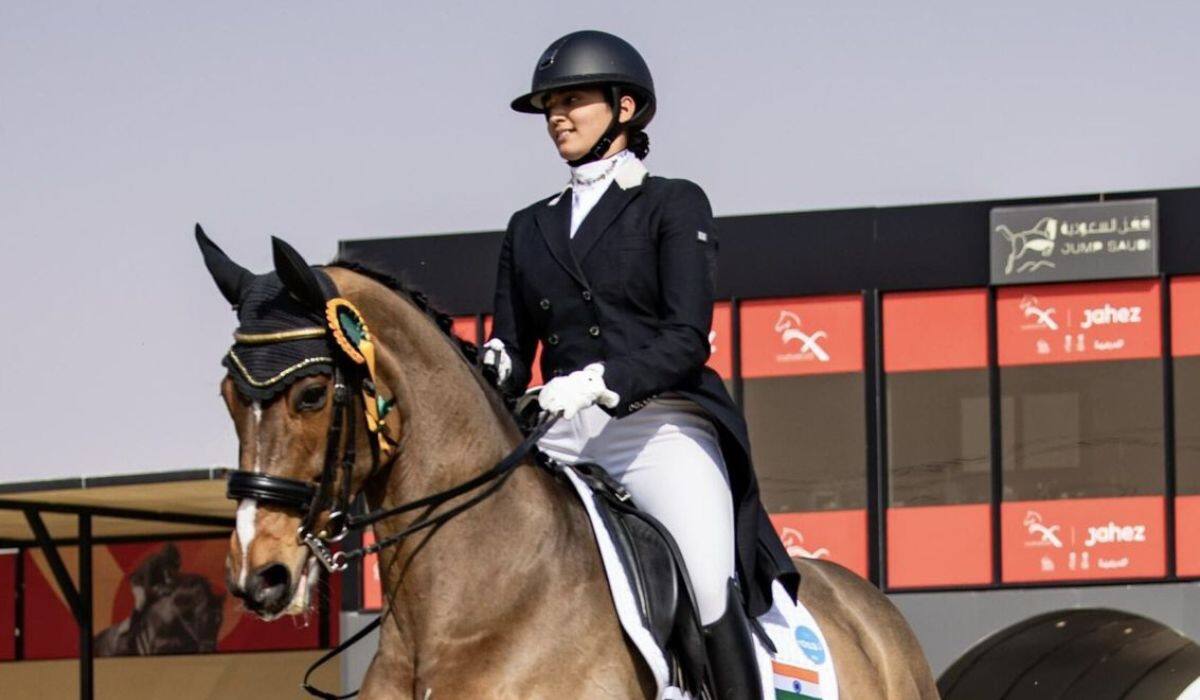
I did everything when I was in school. So, I did showjumping, tent-pegging, dressage. All of us were required to do everything. And I was better at dressage than I was at showjumping or eventing. That's one thing. But also, dressage is the fundamental of all (equestrian) disciplines. So, to be a good showjumper, you have to do your flatwork (training exercises performed without jumping, focusing on improving a horse's balance, suppleness, strength, and obedience to aids). In eventing, your dressage is your first event and it's the foundation for everything. So, dressage is really the fundamental element in any equestrian discipline and the nitty-gritties of it and how detail-oriented you have to be, because, you know, it may look boring when you don't know about it. If a person just watches a dressage test, they might not quite understand it. It may look boring and you might wonder what's going on. But if you read into it a little bit and you understand how technical the sport is, there's so much involved. There's so much precision and precision with a horse is a unique combination in itself. So that's what fascinated me. And the feeling that you have when you go into a dressage arena with your horse, who you've known for so long, you've worked hard with, you know, my horse knows me inside out. I know my horse inside out. And to then sort of, you know, give this performance where you look for harmony and, you know, everything just comes together. Those days are seldom. A lot goes wrong. And I think they're more bad days than good days, as is in any sport. But the day that it goes well, everything just fits, is the most rewarding feeling where you feel like – ‘okay, my journey with my horse has evolved into something.’ So, it's that. It's the process that drove me to choosing it because I loved how detail-oriented everything was. And I became sort of a horse nerd and I wanted to learn more and dig deeper. And how do I perfect this? And one thing led to the other. But of course, I must say, if I was a better show jumper, I probably would have done that. I was better at dressage. That's why I took it. So, it's not always a glamorous answer, but yes, that's also a part of it.
No, that makes sense. You would want to pick up something that you feel that you can work on and become stronger and stronger at, and therefore more competitive at. So that makes a lot of sense, of course. Talking about competition, let's talk about the 2022 Asian Games team gold at Hangzhou. Of course, a huge achievement. What was the overall experience of being at the Asian Games like and competing at the Games like? This was also your first Asian Games appearance, right?
It was my first Asian Games. It was the first time we were at Asian Games. It was the first Asian Games for all four of us. Like I said earlier, we were four under 25-year-old athletes. And Asian Games had been my biggest dream since I think ninth grade, where I would be sitting in boarding school, zoning out in class, thinking and reminding myself of the Asian Games. I didn't even know. At that time, I didn't even think if the sport is at the Olympics or not. That was not on my radar. I just really wanted to go to the Asian Games. So, it's been a lifelong dream. And all of us, all of us riders in India competing at the junior nationals, senior nationals, at local horse shows, all of us have this dream that we want to represent India at the Asian Games just to participate. Winning was also not a dream. It was just to participate. And Asian Games, as you know, got postponed because of Corona. So, the trials happened again. But the first time I actually didn't make it at the Indian team, which was a learning process in itself, but it gave me a lot of lessons and experience. And the second time when I was able to try again because of Corona, that was a blessing in disguise. I had all that experience from my bad competitions or me not making it to the team. And I used it and turned it into something better. And when we made it to the team, it was a surreal experience. And when I qualified, I actually said this, that I know I shared this dream with every Indian athlete, every Indian rider back home. So, I don't take it lightly. And I didn’t. And it was the best experience of my life. And I'm very happy that we went and did that. All of us were just extremely happy to be there. We gave it our best shot. I think most of us had personal best scores over there and our horses loved it. And also, for me, I think that was like the defining moment in mine and adrenaline's career where we knew each other a lot, but that day it just took it to a whole new level because I was so nervous. It was my first championship and I was riding in that big arena and you know, the atmosphere got to me, but it's almost like he held my hand and he said – ‘no, we'll do it.’ And that day something happened. And yeah, of course I loved him equally before and after, but yes, I truly realized what a golden horse I have in adrenaline (one of Divyakriti’s horses) that day. It makes me emotional even thinking about it.
What was going on in your mind when your event started at the Asian Games and while you were competing? Like you said you were nervous…
It had taken so long to get to the Asian Games and it had taken so much to get to the Asian Games. We had a very tough selection process. I'd been competing all across Europe. I think in that year, I had done 20 international competitions, if I'm not wrong, or the period of two years or something, it was, it was a lot that we were doing. So honestly, I was just happy to be there. And then I told myself, I'm going to live in the moment and enjoy it. But of course, I was nervous. I was afraid of something going wrong, all of that. But like I said, I had a horse who had a heart of gold. He really did it, for me, there was nothing I had to be nervous about. He didn't do anything wrong. He almost did it for me. It's almost like he held my hand and he said – ‘don't worry, we'll do this.’ So yeah, it was a defining moment in my life. But I really felt that connection that you get with a horse. And, you know, I've heard stories about people talking about that relationship. And I thought, okay, maybe this is how it is, but that day just changed everything for me. So yes, I was just happy to be there. There was a lot that it took to get there. And then I tried to live in the moment and just enjoy every bit of it.
You have said before and you mentioned this in this interview as well - that horses have a mind of their own. They are of course extremely intelligent and are capable of highly developed cognition and are also quite emotionally evolved. As a horse rider what does it take for a human being to establish that kind of a relationship and rapport with a horse where they go from being strangers to almost one cohesive unit. I know it must be tough to put the entire process into simple words but if you could attempt to do it, what would you say? How do you form that bond?
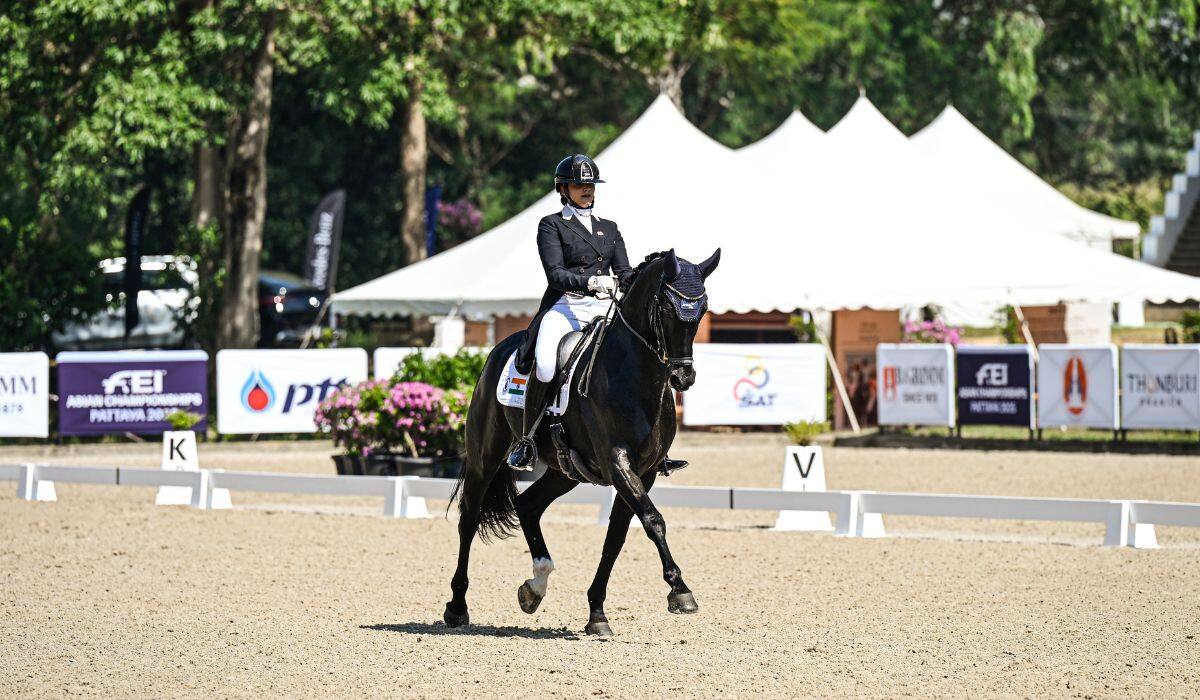
It's a long process. It of course, it depends, you know, every horse is different. Every rider is different. You might connect with some horse instantly and some horses, it might take a little longer, but I think it's hours that you spend every day (with the horses). As riders, we're not just going and riding a horse, we're taking care of the horse or horses. We're in the stable all day long from feeding, taking care, treatment and management of the horse, how the horse is feeling, physiotherapy, chiro (chiropractic care), all of that. There's a whole team around that one horse and as riders, we're responsible for that. So, I know my horse so well that I can notice the slightest of change in behaviour or, you know, the slightest visible difference. And when your horse knows you as well, when your horse sees you every day, he also starts trusting you and you trust each other and you become this cohesive unit. But that is, of course, years and hours that you spend together, not just riding, not just on the horse. Practicing, of course, is important, but the hours that you spend off the saddle when you're just spending time with them, grooming them, you know, hacking in the forest or hand-walking them, grazing, things like that is where you actually form that partnership. It's like, how you have a dog. Maybe the first day you get a dog, the dog is also a little, you know, afraid or apprehensive. And then, of course, slowly but time, you trust each other. So, it's many times that with the horse. But yes, it's the same. It's the same process. They become a family member of yours.
I have a family member who is a horse rider, so we keep hearing about what she's doing etc, which is a lot and that is in a non-Olympic discipline. Now, as someone who is competing in equestrian events at the highest levels, in an Olympic-discipline, how much of your time does the sport take up. What is a usual week or month like in your life when you are say training for a big tournament that's coming up?
So, it's my life. There's nothing more to my life at the moment. And maybe that's a good thing or a bad thing. And of course, I think, in some years, I have to find a sustainable way of doing this, you know, in a couple of years. But horses are time consuming, and this becomes your life. And it kind of has to, I think you have to be crazy obsessed with it, to be able to do it not in an unhealthy way. But I think you have to be so madly in love with the horse that you want to spend all your time with it. As riders, you lead sort of lonely lives. The long days, quieter evenings, you're very consumed with them (the horses) especially before competitions, or when you're traveling and things like that with them practically all the time. So, there's little outside this horse world for me. And especially before the Asian Games. I don't know how I lived at that time. Now I'm a little more social and more outgoing. But that time I was just so consumed by this whole thing. So yes, there is nothing other than horses. A lot of people ask me – ‘so what else do you like? If not a rider, what would you be?’ And I don't know how to answer that. At the moment, this is still my answer - that it is my whole life.
Akaash is a former Sports Editor and primetime sports news anchor. He is also a features writer, a VO artist and a stage actor
Tags

Lovlina Borgohain opens India’s medal tally ahead before Commonwealth Games 2026 could begin | Explained
Vozinha, Haaland lead fan-voted FIFA World Cup dream team
PV Sindhu's China Open hopes end after agonising second-round defeat to Chen Yufei
Commonwealth Games 2026: Check schedule, star athletes, medal favourites and everything you need to know
High-flying PV Sindhu defeats fellow Indian Unnati Hooda, advances into 2026 China Open round two