


Uttarakhand Election 2017: The relatively prosperous state has poor child health indicators
The relatively prosperous, mountainous state of Uttarakhand does worse than many poorer states with its infant mortality rate (IMR).

By Shalini RudraIt ranks number six in per capita income–although it has slipped from number three–but the relatively prosperous, mountainous state of Uttarakhand does worse than many poorer states with its infant mortality rate (IMR), ranking 18th among 29 states, an indication of its indifferent health as it prepares to choose a new government on February 15, 2017, according to an Observer Research Foundation analysis.[caption id="attachment_3278274" align="alignleft" width="385"]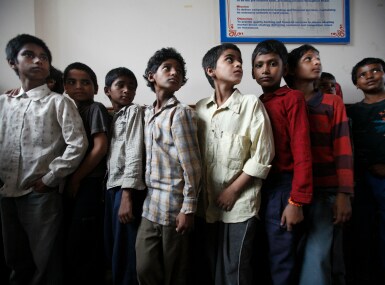 Representational image. Reuters[/caption]Although the maternal mortality ratio has improved, child-health indicators, collectively, a major bellwether of a state’s healthcare system, do not match Uttarakhand’s relative prosperity:• Over 10 years to 2015-16, the IMR has stagnated at 40 deaths per 1,000 live births; it was 42 in 2005-06, worse than poorer states, such as Himachal Pradesh.• A fifth of all children below five years of age are wasted–low weight for height–and there was no improvement over a decade to 20 percent wasted.• A quarter of newborn babies are underweight, compared to 36% and 28% in Rajasthan and Jharkhand respectively for the year 2012-13.• The proportion of stunted–low height for age–children declined relatively faster, from 44% to 34% in a decade to 2015-16, compared to India’s improvement from 48% to 39%. Proportion of underweight–low weight for age–children reduced from 38% to 27% in the decade.
Infant Mortality Rate Across Uttarakhand

Community Health Centres (CHCs)–the second-rung of the public health system–are 83% short of specialists required to handle emergencies and 50% short of nursing staff. No more than 68% of primary health centres (PHCs), the frontline of the basic healthcare system, work as they are supposed to 24×7, according to data, the latest available, from the District Level Household and Facility Survey (DLHS-4).Why are babies dying in holy Haridwar at the same rate as The Congo?In rural areas surrounding the second biggest city in the state, Haridwar, public health situation seems bleak. Rural IMR of Haridwar district is 70 (2012-13), worse than the average for India’s worst statewide IMR of (68) among Empowered Action Group (EAG) of states–India’s most backward–recorded in 2012-13 from Uttar Pradesh, worse than many of the poorest African nations and the same as the Democratic Republic of Congo, home to the deadliest conflict since World War II.Uttarakhand doubled the number of institutional births 69% in the decade ending 2015-16, with about two-thirds in public health facilities. But private healthcare varies across districts, according to 2012-13 data, the latest available, from the Annual Health Survey (AHS) 2012-13 report reveals that there are significant variations in the presence of private sector across.Haridwar is the only district where fewer babies are delivered by public healthcare than private. There is scarce private healthcare in the hills, where IMR rates are lowest across Uttarakhand. The districts of Rudraprayag, Pithoragarh and Almora with least recorded infant deaths are hilly with difficult reach of healthcare be it public or private. Even then, they are doing better than districts with more private healthcare.According to the Clinical, Anthropometric and Biochemical Survey-2014, Haridwar’s high IMR also appears to be associated with its stunting rate of 52% in children under five–comparable to IMR of 23 in Pithoragarh with lowest proportion (22%) of children under five stunted.
Sex Ratio (At Birth) Across Uttarakhand

Rahul Gandhi, Kharge lead protest near PM residence; Centre says Parliament discussion was offered
Parliament's Monsoon Session from July 20: Key bills, numbers game to dominate agenda
Major blow to Uddhav Thackeray as six Lok Sabha MPs join Shinde camp
12 years and counting: NDA leaders felicitate PM Modi as he trumps Nehru's tenure record
‘Trust, progress and welfare’: PM Modi celebrates 12 years in office, highlights big policy moves