


Uttarakhand floor test should decide political battle, not Centre-state legal row
The result of the Supreme Court-mandated floor test for ousted Uttarakhand chief minister Harish Rawat should decide the political battle between the warring Congress and the BJP, but not the legal row over the constitutional validity of imposition of President’s Rule in the state by the Centre

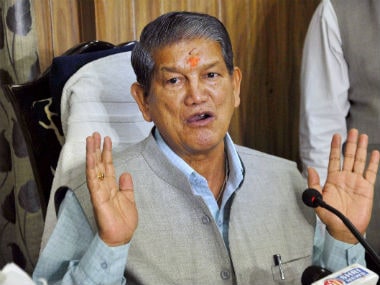
File image of Harish Rawat. PTI[/caption]Unless it is merely to put an end to the political stalemate till a decision on the main issue, the result of the floor test — by one interpretation — should mean nothing. Rawat having lost the majority should make no difference as President’s Rule is no substitute for a floor test to decide the question of majority. This interpretation is in line with the impugned judgment by the Uttarakhand High Court which followed the precedent set by the Supreme Court in the 1994 SR Bommai case.The high court, once it came to the conclusion that Article 356 was invoked on the ground that Rawat had lost support of majority, quashed President’s Rule and called for a floor test to resolve the political stalemate. However, with the Supreme Court order on floor test silent on any such conclusion, it is not clear if the court has zeroed in on the issue of majority, while the Centre has also relied on charges of horse-trading and other reasons for imposing the President’s Rule.If the court proposes to seriously consider other reasons cited by the Centre, the result of the floor test could be aimed at ending the stalemate as the court had ordered a stay on the high court order while taking on board the petition by the Centre. The court that had stayed the high court order without considering the merits of the Centre’s application for stay, could lift the stay if Rawat wins the floor test while keeping the main matter pending for further hearing.This line of thinking is backed by the fact that a Constitution bench of the Supreme Court had held in the Bommai case that President’s Rule should not be involved if there are doubts over majority, which should be decided on the floor of the House. Factoring in the Bommai ruling, if Article 356 was invoked on the ground of Rawat having lost majority, it was not as per the constitutional mandate. The result of the floor test, for or against Rawat, should not be relevant for deciding the validity of the proclamation.But the order directing floor test could not have been without any reason.Speculation, however, should end on Wednesday when the court will hear the matter after the result of the floor test is placed before it in a sealed envelope. The hearing will make clear the course of action contemplated by the court. But one should not be surprised if the second sting operation on horse-trading is brought to the notice of the court if Rawat wins the floor test. Although this case may be viewed differently in view of evidence in the form of two sting operations, horse-trading was cited as a ground by the governor in the case of Karnataka and Nagaland (Bommai case) and later in the case of Bihar (2006 Rameshwar Prasad case), but the Supreme Court quashed the proclamation in all these cases.“Even assuming that it was so, the correct and the proper course for him to adopt was to await the test on the floor of the House... (a) test the chief minister had willingly undertaken to go through on any day that the governor chose,” the Supreme Court observed, while dealing with the issue of horse-trading in the case of Karnataka.

Rahul Gandhi, Kharge lead protest near PM residence; Centre says Parliament discussion was offered
Parliament's Monsoon Session from July 20: Key bills, numbers game to dominate agenda
Major blow to Uddhav Thackeray as six Lok Sabha MPs join Shinde camp
12 years and counting: NDA leaders felicitate PM Modi as he trumps Nehru's tenure record
‘Trust, progress and welfare’: PM Modi celebrates 12 years in office, highlights big policy moves