


No longer Mr Charisma? Kejriwal beat PM Modi at his own game in Delhi
If BJP indeed fails to win the majority in Delhi assembly, the loss is not that of the party, but that of Narendra Modi.

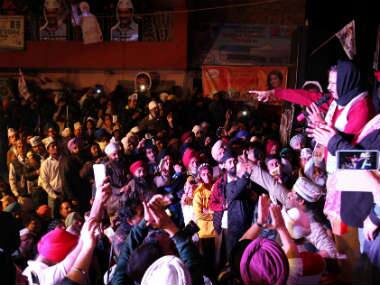
Arvind Kejriwal during a rally in Delhi. AP[/caption]What Kejriwal has trumped Modi is in the latter’s own game - what German social theorist Max Weber called “charismatic authority”. According to Weber, charismatic authority is generated by leaders capable of mobilising large numbers of people around an idea or goal. It can be associated with religious and political leaders, and leaders of moral movements. This leadership quality contrasts with “traditional authority”, another term that Weber used, which is derived from patriarchal, patrimonial or feudal power. (Dynastic leaders such as Rahul Gandhi are good examples of traditional authority.)Both Modi and Kejriwal have little to do with traditional authority, although the former’s religious and ideological beliefs tend to lend him some advantage of inherited authority of the Sangh Parivar. Both talk about ideas - one on economic development while the other on development with a focus on the poor and the marginalised. Development has been Modi’s buzzword and he repeated it in Delhi too.But, compared to his spiels in other parts of the country, in Delhi, Modi picked on the “poor”, a constituency that Kejriwal has assiduously nurtured. "Development will transform the lives of the poor — education for their children, medicines for their parents, and a house to stay in,” Modi said. And when he said, "where there are slums today, houses will be built, right where they live now, not far away. And it won't be just four walls, these houses will have electricity, water, toilets, schools close by for the children,” he was clearly borrowing from Kejriwal’s book.What happened in Delhi was unique compared to Modi’s dream run in the rest of India. Here the BJP was trying to catch up with Kejriwal and beat him in his game. In response, Kejriwal was minding his business, without directly taking on Modi, which appeared strategically superior.What’s remarkable about Delhi’s relative indifference to Modi and Kiran Bedi is that it stemmed from the state’s undiluted commitment to Kejriwal and the AAP although they foolishly squandered its trust once. Had it not been for this trust, Modi, with his glorious streak of victories, could have easily upstaged him. Kejriwal’s 49 days in power were replete with laughable exercises and should have made him a risky candidate to run even a Panchayat. But people still trusted him.This trust is a trust of character, Kejriwal’s non-depreciating asset. He has nothing else to offer, but it seems to be more than good enough against Modi and the triumphalist BJP paraphernalia.The summary of Delhi so far is that Modi can indeed be stopped, but by people such as Kejriwal. Unfortunately, the AAP phenomenon is highly localised and is not amenable to scale up. However, it’s a template on leadership and people’s trust that can work elsewhere too.

Rahul Gandhi, Kharge lead protest near PM residence; Centre says Parliament discussion was offered
Parliament's Monsoon Session from July 20: Key bills, numbers game to dominate agenda
Major blow to Uddhav Thackeray as six Lok Sabha MPs join Shinde camp
12 years and counting: NDA leaders felicitate PM Modi as he trumps Nehru's tenure record
‘Trust, progress and welfare’: PM Modi celebrates 12 years in office, highlights big policy moves