


DMK withdraws decision to boycott ongoing Tamil Nadu Assembly session to 'uphold democracy'
The Opposition DMK in Tamil Nadu on Saturday withdrew its decision to boycott the ongoing Assembly session, saying it did so to "uphold democracy" and perform its duties as a "constructive Opposition."

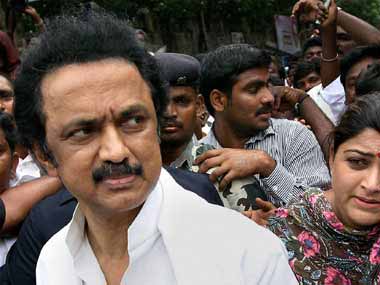
File image of DMK working president MK Stalin. PTI[/caption]It was taken in order to "uphold democracy which has been trampled upon by the AIADMK government," a resolution adopted at the meeting said.Further, DMK wanted to perform its duties as a "constructive opposition to meet people's expectations," it added.The DMK had earlier announced boycotting the Assembly session, which started on 29 May, on the Sterlite issue.Violence had erupted during the 22 May protests in Tuticorin, demanding closure of Sterlite Industries there over pollution concerns.The resultant police firing had killed 13 persons.In the resolution, DMK said it had earlier announced boycotting the session as it wanted to draw people's attention towards the government not heeding its demand to convene a cabinet meet to adopt a resolution for permanent closure of the plant."Due to this boycott, people have come to know about the anti-democratic tendency of the AIADMK government," it said.Earlier, DMK allies, Congress and IUML had urged the government to reach out to DMK to ensure its participation in the proceedings, but the AIADMK put the onus on its arch rival.Later, Stalin told reporters that his party would return to the House starting Monday.The state government had earlier issued closure notice to the copper smelter unit and sealed it.

Rahul Gandhi, Kharge lead protest near PM residence; Centre says Parliament discussion was offered
Parliament's Monsoon Session from July 20: Key bills, numbers game to dominate agenda
Major blow to Uddhav Thackeray as six Lok Sabha MPs join Shinde camp
12 years and counting: NDA leaders felicitate PM Modi as he trumps Nehru's tenure record
‘Trust, progress and welfare’: PM Modi celebrates 12 years in office, highlights big policy moves